Ribeiro Bárbara, Mariana Melissa, Lorigo Margarida, Oliani Denise, Ramalhinho Ana Cristina, Cairrao Elisa
Faculty of Health Sciences (FCS), University of Beira Interior (UBI), 6200-506 Covilhã, Portugal.
Health Sciences Research Centre (CICS), University of Beira Interior (UBI), 6200-506 Covilhã, Portugal.
Biomedicines. 2024 Aug 22;12(8):1932. doi: 10.3390/biomedicines12081932.
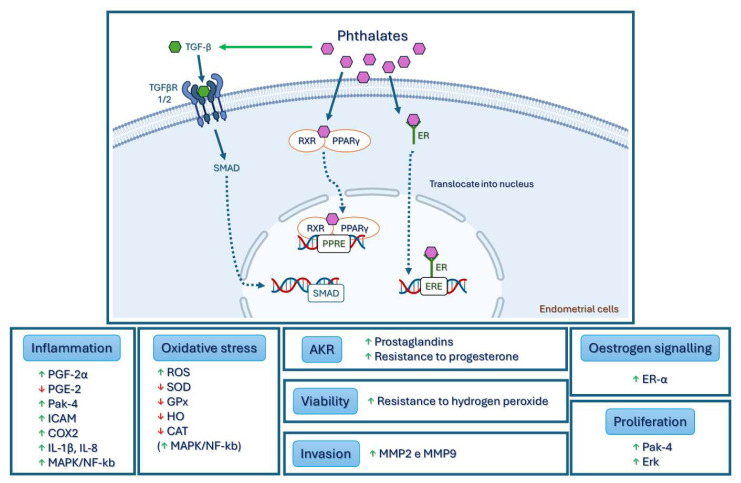
Endometriosis is a chronic gynecological disease, primarily associated with pelvic pain and infertility, that affects approximately 10% of the women of reproductive age. Estrogen plays a central role in endometriosis, and there is growing evidence that endocrine disruptors, such as phthalates, may contribute to its development. This review aimed to determine whether there is a causal relationship between phthalate exposure and the development of endometriosis, as well as the possible effects of phthalates on fertility, by analyzing epidemiological data. After a literature search with a combination of specific terms on this topic, we found that although there are limitations to the current studies, there is a clear association between phthalate exposure and endometriosis. Phthalates can interfere with the cellular processes of the endometrium; specifically, they can bind to PPAR and ER-α and activate TGF-β, promoting different signaling cascades that regulate the expression of specific target genes. This may lead to inflammation, invasion, cytokine alteration, increased oxidative stress, and impaired cell viability and proliferation, culminating in endometriosis. Nevertheless, future research is important to curb the progression and development of endometriosis, and strategies for prevention, diagnosis, and treatment are a priority. In this regard, public policies and recommendations to reduce exposure to phthalates and other endocrine disruptors should be promptly implemented.
子宫内膜异位症是一种慢性妇科疾病,主要与盆腔疼痛和不孕相关,影响着约10%的育龄女性。雌激素在子宫内膜异位症中起核心作用,并且越来越多的证据表明,内分泌干扰物,如邻苯二甲酸盐,可能促使其发展。本综述旨在通过分析流行病学数据,确定邻苯二甲酸盐暴露与子宫内膜异位症发展之间是否存在因果关系,以及邻苯二甲酸盐对生育能力的可能影响。在使用该主题的特定术语组合进行文献检索后,我们发现尽管当前研究存在局限性,但邻苯二甲酸盐暴露与子宫内膜异位症之间存在明确关联。邻苯二甲酸盐可干扰子宫内膜的细胞过程;具体而言,它们可与过氧化物酶体增殖物激活受体(PPAR)和雌激素受体-α(ER-α)结合并激活转化生长因子-β(TGF-β),促进调节特定靶基因表达的不同信号级联反应。这可能导致炎症、侵袭、细胞因子改变、氧化应激增加以及细胞活力和增殖受损,最终导致子宫内膜异位症。然而,未来的研究对于遏制子宫内膜异位症的进展和发展很重要,预防、诊断和治疗策略是当务之急。在这方面,应迅速实施减少邻苯二甲酸盐和其他内分泌干扰物暴露的公共政策和建议。