Yan Yujie, Huang Jun, Pan Lei, Meng Biao, Wei Qiangmin, Yang Bing
JFS Laboratory, Wuhan 430074, China.
Micromachines (Basel). 2024 Jul 25;15(8):954. doi: 10.3390/mi15080954.
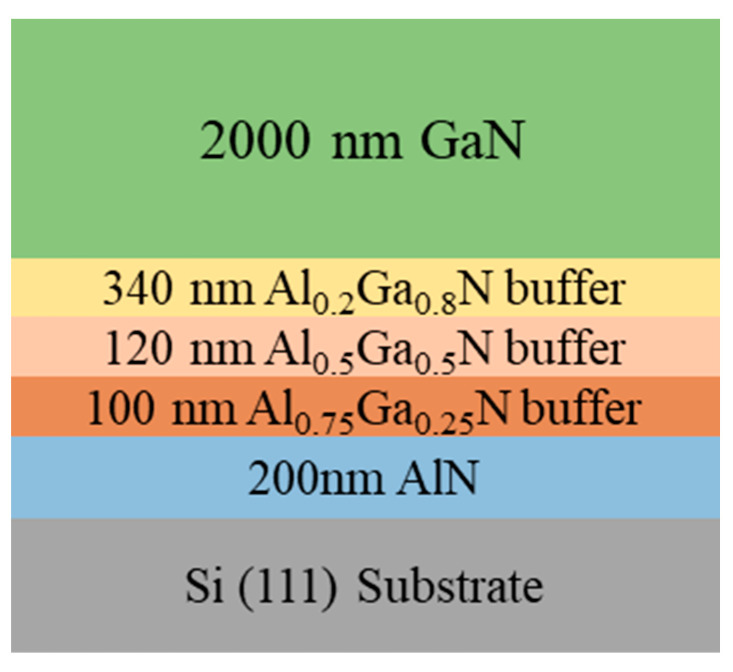
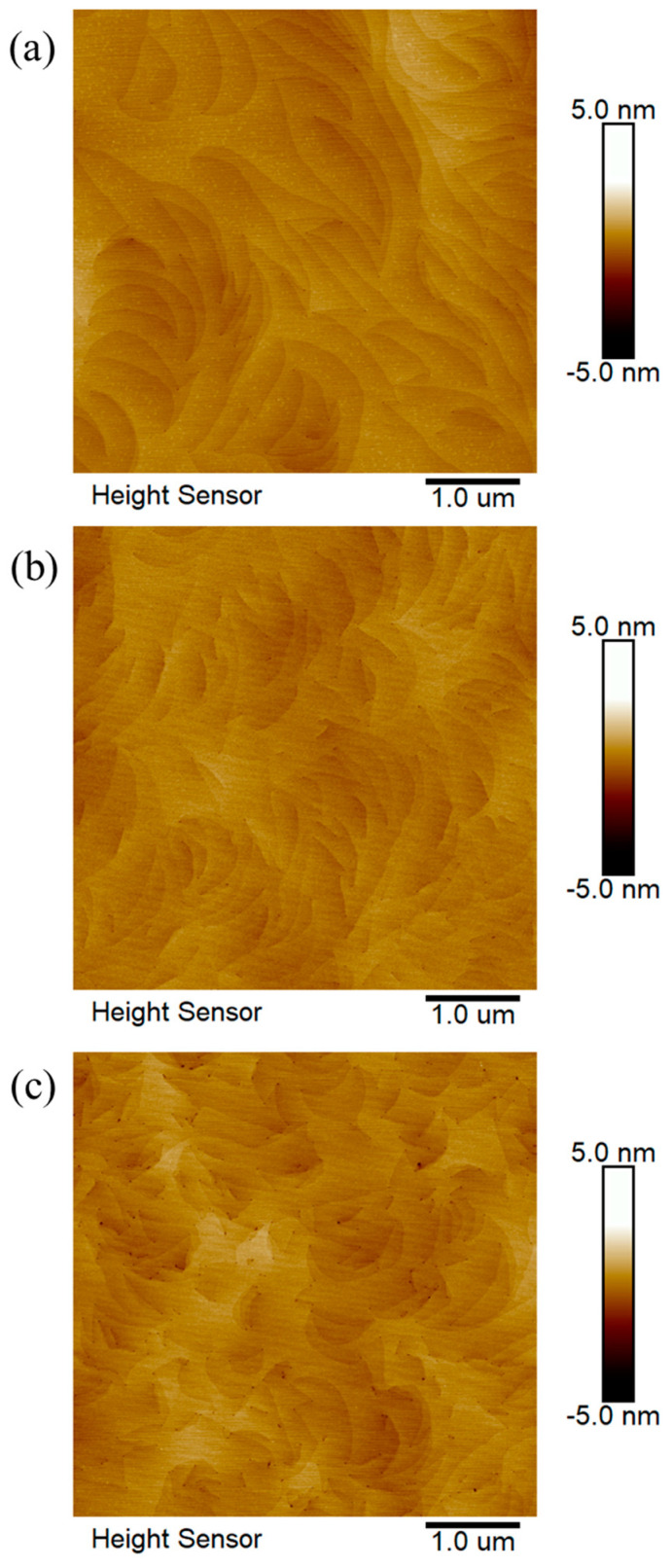
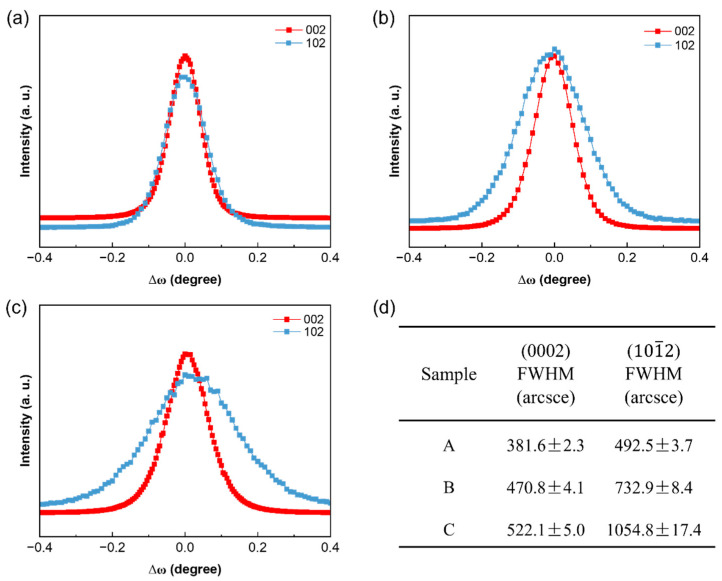
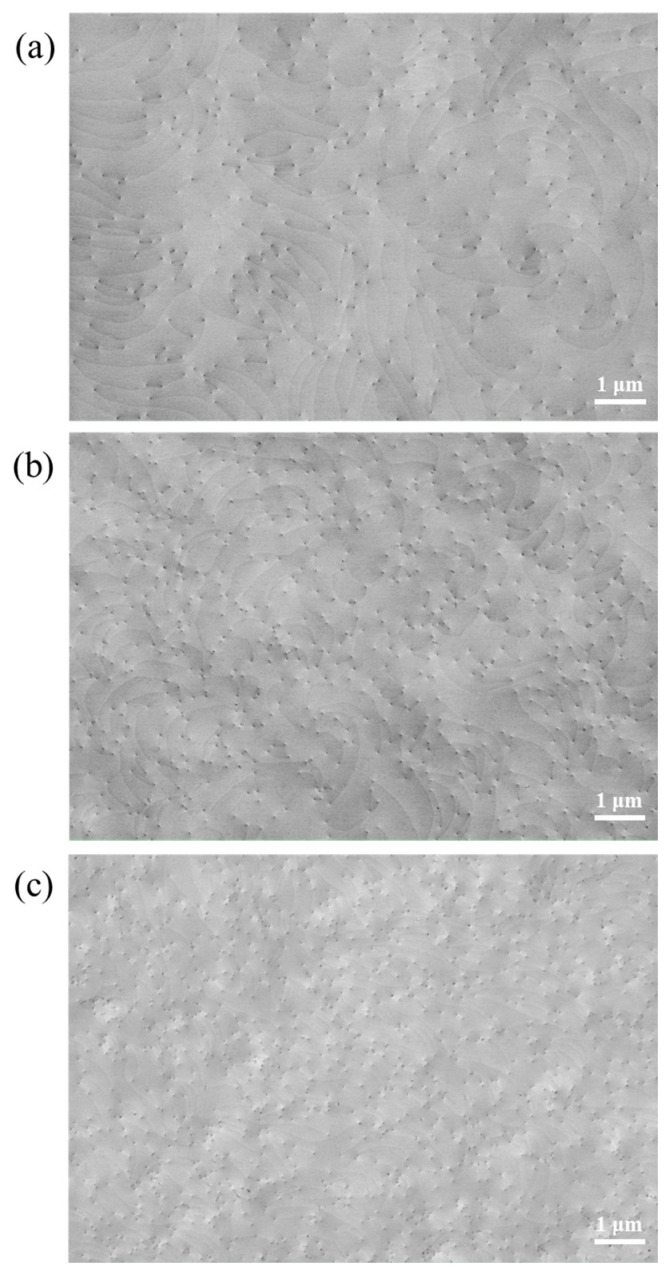
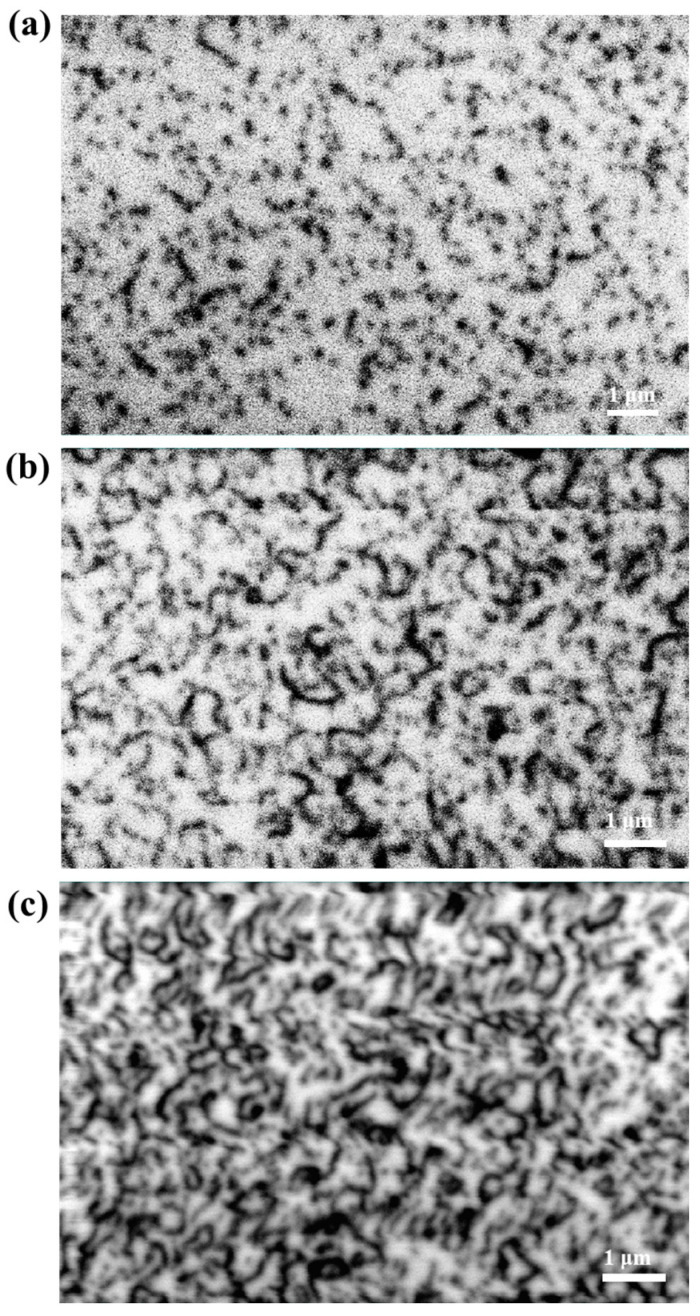
A series of characterization methods involving high-resolution X-ray diffraction (HR-XRD), electron channel contrast imaging (ECCI), cathodoluminescence microscopy (CL), and atomic force microscopy (AFM) were applied to calculate the dislocation density of GaN-on-Si epitaxial wafers, and their performance was analyzed and evaluated. The ECCI technique, owing to its high lateral resolution, reveals dislocation distributions on material surfaces, which can visually characterize the dislocation density. While the CL technique is effective for low-density dislocations, it is difficult to accurately identify the number of dislocation clusters in CL images as the density increases. The AFM technique analyzes surface dislocation characteristics by detecting surface pits caused by dislocations, which are easily affected by sample and probe conditions. A prevalent method for assessing the crystal quality of GaN is the rocking curve of HR-XRD (ω-scan), which calculates the dislocation density based on the FWHM value of the curves. By comparing the above four dislocation characterization methods, the advantages and limitations of each method are clarified, which also verifies the applicability of DB=β29b2 for GaN-on-Si epitaxial wafers. This provides an important reference value for dislocation characterization in GaN-on-Si materials. The accuracy evaluation of dislocation density can truly and reliably reflect crystal quality, which is conducive to further optimization. Furthermore, this study can also be applied to other heterogeneous or homogeneous epitaxial materials.
一系列表征方法,包括高分辨率X射线衍射(HR-XRD)、电子通道对比成像(ECCI)、阴极发光显微镜(CL)和原子力显微镜(AFM),被用于计算硅基氮化镓外延片的位错密度,并对其性能进行分析和评估。ECCI技术由于其高横向分辨率,可揭示材料表面的位错分布,能够直观地表征位错密度。虽然CL技术对低密度位错有效,但随着密度增加,在CL图像中难以准确识别位错簇的数量。AFM技术通过检测由位错引起的表面坑来分析表面位错特征,这很容易受到样品和探针条件的影响。评估氮化镓晶体质量的一种常用方法是HR-XRD的摇摆曲线(ω扫描),它根据曲线的半高宽值计算位错密度。通过比较上述四种位错表征方法,阐明了每种方法的优缺点,这也验证了DB=β29b2对硅基氮化镓外延片的适用性。这为硅基氮化镓材料中的位错表征提供了重要的参考价值。位错密度的准确性评估能够真实可靠地反映晶体质量,有利于进一步优化。此外,本研究也可应用于其他异质或同质外延材料。