Department of Radiation Oncology, Klinikum Rechts der Isar, Technische Universität München, Ismaninger Straße 22, 81675, Munich, Germany.
Department of Informatics, Bioinformatics and Computational Biology-i12, Technische Universität München, Boltzmannstr. 3, 85748, Munich, Germany.
Sci Rep. 2024 Aug 29;14(1):20051. doi: 10.1038/s41598-024-70723-w.
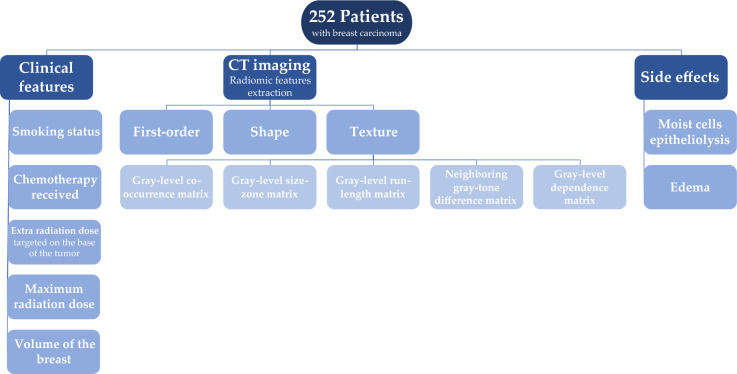
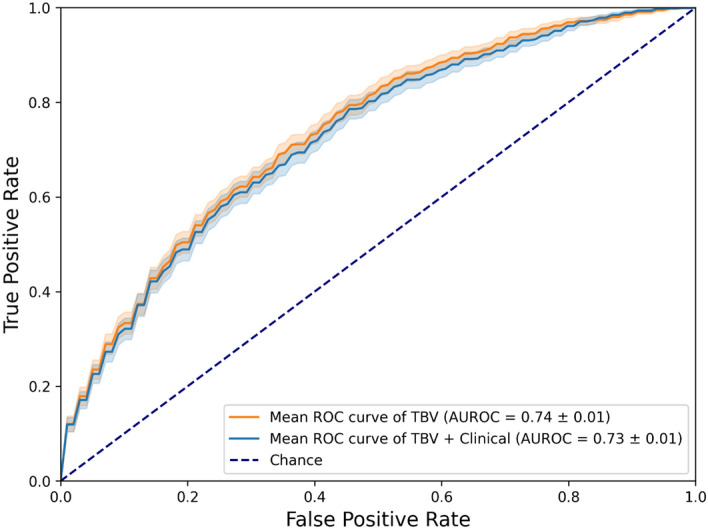
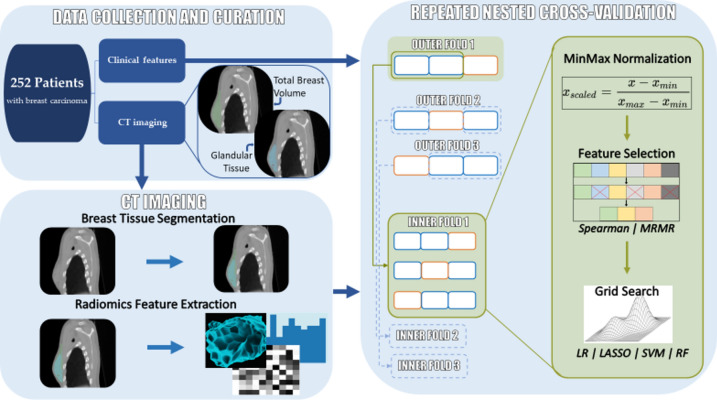
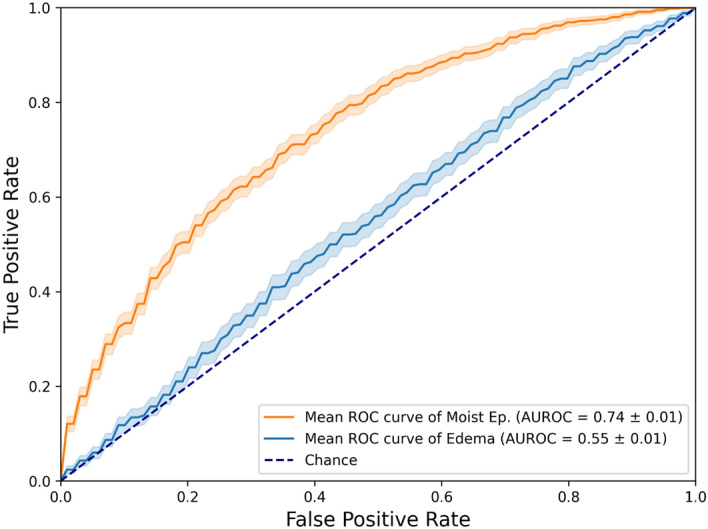
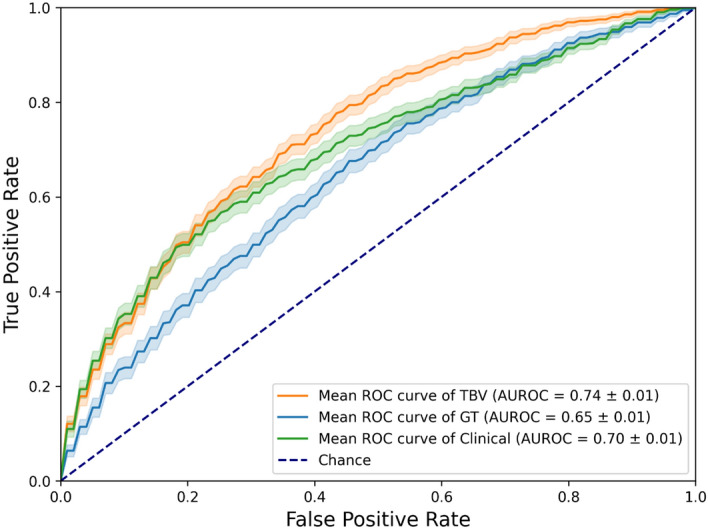
Skin inflammation with the potential sequel of moist epitheliolysis and edema constitute the most frequent breast radiotherapy (RT) acute side effects. The aim of this study was to compare the predictive value of tissue-derived radiomics features to the total breast volume (TBV) for the moist cells epitheliolysis as a surrogate for skin inflammation, and edema. Radiomics features were extracted from computed tomography (CT) scans of 252 breast cancer patients from two volumes of interest: TBV and glandular tissue (GT). Machine learning classifiers were trained on radiomics and clinical features, which were evaluated for both side effects. The best radiomics model was a least absolute shrinkage and selection operator (LASSO) classifier, using TBV features, predicting moist cells epitheliolysis, achieving an area under the receiver operating characteristic (AUROC) of 0.74. This was comparable to TBV breast volume (AUROC of 0.75). Combined models of radiomics and clinical features did not improve performance. Exclusion of volume-correlated features slightly reduced the predictive performance (AUROC 0.71). We could demonstrate the general propensity of planning CT-based radiomics models to predict breast RT-dependent side effects. Mammary tissue was more predictive than glandular tissue. The radiomics features performance was influenced by their high correlation to TBV volume.
皮肤炎症伴潜在的湿润上皮溶解和水肿是最常见的乳腺癌放射治疗 (RT) 急性副作用。本研究旨在比较组织衍生的放射组学特征与全乳体积 (TBV) 对作为皮肤炎症和水肿替代物的湿润细胞上皮溶解的预测价值。从 252 名乳腺癌患者的两个感兴趣区域(TBV 和腺体组织 (GT))的 CT 扫描中提取放射组学特征。使用 TBV 特征,对放射组学和临床特征进行机器学习分类器训练,并对两种副作用进行评估。最佳放射组学模型是使用 TBV 特征的最小绝对收缩和选择算子 (LASSO) 分类器,预测湿润细胞上皮溶解,获得接收器操作特征 (ROC) 曲线下面积 (AUROC) 为 0.74。这与 TBV 乳房体积 (AUROC 为 0.75) 相当。放射组学和临床特征的组合模型并未提高性能。排除与体积相关的特征略微降低了预测性能 (AUROC 为 0.71)。我们能够证明基于计划 CT 的放射组学模型预测乳腺癌 RT 相关副作用的一般倾向。乳腺组织比腺体组织更具预测性。放射组学特征的性能受到与 TBV 体积高度相关的影响。