Ma Guang-Lei, Liu Wan-Qiu, Huang Huawei, Yan Xin-Fu, Shen Wei, Visitsatthawong Surawit, Prakinee Kridsadakorn, Tran Hoa, Fan Xiaohui, Gao Yong-Gui, Chaiyen Pimchai, Li Jian, Liang Zhao-Xun
School of Biological Sciences, Nanyang Technological University, Singapore 637551, Singapore.
College of Pharmaceutical Sciences, Zhejiang University, Hangzhou 310058, China.
JACS Au. 2024 Aug 9;4(8):2925-2935. doi: 10.1021/jacsau.4c00279. eCollection 2024 Aug 26.
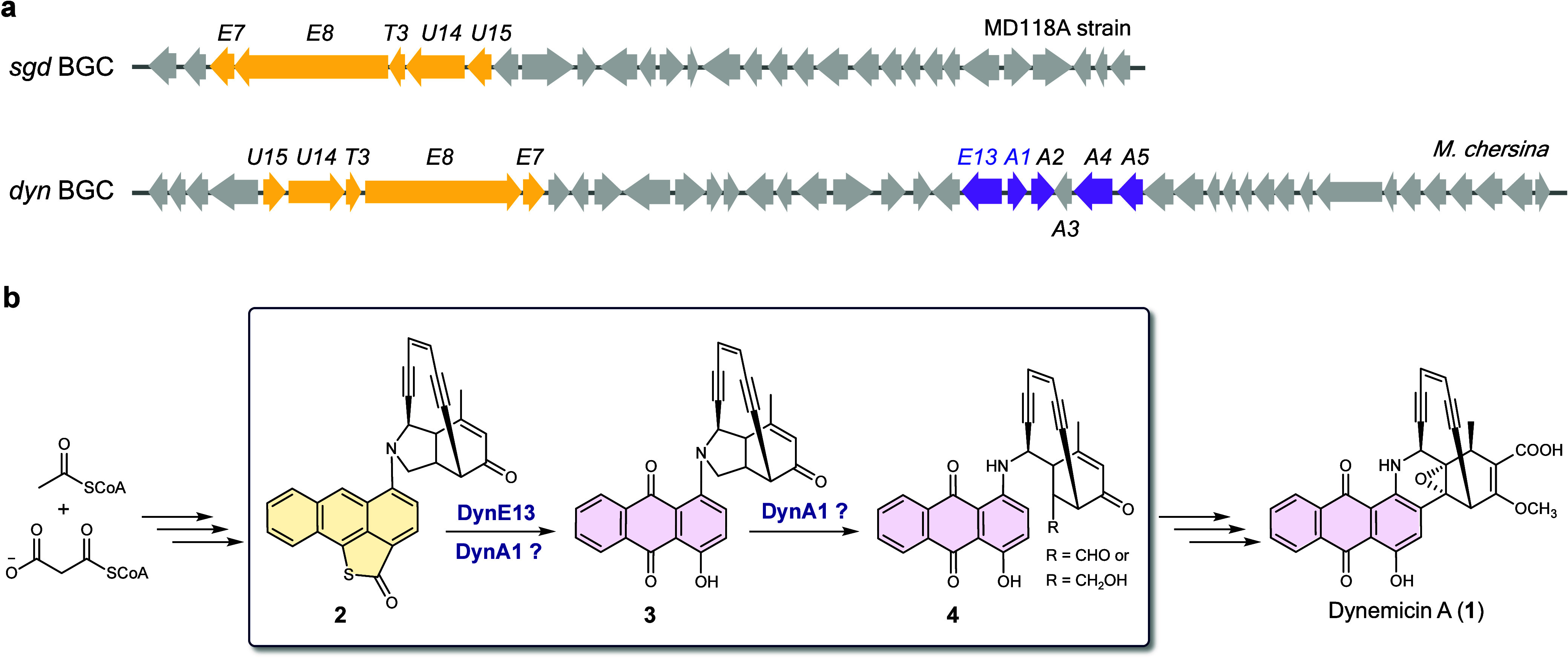
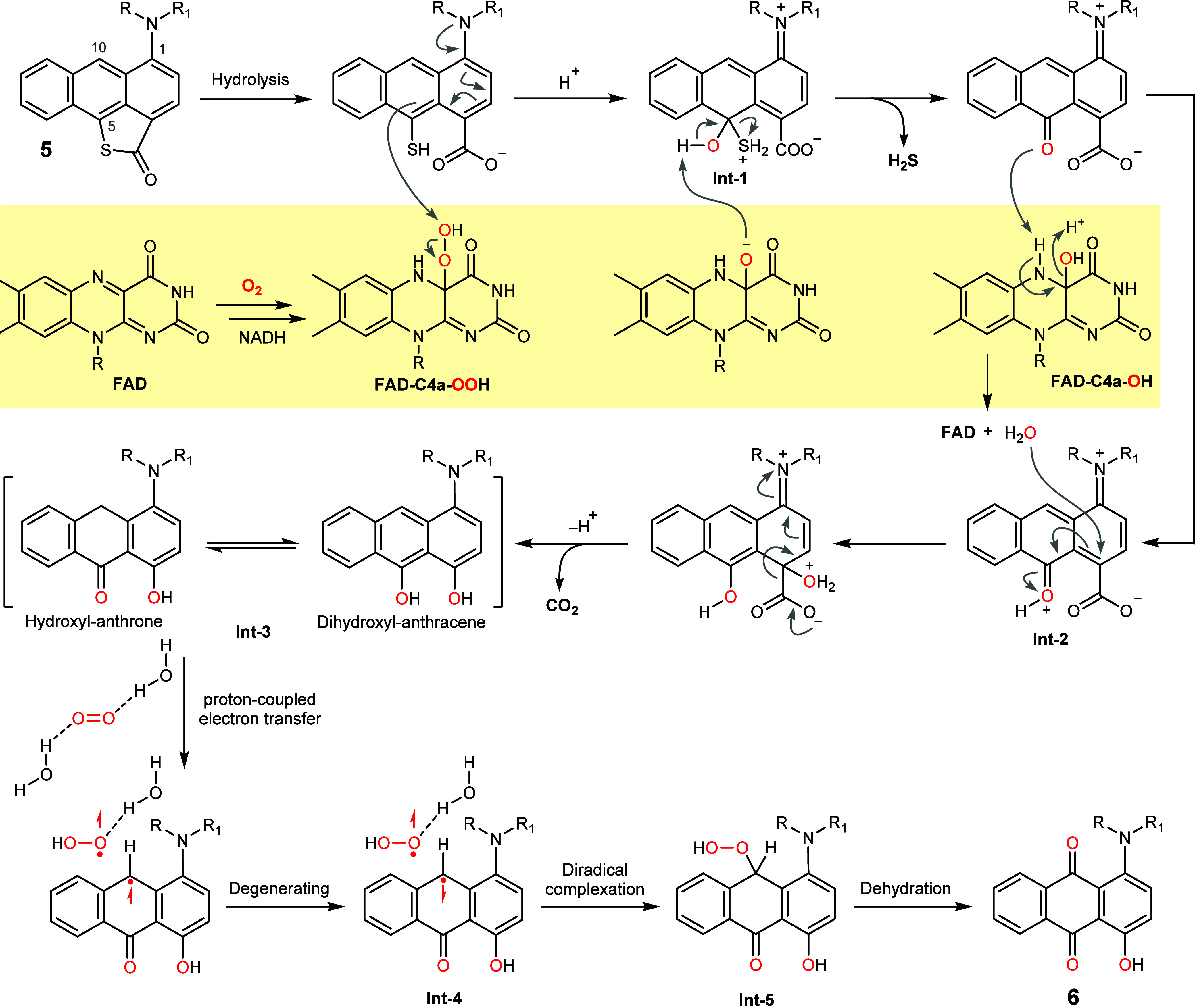
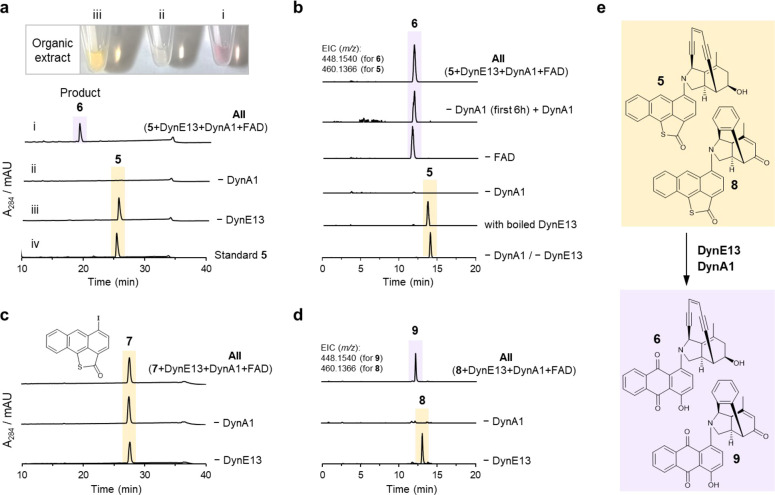
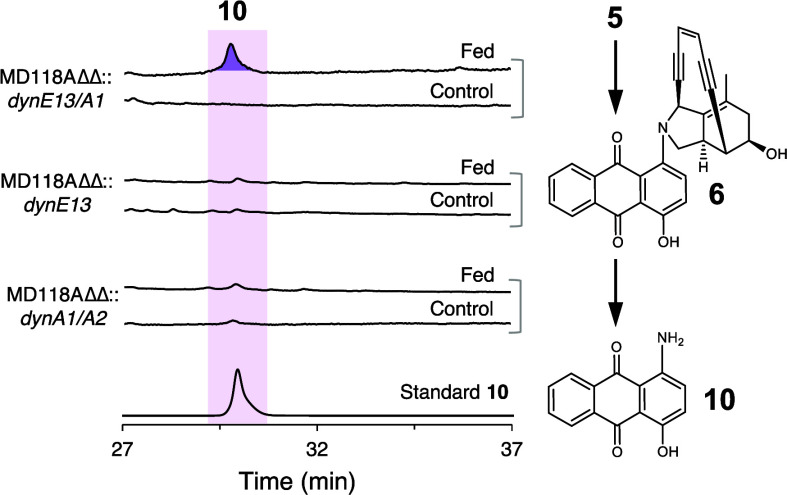
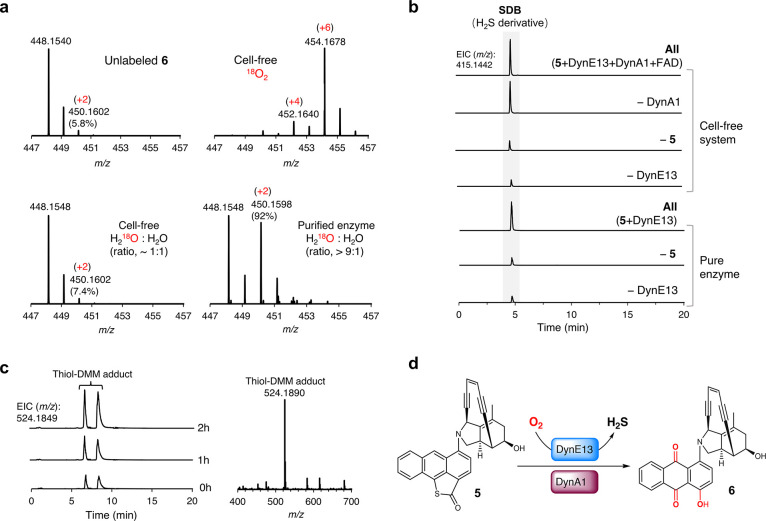
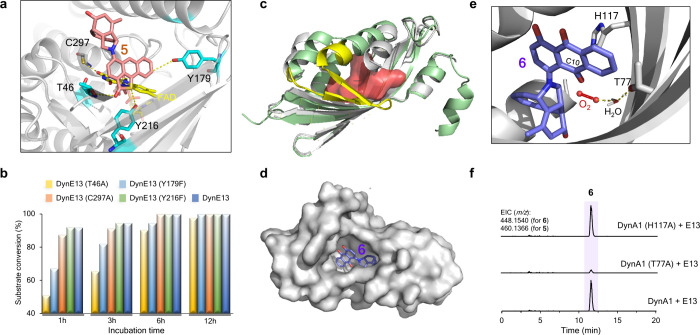
Anthraquinone-fused enediynes are anticancer natural products featuring a DNA-intercalating anthraquinone moiety. Despite recent insights into anthraquinone-fused enediyne (AQE) biosynthesis, the enzymatic steps involved in anthraquinone biogenesis remain to be elucidated. Through a combination of and studies, we demonstrated that a two-enzyme system, composed of a flavin adenine dinucleotide (FAD)-dependent monooxygenase (DynE13) and a cofactor-free enzyme (DynA1), catalyzes the final steps of anthraquinone formation by converting δ-thiolactone anthracene to hydroxyanthraquinone. We showed that the three oxygen atoms in the hydroxyanthraquinone originate from molecular oxygen (O), with the sulfur atom eliminated as HS. We further identified the key catalytic residues of DynE13 and A1 by structural and site-directed mutagenesis studies. Our data support a catalytic mechanism wherein DynE13 installs two oxygen atoms with concurrent desulfurization and decarboxylation, whereas DynA1 acts as a cofactor-free monooxygenase, installing the final oxygen atom in the hydroxyanthraquinone. These findings establish the indispensable roles of DynE13 and DynA1 in AQE biosynthesis and unveil novel enzymatic strategies for anthraquinone formation.
蒽醌稠合的烯二炔是一类具有DNA嵌入蒽醌部分的抗癌天然产物。尽管最近对蒽醌稠合烯二炔(AQE)的生物合成有了深入了解,但蒽醌生物合成所涉及的酶促步骤仍有待阐明。通过一系列研究,我们证明了一个由黄素腺嘌呤二核苷酸(FAD)依赖性单加氧酶(DynE13)和一种无辅因子的酶(DynA1)组成的双酶系统,通过将δ-硫代内酯蒽转化为羟基蒽醌来催化蒽醌形成的最后步骤。我们表明,羟基蒽醌中的三个氧原子来自分子氧(O),硫原子以HS形式被消除。我们通过结构和定点诱变研究进一步确定了DynE13和DynA1的关键催化残基。我们的数据支持一种催化机制,其中DynE13在进行脱硫和脱羧的同时引入两个氧原子,而DynA1作为一种无辅因子的单加氧酶,在羟基蒽醌中引入最后一个氧原子。这些发现确立了DynE13和DynA1在AQE生物合成中的不可或缺的作用,并揭示了蒽醌形成的新酶促策略。