Cao Junwei, Shao Baoying, Lin Jing, Liu Jie, Cui Yiran, Wang Jiahua, Fang Jiasong
College of Oceanography and Ecological Science, Shanghai Ocean University, Shanghai, China.
Laboratory for Marine Biology and Biotechnology, Qingdao National Laboratory for Marine Science and Technology, Qingdao, China.
Front Microbiol. 2024 Aug 16;15:1423245. doi: 10.3389/fmicb.2024.1423245. eCollection 2024.
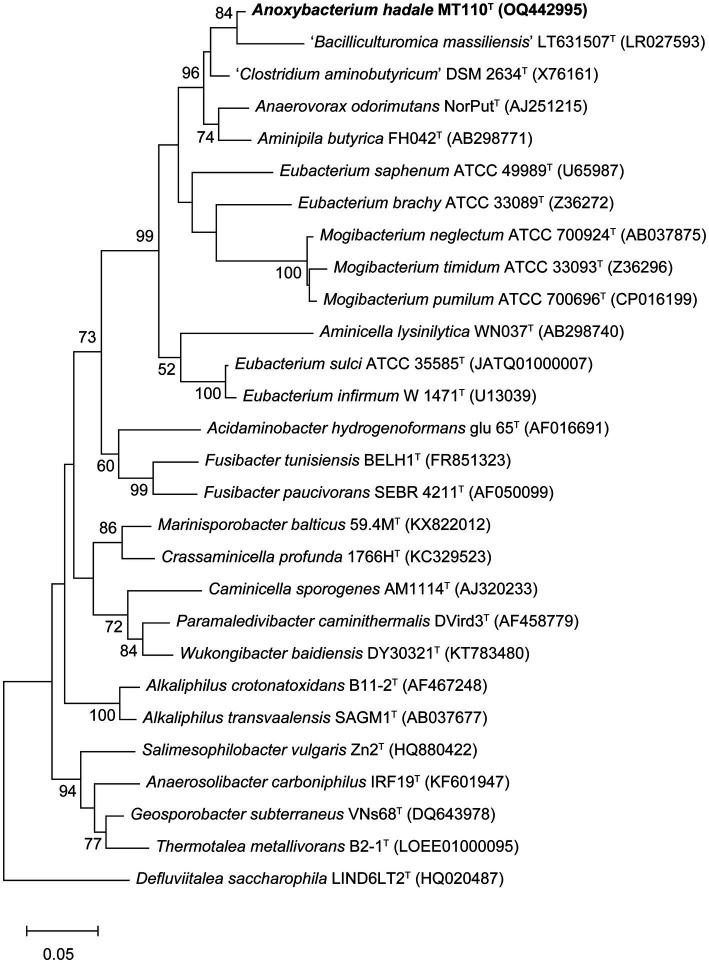
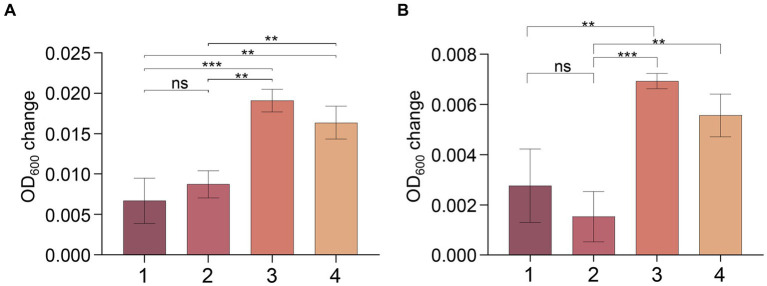
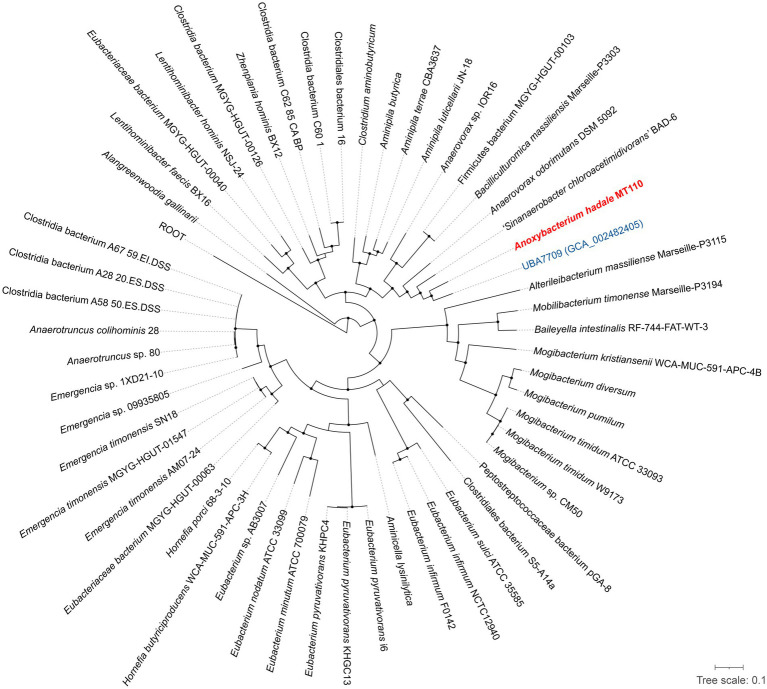
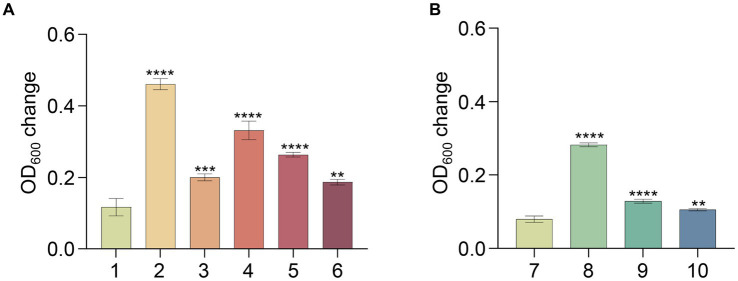
Hadal zones account for the deepest 45% of the oceanic depth range and play an important role in ocean biogeochemical cycles. As the least-explored aquatic habitat on earth, hadal ecosystems contain a vast diversity of so far uncultured microorganisms that cannot be grown on conventional laboratory culture media. Therefore, it has been difficult to gain a true understanding of the detailed metabolic characteristics and ecological functions of those difficult-to-culture microorganisms in hadal environments. In this study, a novel anaerobic bacterial strain, MT110, was isolated from a hadal sediment-water interface sample of the Mariana Trench at 10,890 m. The level of 16S rRNA gene sequence similarity and percentage of conserved proteins between strain MT110 and the closest relatives, DSM 5092 (94.9 and 46.6%) and DSM 103574 (94.4 and 46.7%), indicated that strain MT110 exhibits sufficient molecular differences for genus-level delineation. Phylogenetic analyses based on both 16S rRNA gene and genome sequences showed that strain MT110 formed an independent monophyletic branch within the family Anaerovoracaceae. The combined evidence showed that strain MT110 represents a novel species of a novel genus, proposed as gen. nov. sp. nov. (type strain MT110 = KCTC 15922 = MCCC 1K04061), which represents a previously uncultured lineage of the class Clostridia. Physiologically, no tested organic matter could be used as sole carbon source by strain MT110. Genomic analysis showed that MT110 had the potential capacity of utilizing various carbon sources, but the pathways of sulfur reduction were largely incomplete. Our experiments further revealed that cysteine is one of the essential nutrients for the survival of strain MT110, and cannot be replaced by sulfite, leucine, or taurine. This result suggests that organic sulfur compounds might play an important role in metabolism and growth of the family Anaerovoracaceae and could be one of the key factors affecting the cultivation of the uncultured microbes. Our study brings a new perspective to the role of dissolved organic sulfur in hadal ecosystems and also provides valuable information for optimizing the conditions of isolating related microbial taxa from the hadal environment.
超深渊带占海洋深度范围最深的45%,在海洋生物地球化学循环中发挥着重要作用。作为地球上探索最少的水生栖息地,超深渊生态系统包含着种类繁多的迄今未培养的微生物,这些微生物无法在传统实验室培养基上生长。因此,很难真正了解这些超深渊环境中难以培养的微生物的详细代谢特征和生态功能。在本研究中,从马里亚纳海沟10890米深处的超深渊沉积物-水界面样本中分离出一种新型厌氧细菌菌株MT110。菌株MT110与最接近的亲缘种DSM 5092(94.9%和46.6%)以及DSM 103574(94.4%和46.7%)之间的16S rRNA基因序列相似性水平和保守蛋白百分比表明,菌株MT110表现出足够的分子差异以进行属级划分。基于16S rRNA基因和基因组序列的系统发育分析表明,菌株MT110在厌氧食菌科内形成了一个独立的单系分支。综合证据表明,菌株MT110代表一个新属的新物种,提议为gen. nov. sp. nov.(模式菌株MT110 = KCTC 15922 = MCCC 1K04061),它代表梭菌纲中一个以前未培养的谱系。在生理上,没有一种测试的有机物可以被菌株MT110用作唯一碳源。基因组分析表明,MT110具有利用各种碳源的潜在能力,但硫还原途径在很大程度上是不完整的。我们的实验进一步表明,半胱氨酸是菌株MT110生存所必需的营养物质之一,不能被亚硫酸盐、亮氨酸或牛磺酸替代。这一结果表明,有机硫化合物可能在厌氧食菌科的代谢和生长中发挥重要作用,并且可能是影响未培养微生物培养的关键因素之一。我们的研究为溶解有机硫在超深渊生态系统中的作用带来了新的视角,也为优化从超深渊环境中分离相关微生物类群的条件提供了有价值的信息。