Schittenhelm Andrea, Brandt Tom, Andres Denny, Adler Patrick, Fairhurst Merle T, Schmidt Annette
NextGenerationEU, dtec.bw Project Smart Health Lab, Faculty of Human Sciences, Institute for Sports Science, Chair of Sport Biology, University of the Bundeswehr Munich, Neubiberg, Germany.
Institute for Sports Science, University of the Bundeswehr Munich, Neubiberg, Germany.
Front Psychol. 2024 Aug 16;15:1427373. doi: 10.3389/fpsyg.2024.1427373. eCollection 2024.
This study assessed how exposure to slow (SBM) versus fast beat music (FBM) during high-intensity rowing intervals affects performance, heart rate (HR), lactate levels, relative perceived exertion (RPE), and recovery.
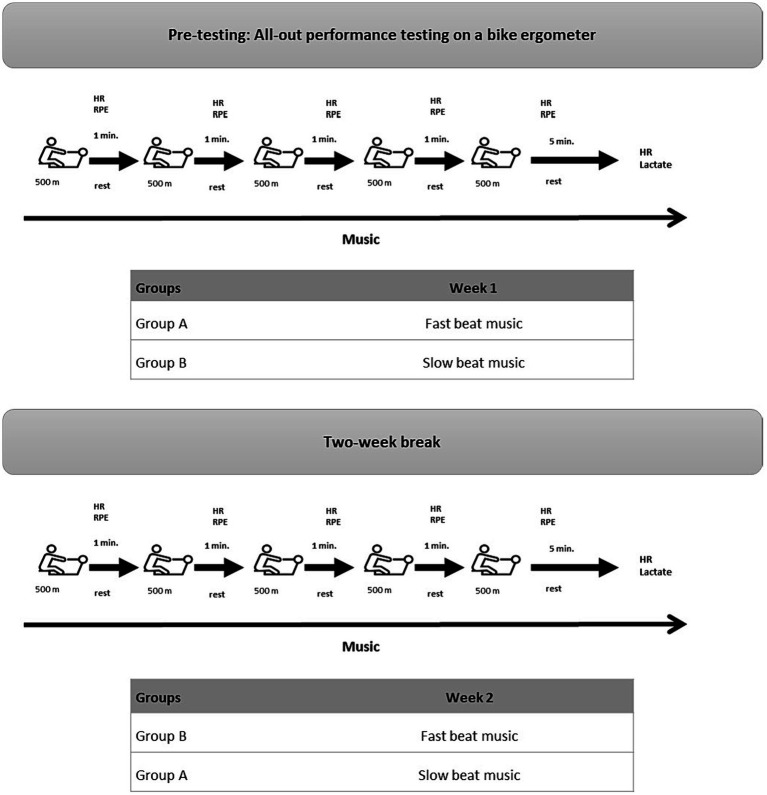
The A/B crossover design involved 21 participants performing 5 × 500 m rowing intervals under two conditions: FBM and SBM. Primary endpoint was the difference in total rowing time. Secondary endpoints included average HR, average RPE as well as rowing interval times, RPE, and HR per interval. For exploratory purpose, HR and lactate drop during the initial 5 min post completion was analyzed.
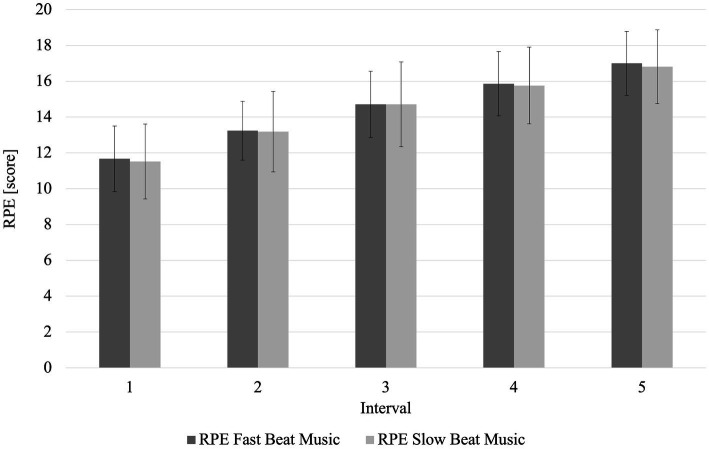
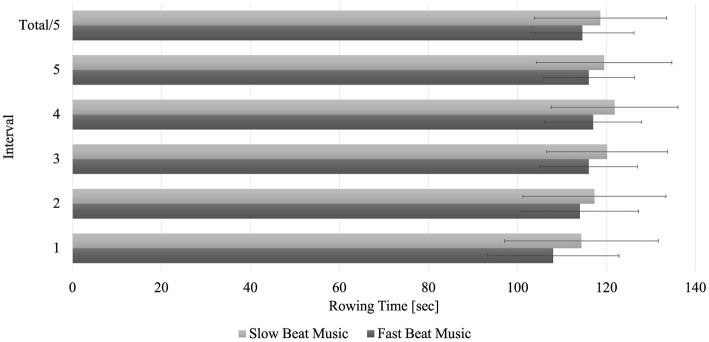
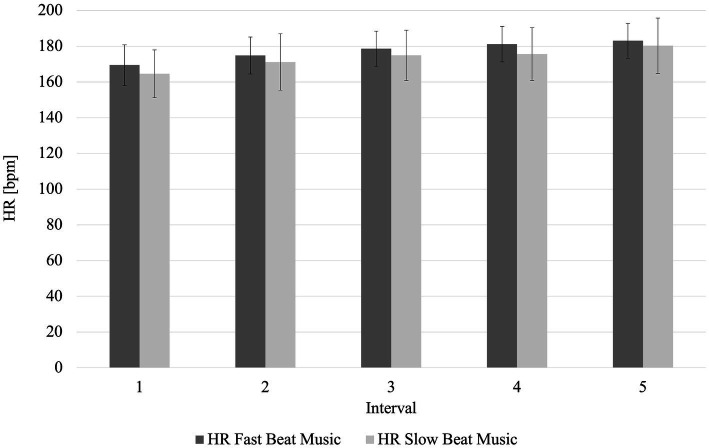
Listening to FBM resulted in significantly shorter total rowing times ( = 0.009, r = 0.59), especially during the 1st interval. The 1st interval was also significantly faster than intervals 2-5 ( < 0.001), with the greatest performance drop between the 1st and 2nd interval during FBM. Average HR was significantly lower when listening to SBM ( = 0.03, r = 0.48), while average RPE showed no significant difference ( = 0.47, r = 0.02). Lactate values after interval 5 were significantly lower in SBM ( = 0.05, r = 0.41), but no significant difference was found for lactate drop ( = 0.21, r = 0.21). However, participants exhibited a higher HR drop rate with SBM ( = 0.05, r = 0.42).
FBM improved performance without increasing RPE, while SBM proved superior for recovery. Systematic customization of music based on intended training stimuli holds broad potential for the competitive sports, fitness, and health sector.
本研究评估了在高强度划船间歇期间,暴露于慢节奏音乐(SBM)与快节奏音乐(FBM)如何影响运动表现、心率(HR)、乳酸水平、相对主观用力程度(RPE)以及恢复情况。
A/B交叉设计涉及21名参与者,在两种条件下进行5×500米划船间歇:FBM和SBM。主要终点是总划船时间的差异。次要终点包括平均心率、平均RPE以及每个间歇的划船时间、RPE和心率。出于探索目的,分析了完成后最初5分钟内心率和乳酸的下降情况。
听FBM导致总划船时间显著缩短(=0.009,r=0.59),尤其是在第1个间歇期间。第1个间歇也显著快于第2至5个间歇(<0.001),在FBM期间,第1个和第2个间歇之间的表现下降最大。听SBM时平均心率显著更低(=0.03,r=0.48),而平均RPE无显著差异(=0.47,r=0.02)。SBM中第5个间歇后的乳酸值显著更低(=0.05,r=0.41),但乳酸下降无显著差异(=0.21,r=0.21)。然而,参与者在SBM下心率下降率更高(=0.05,r=0.42)。
FBM提高了运动表现而不增加RPE,而SBM在恢复方面表现更优。基于预期训练刺激进行音乐的系统定制在竞技体育、健身和健康领域具有广阔潜力。