
基于DeepSort的航空图像数据集车辆识别流程
Vehicle recognition pipeline via DeepSort on aerial image datasets.
作者信息
Hanzla Muhammad, Yusuf Muhammad Ovais, Al Mudawi Naif, Sadiq Touseef, Almujally Nouf Abdullah, Rahman Hameedur, Alazeb Abdulwahab, Algarni Asaad
机构信息
Faculty of Computing and AI, Air University, Islamabad, Pakistan.
Department of Computer Science, College of Computer Science and Information System, Najran University, Najran, Saudi Arabia.
出版信息
Front Neurorobot. 2024 Aug 16;18:1430155. doi: 10.3389/fnbot.2024.1430155. eCollection 2024.
INTRODUCTION
Unmanned aerial vehicles (UAVs) are widely used in various computer vision applications, especially in intelligent traffic monitoring, as they are agile and simplify operations while boosting efficiency. However, automating these procedures is still a significant challenge due to the difficulty of extracting foreground (vehicle) information from complex traffic scenes.
METHODS
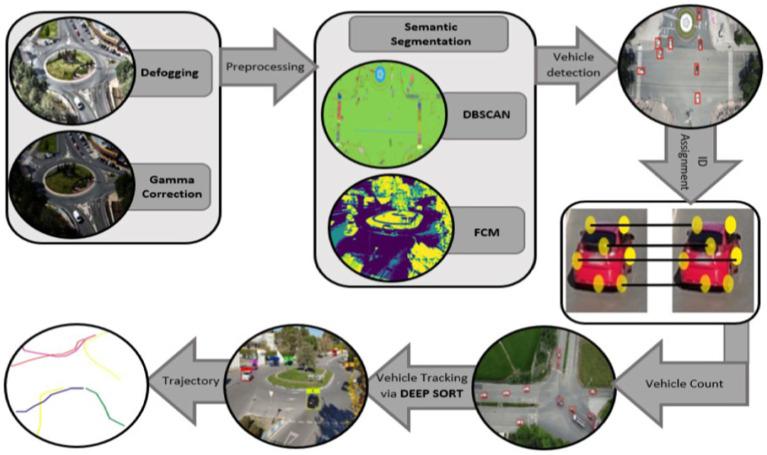
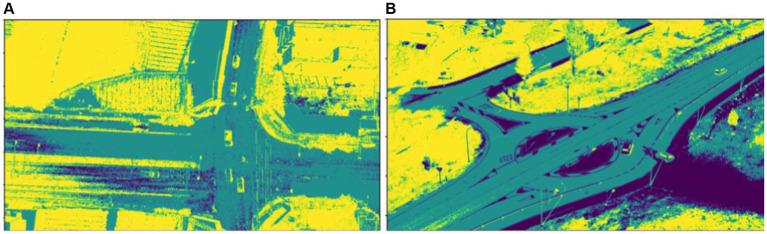
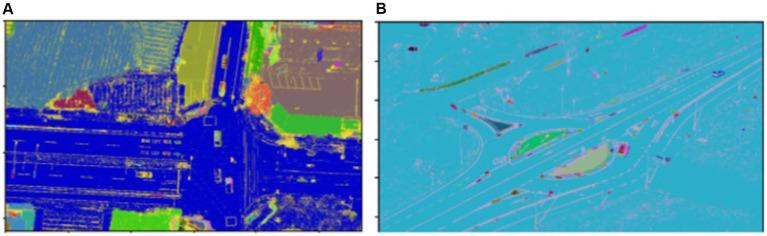
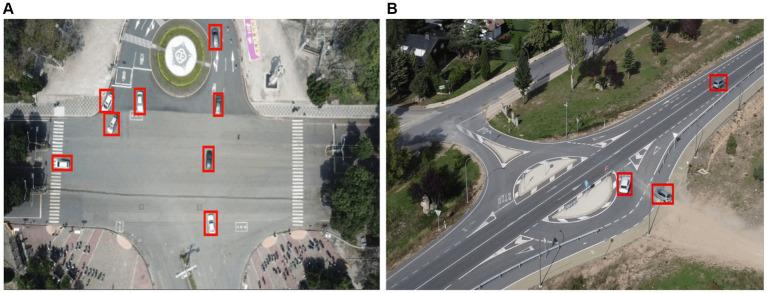
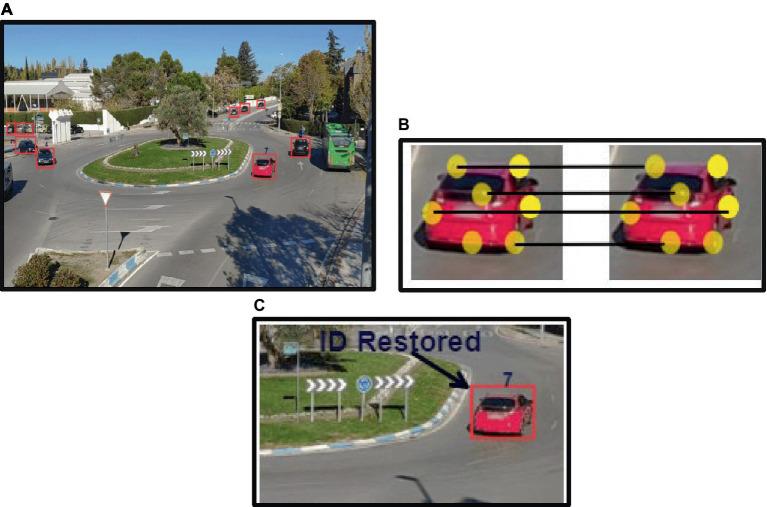
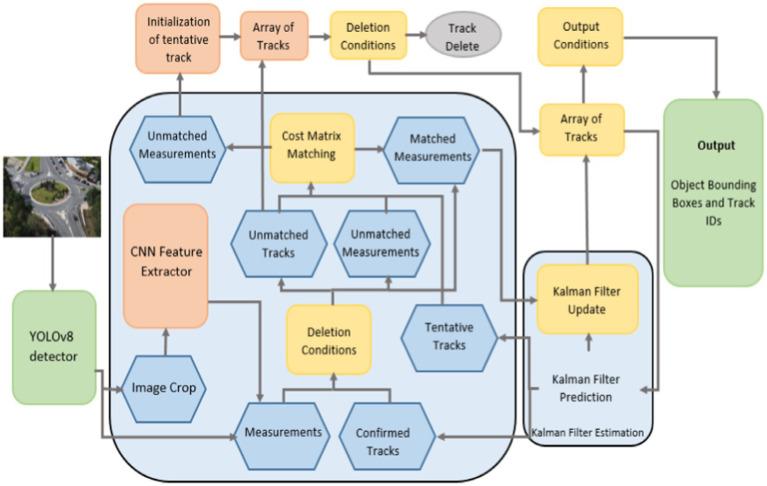
This paper presents a unique method for autonomous vehicle surveillance that uses FCM to segment aerial images. YOLOv8, which is known for its ability to detect tiny objects, is then used to detect vehicles. Additionally, a system that utilizes ORB features is employed to support vehicle recognition, assignment, and recovery across picture frames. Vehicle tracking is accomplished using DeepSORT, which elegantly combines Kalman filtering with deep learning to achieve precise results.
RESULTS
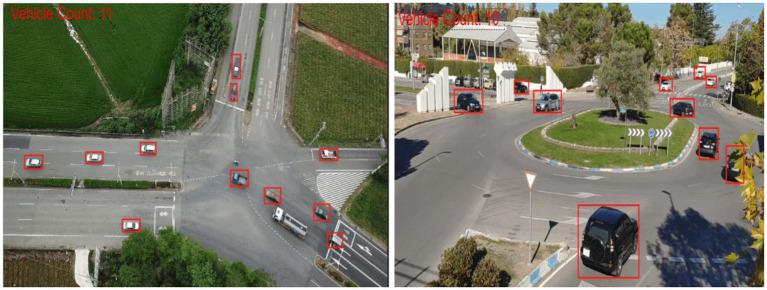
Our proposed model demonstrates remarkable performance in vehicle identification and tracking with precision of 0.86 and 0.84 on the VEDAI and SRTID datasets, respectively, for vehicle detection.
DISCUSSION
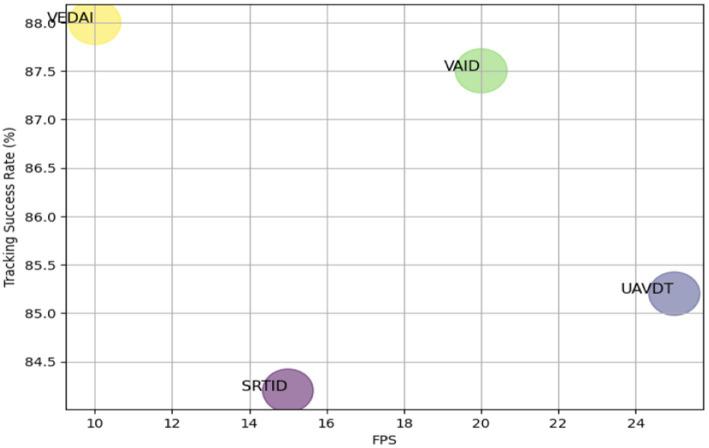
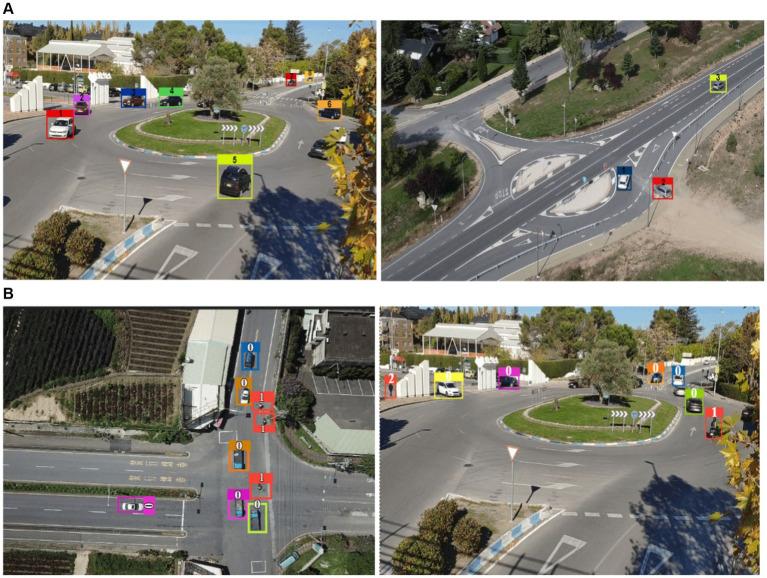
For vehicle tracking, the model achieves accuracies of 0.89 and 0.85 on the VEDAI and SRTID datasets, respectively.
引言
无人驾驶飞行器(UAV)广泛应用于各种计算机视觉应用中,特别是在智能交通监测方面,因为它们灵活且能简化操作并提高效率。然而,由于难以从复杂的交通场景中提取前景(车辆)信息,实现这些程序的自动化仍然是一项重大挑战。
方法
本文提出了一种独特的自动驾驶车辆监测方法,该方法使用模糊C均值聚类(FCM)对航空图像进行分割。然后,以检测微小物体能力著称的YOLOv8用于检测车辆。此外,还采用了一个利用ORB特征的系统来支持跨图像帧的车辆识别、分配和恢复。车辆跟踪使用DeepSORT完成,它巧妙地将卡尔曼滤波与深度学习相结合以获得精确结果。
结果
我们提出的模型在车辆识别和跟踪方面表现出色,在VEDAI和SRTID数据集上进行车辆检测时,精度分别为0.86和0.84。
讨论
对于车辆跟踪,该模型在VEDAI和SRTID数据集上的准确率分别达到0.89和0.85。
 Zotero 插件