Department of Internal Medicine, Division of Pulmonary, Critical Care, & Sleep, University of Nebraska Medical Center, Omaha, NE, USA.
Department of Pharmacy Practice and Science, College of Pharmacy, University of Nebraska Medical Center, Omaha, NE, USA.
NPJ Biofilms Microbiomes. 2024 Sep 3;10(1):79. doi: 10.1038/s41522-024-00558-w.
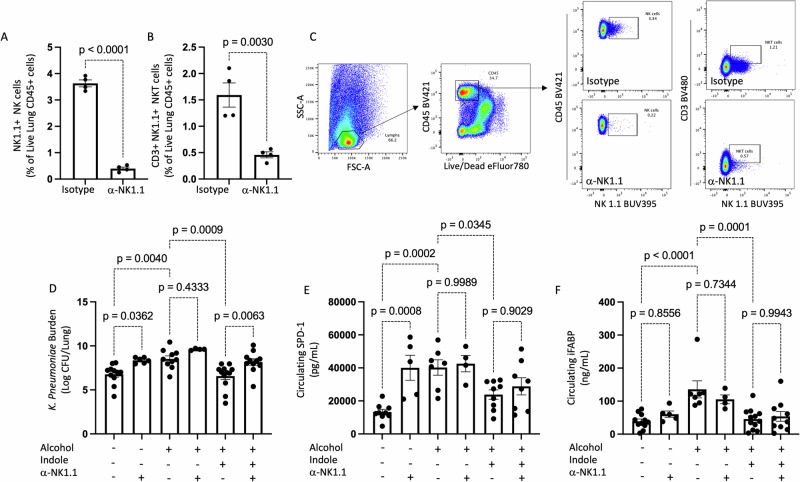
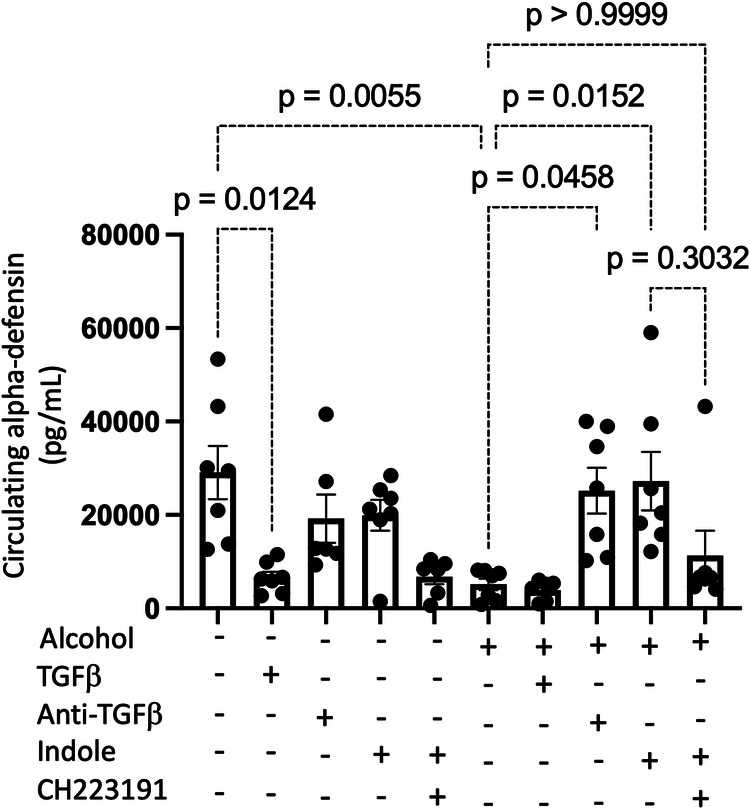
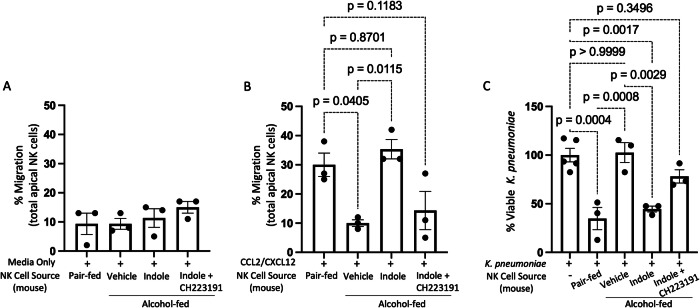
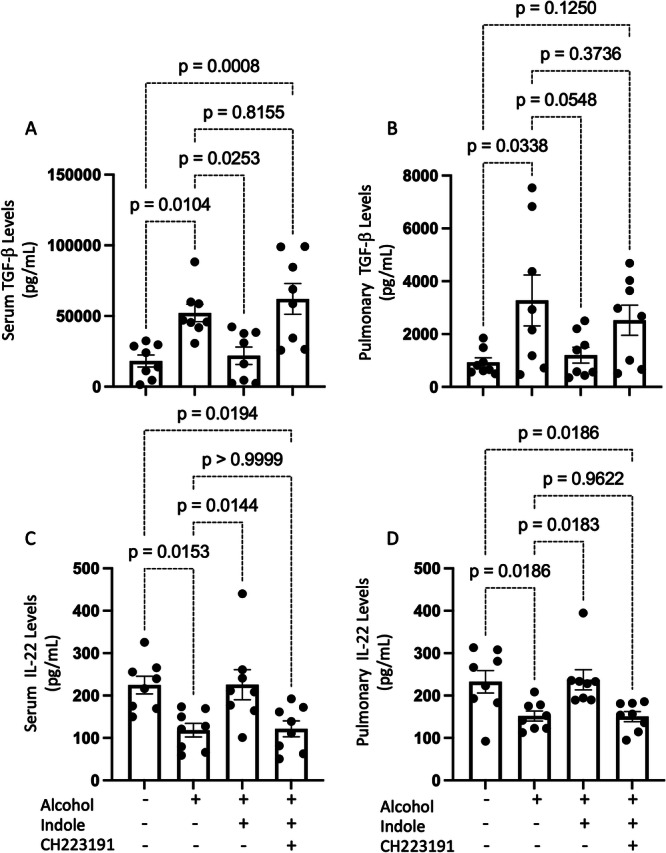
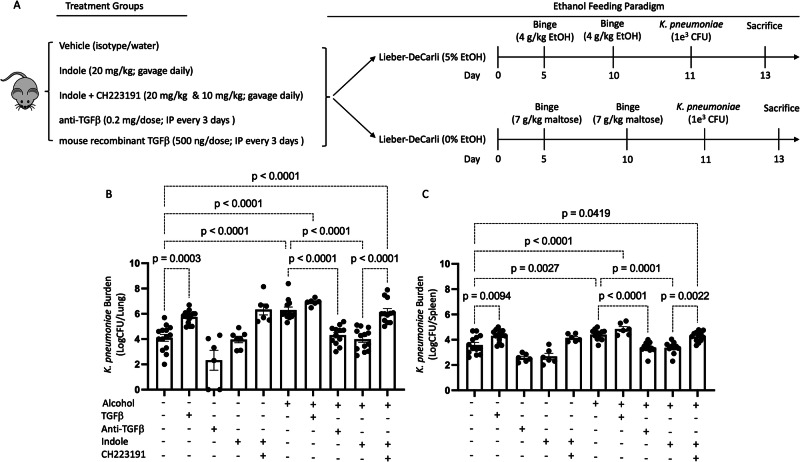
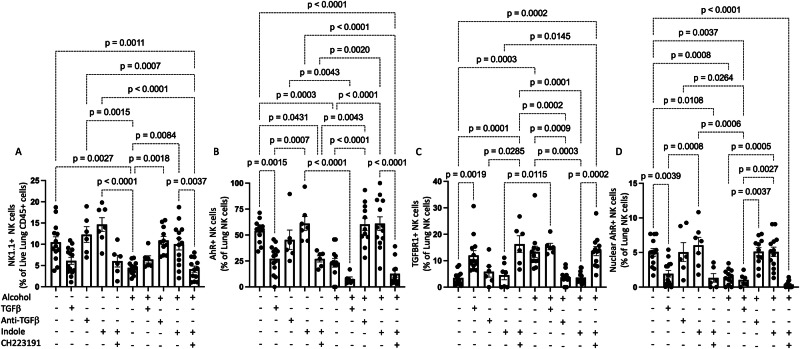
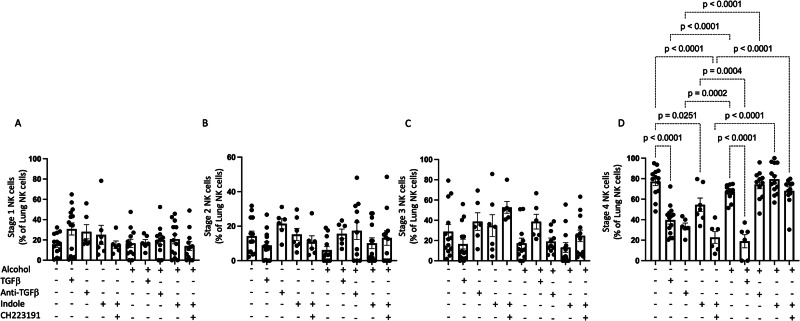
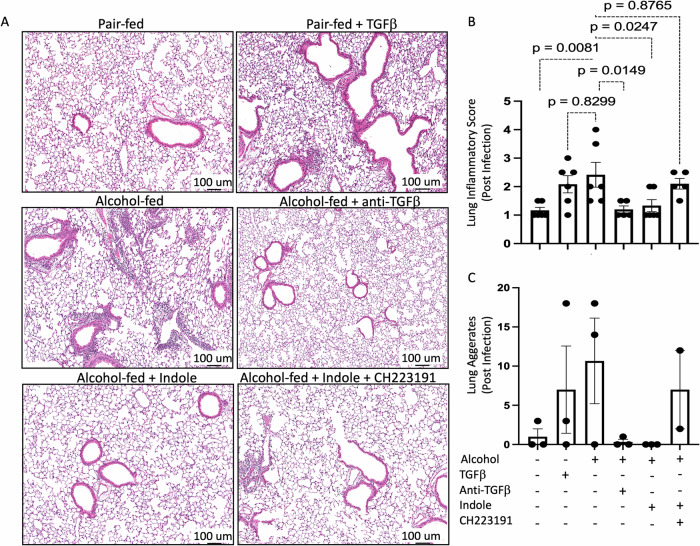
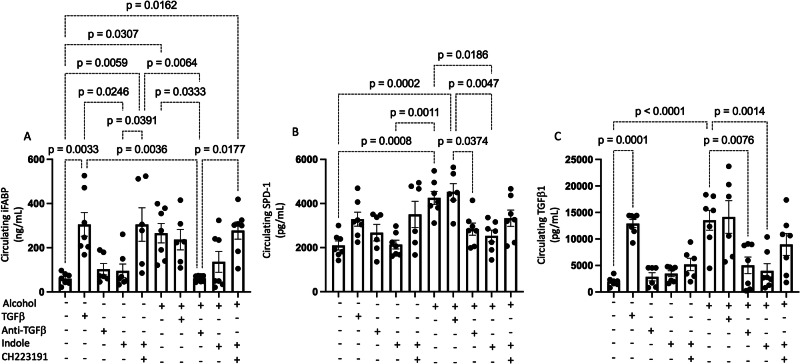
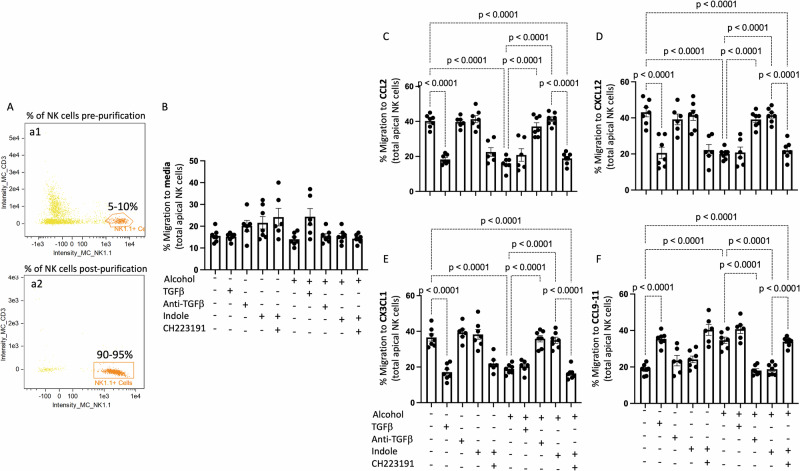
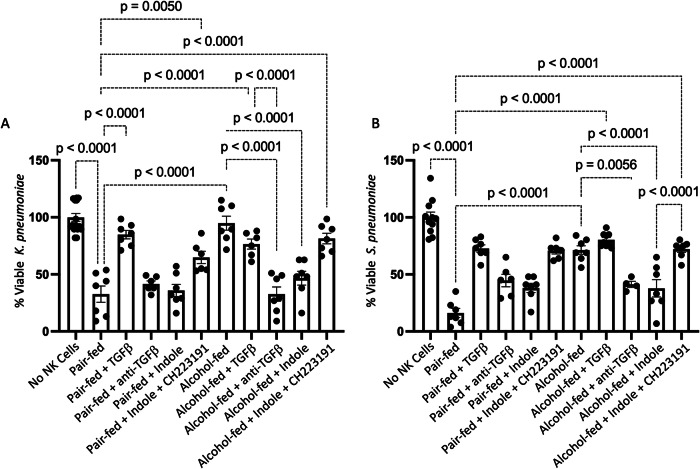
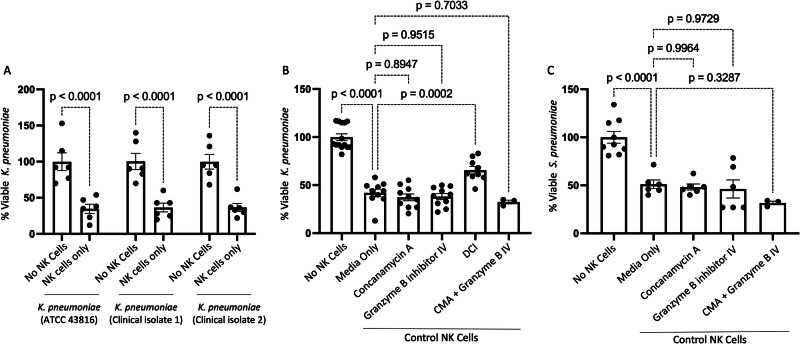
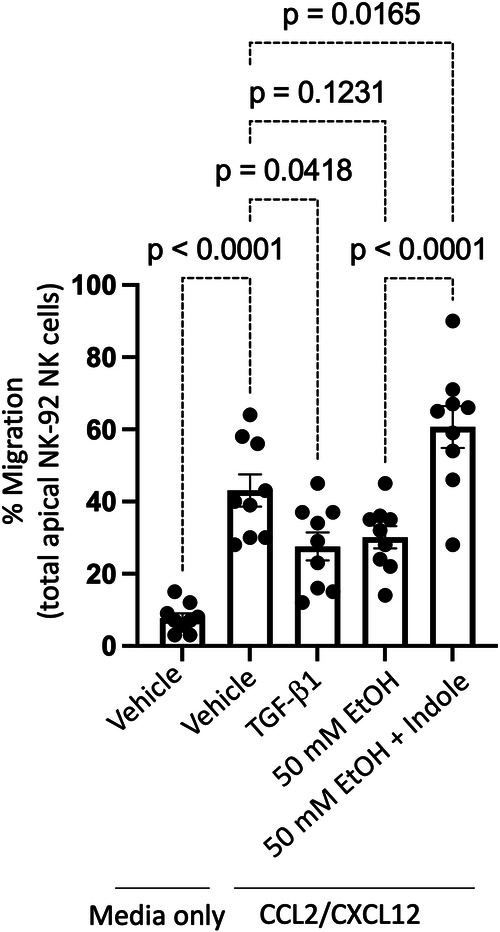
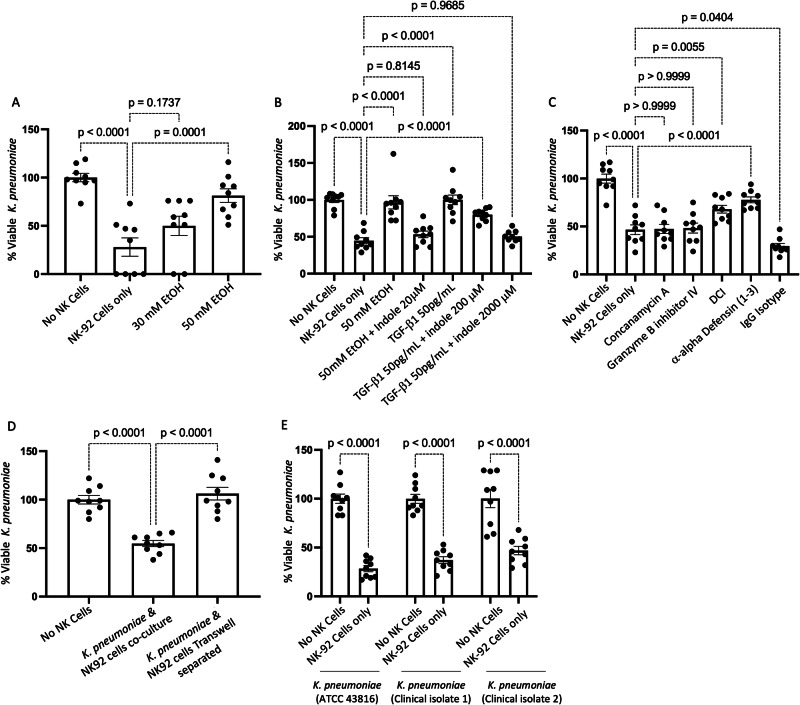
Alcohol use is an independent risk factor for the development of bacterial pneumonia due, in part, to impaired mucus-facilitated clearance, macrophage phagocytosis, and recruitment of neutrophils. Alcohol consumption is also known to reduce peripheral natural killer (NK) cell numbers and compromise NK cell cytolytic activity, especially NK cells with a mature phenotype. However, the role of innate lymphocytes, such as NK cells during host defense against alcohol-associated bacterial pneumonia is essentially unknown. We have previously shown that indole supplementation mitigates increases in pulmonary bacterial burden and improves pulmonary NK cell recruitment in alcohol-fed mice, which were dependent on aryl hydrocarbon receptor (AhR) signaling. Employing a binge-on-chronic alcohol-feeding model we sought to define the role and interaction of indole and NK cells during pulmonary host defense against alcohol-associated pneumonia. We demonstrate that alcohol dysregulates NK cell effector function and pulmonary recruitment via alterations in two key signaling pathways. We found that alcohol increases transforming growth factor beta (TGF-β) signaling while suppressing AhR signaling. We further demonstrated that NK cells isolated from alcohol-fed mice have a reduced ability to kill Klebsiella pneumoniae. NK cell migratory capacity to chemokines was also significantly altered by alcohol, as NK cells isolated from alcohol-fed mice exhibited preferential migration in response to CXCR3 chemokines but exhibited reduced migration in response to CCR2, CXCR4, and CX3CR1 chemokines. Together this data suggests that alcohol disrupts NK cell-specific TGF-β and AhR signaling pathways leading to decreased pulmonary recruitment and cytolytic activity thereby increasing susceptibility to alcohol-associated bacterial pneumonia.
酒精使用是细菌性肺炎发展的一个独立风险因素,部分原因是其损害了黏液促进的清除、巨噬细胞吞噬和中性粒细胞的募集。众所周知,酒精摄入还会减少外周自然杀伤 (NK) 细胞数量,并损害 NK 细胞的细胞溶解活性,尤其是具有成熟表型的 NK 细胞。然而,在宿主防御酒精相关细菌性肺炎方面,先天淋巴细胞(如 NK 细胞)的作用基本上是未知的。我们之前已经表明,吲哚补充可以减轻酒精喂养小鼠肺部细菌负荷的增加,并改善肺部 NK 细胞的募集,这依赖于芳香烃受体 (AhR) 信号。我们采用了 binge-on-chronic alcohol-feeding 模型,旨在定义吲哚和 NK 细胞在宿主防御酒精相关肺炎中的作用和相互作用。我们证明酒精通过改变两个关键信号通路来调节 NK 细胞的效应功能和肺部募集。我们发现酒精增加了转化生长因子-β (TGF-β) 信号,同时抑制了 AhR 信号。我们进一步证明,来自酒精喂养小鼠的 NK 细胞的杀伤肺炎克雷伯菌的能力降低。酒精还显著改变了 NK 细胞的迁移能力对趋化因子的反应,因为来自酒精喂养小鼠的 NK 细胞对 CXCR3 趋化因子表现出优先迁移,但对 CCR2、CXCR4 和 CX3CR1 趋化因子的迁移减少。综上所述,这些数据表明,酒精破坏了 NK 细胞特异性的 TGF-β 和 AhR 信号通路,导致肺部募集和细胞溶解活性降低,从而增加了对酒精相关细菌性肺炎的易感性。