Istituto di Analisi dei Sistemi ed Informatica "Antonio Ruberti" (IASI) - CNR , National Research Council, Via dei Taurini 19, Rome, 00185, Italy.
Department of Neuroscience, Università Cattolica del Sacro Cuore, Rome, 00168, Italy.
Stem Cell Res Ther. 2024 Sep 3;15(1):275. doi: 10.1186/s13287-024-03805-1.
Reduction of adult hippocampal neurogenesis is an early critical event in Alzheimer's disease (AD), contributing to progressive memory loss and cognitive decline. Reduced levels of the nucleoporin 153 (Nup153), a key epigenetic regulator of NSC stemness, characterize the neural stem cells isolated from a mouse model of AD (3×Tg) (AD-NSCs) and determine their altered plasticity and gene expression.
Nup153-regulated mechanisms contributing to NSC function were investigated: (1) in cultured NSCs isolated from AD and wild type (WT) mice by proteomics; (2) in vivo by lentiviral-mediated delivery of Nup153 or GFP in the hippocampus of AD and control mice analyzing neurogenesis and cognitive function; (3) in human iPSC-derived brain organoids obtained from AD patients and control subjects as a model of neurodevelopment.
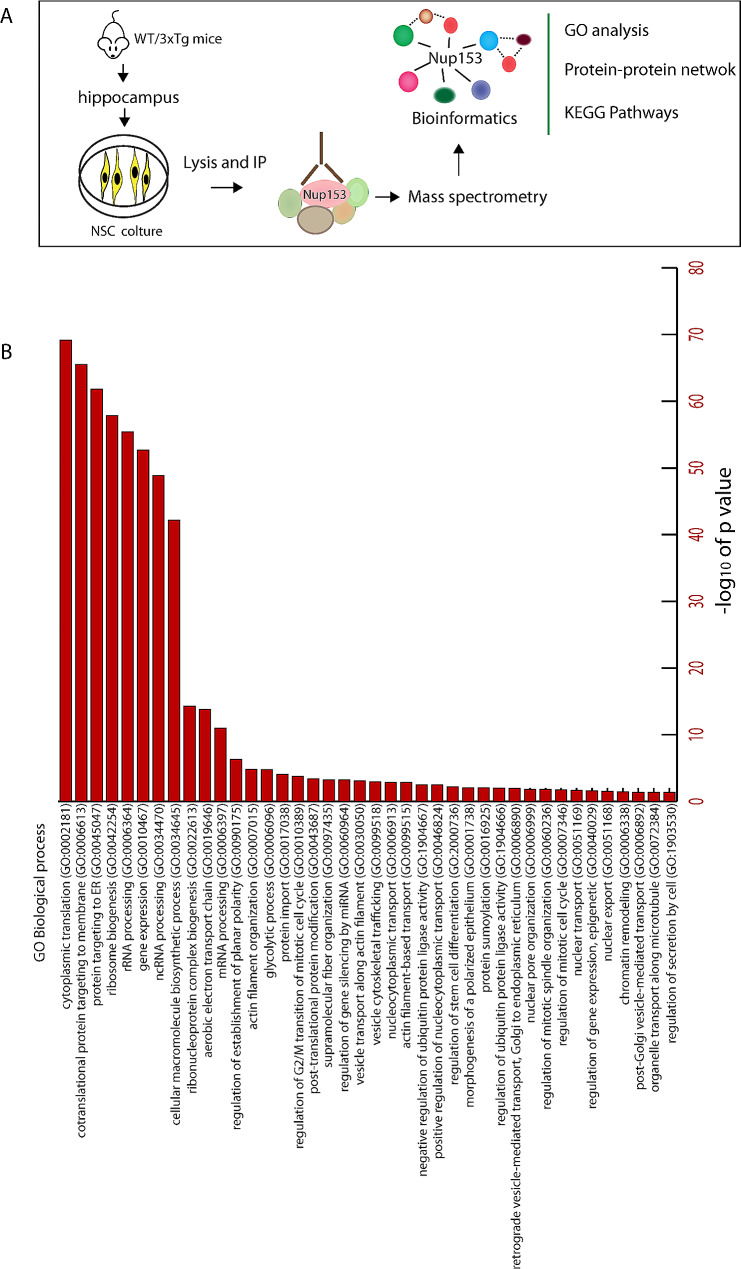
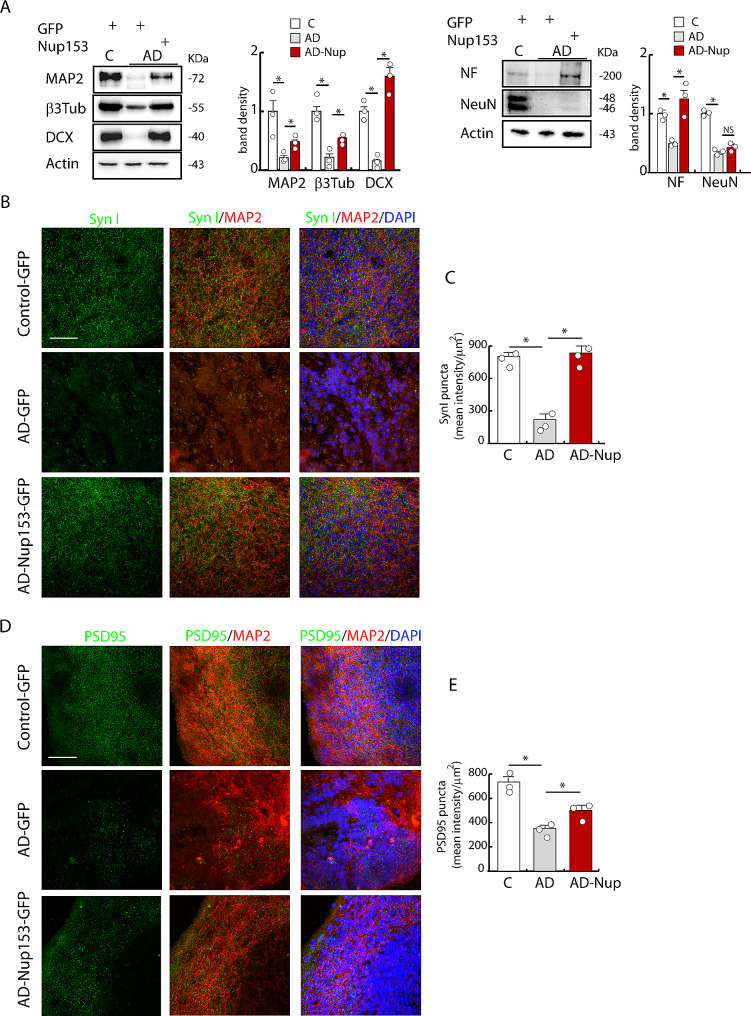
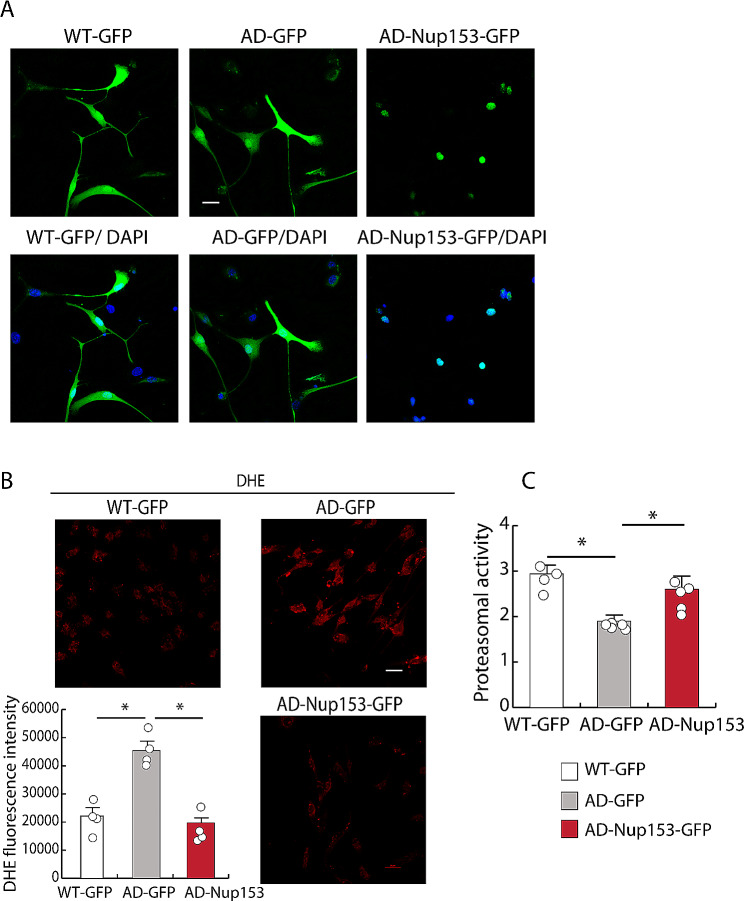
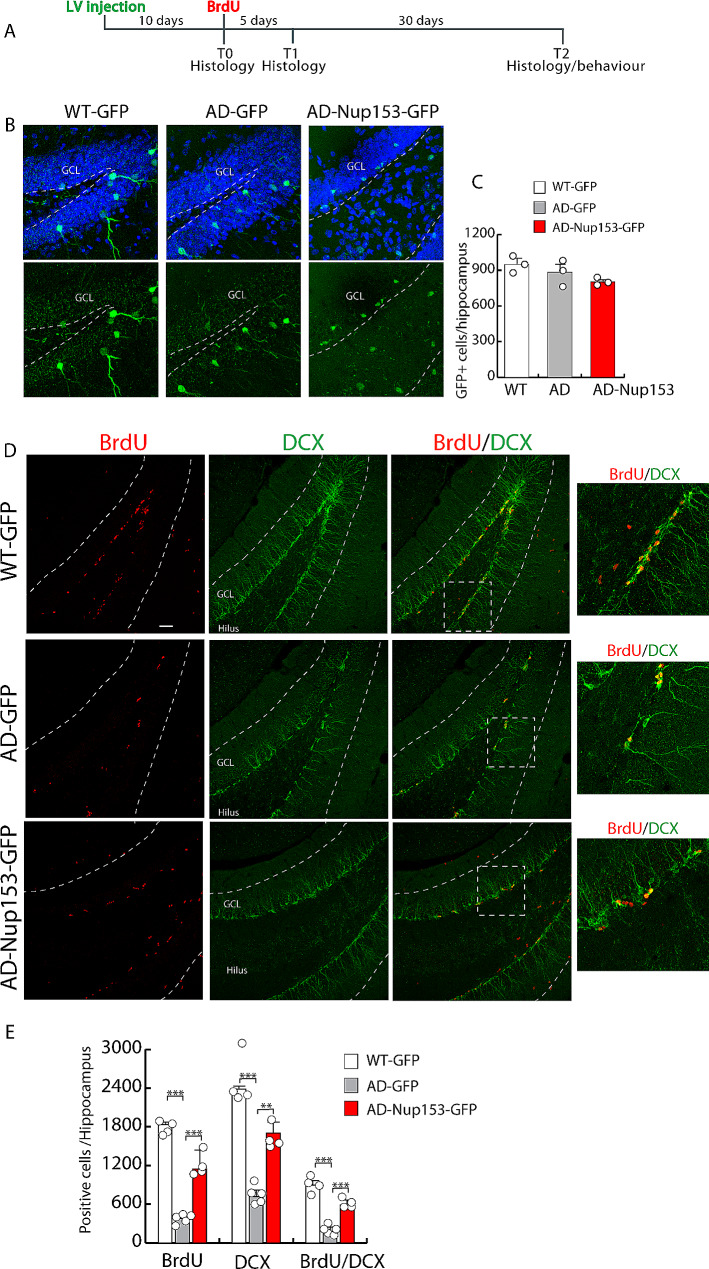
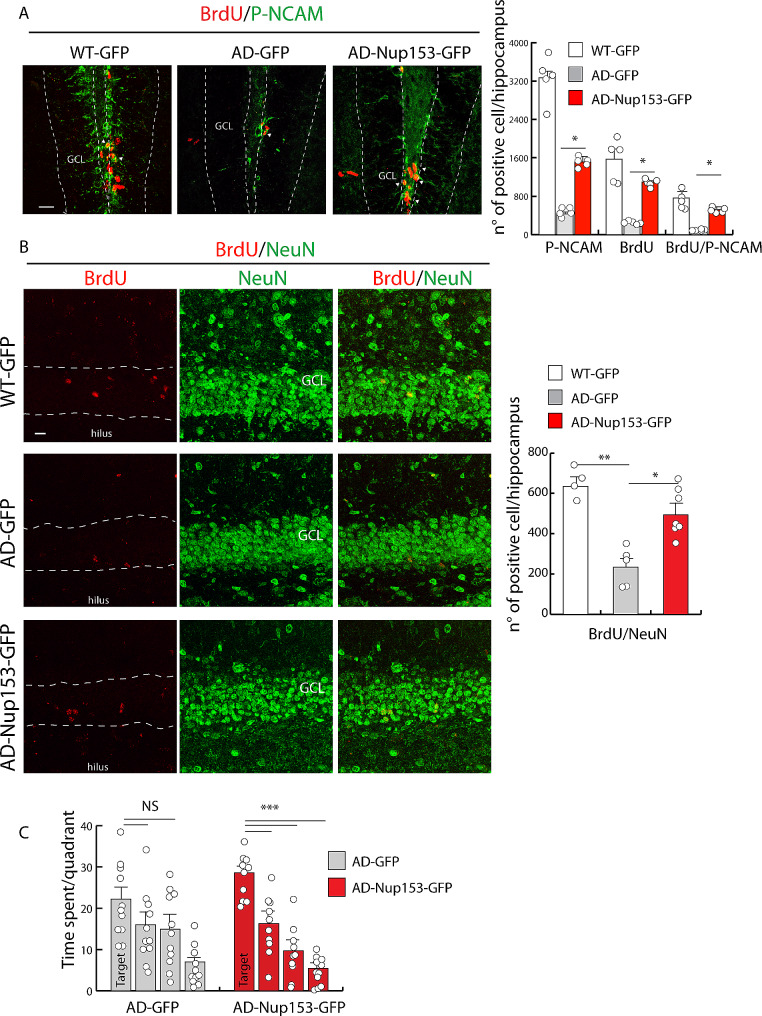
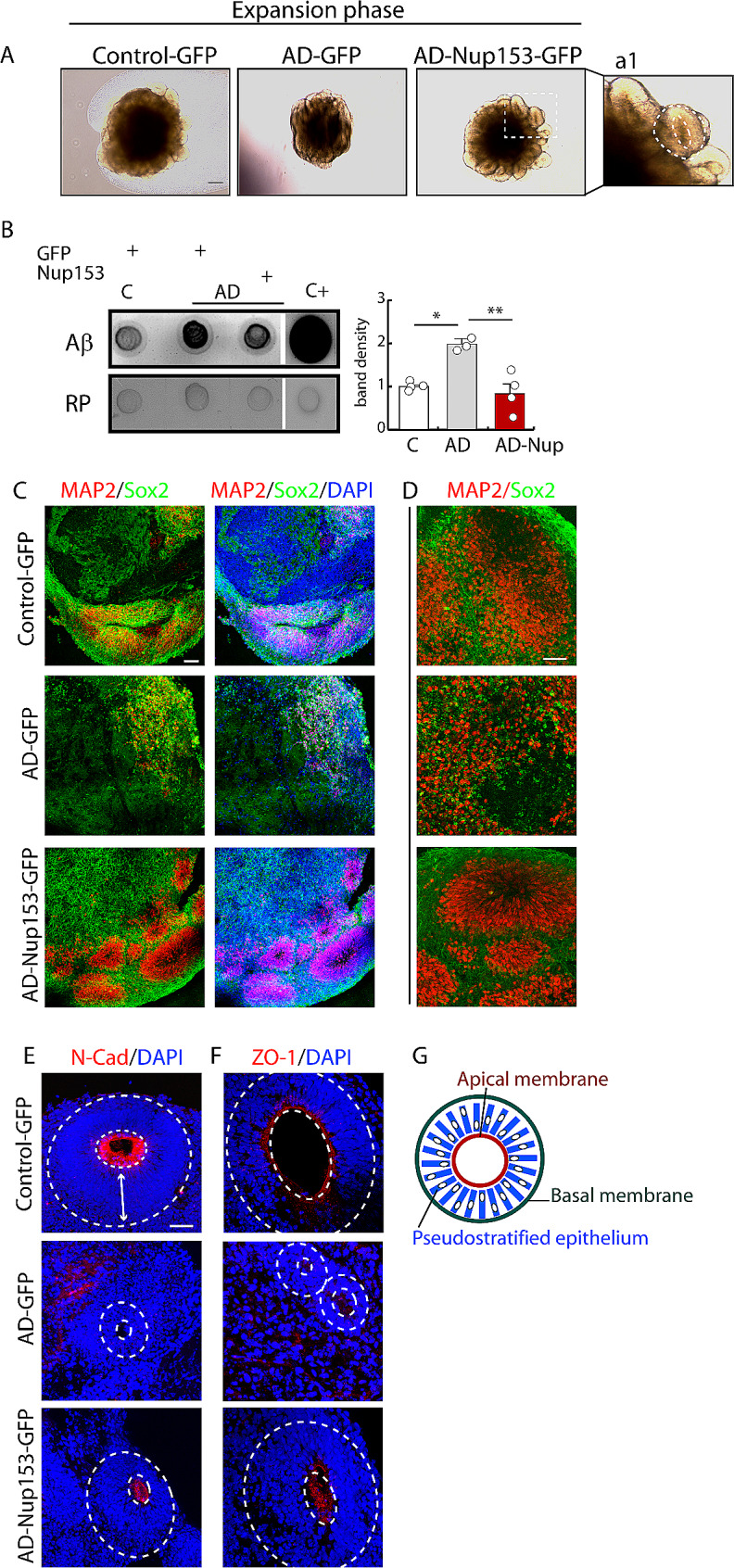
Proteomic approach identified Nup153 interactors in WT- and AD-NSCs potentially implicated in neurogenesis regulation. Gene ontology (GO) analysis showed that Nup153-bound proteins in WT-NSCs were involved in RNA metabolism, nuclear import and epigenetic mechanisms. Nup153-bound proteins in AD-NSCs were involved in pathways of neurodegeneration, mitochondrial dysfunction, proteasomal processing and RNA degradation. Furthermore, recovery of Nup153 levels in AD-NSCs reduced the levels of oxidative stress markers and recovered proteasomal activity. Lentiviral-mediated delivery of Nup153 in the hippocampal niche of AD mice increased the proliferation of early progenitors, marked by BrdU/DCX and BrdU/PSANCAM positivity and, later, the integration of differentiating neurons in the cell granule layer (BrdU/NeuN cells) compared with GFP-injected AD mice. Consistently, Nup153-injected AD mice showed an improvement of cognitive performance in comparison to AD-GFP mice at 1 month after virus delivery assessed by Morris Water Maze. To validate the role of Nup153 in neurogenesis we took advantage of brain organoids derived from AD-iPSCs characterized by fewer neuroepithelial progenitor loops and reduced differentiation areas. The upregulation of Nup153 in AD organoids recovered the formation of neural-like tubes and differentiation.
Our data suggest that the positive effect of Nup153 on neurogenesis is based on a complex regulatory network orchestrated by Nup153 and that this protein is a valuable disease target.
成年海马神经发生减少是阿尔茨海默病(AD)的早期关键事件,导致进行性记忆丧失和认知能力下降。核孔蛋白 153(Nup153)水平降低,这是神经干细胞干性的关键表观遗传调节剂,其特征在于从 AD(3xTg)小鼠模型中分离的神经干细胞(AD-NSCs),并决定其改变的可塑性和基因表达。
研究了 Nup153 调节的机制,这些机制有助于 NSC 功能:(1)通过蛋白质组学在 AD 和野生型(WT)小鼠分离的培养神经干细胞中;(2)通过慢病毒介导的 Nup153 或 GFP 在 AD 和对照小鼠的海马中的递送,分析神经发生和认知功能;(3)在 AD 患者和对照受试者的诱导多能干细胞衍生的脑类器官中,作为神经发育的模型。
蛋白质组学方法鉴定了 WT-和 AD-NSCs 中潜在参与神经发生调节的 Nup153 相互作用蛋白。基因本体(GO)分析显示,WT-NSCs 中 Nup153 结合的蛋白参与 RNA 代谢、核输入和表观遗传机制。AD-NSCs 中 Nup153 结合的蛋白参与神经退行性途径、线粒体功能障碍、蛋白酶体加工和 RNA 降解。此外,AD-NSCs 中 Nup153 水平的恢复降低了氧化应激标志物的水平并恢复了蛋白酶体活性。与 AD-GFP 小鼠相比,慢病毒介导的 Nup153 在 AD 小鼠海马巢中的递送增加了早期祖细胞的增殖,由 BrdU/DCX 和 BrdU/PSANCAM 阳性标记,并随后在颗粒层中整合分化神经元(BrdU/NeuN 细胞)。一致地,与 AD-GFP 小鼠相比,Nup153 注射的 AD 小鼠在病毒递送后 1 个月通过 Morris 水迷宫评估显示认知表现得到改善。为了验证 Nup153 在神经发生中的作用,我们利用源自 AD-iPSCs 的脑类器官,其特征在于神经上皮祖细胞环较少且分化区域减少。AD 类器官中 Nup153 的上调恢复了神经样管的形成和分化。
我们的数据表明,Nup153 对神经发生的积极影响基于由 Nup153 协调的复杂调控网络,并且该蛋白是有价值的疾病靶标。