Zhai Sophia R, Sarma Sridevi V, Gunnarsdottir Kristin, Crone Nathan E, Rouse Adam G, Cheng Jennifer J, Kinsman Michael J, Landazuri Patrick, Uysal Utku, Ulloa Carol M, Cameron Nathaniel, Inati Sara, Zaghloul Kareem A, Boerwinkle Varina L, Wyckoff Sarah, Barot Niravkumar, González-Martínez Jorge A, Kang Joon Y, Smith Rachel June
Department of Biomedical Engineering, Johns Hopkins University, Baltimore, MD, United States.
Institute for Computational Medicine, Johns Hopkins University, Baltimore, MD, United States.
Front Netw Physiol. 2024 Aug 20;4:1425625. doi: 10.3389/fnetp.2024.1425625. eCollection 2024.
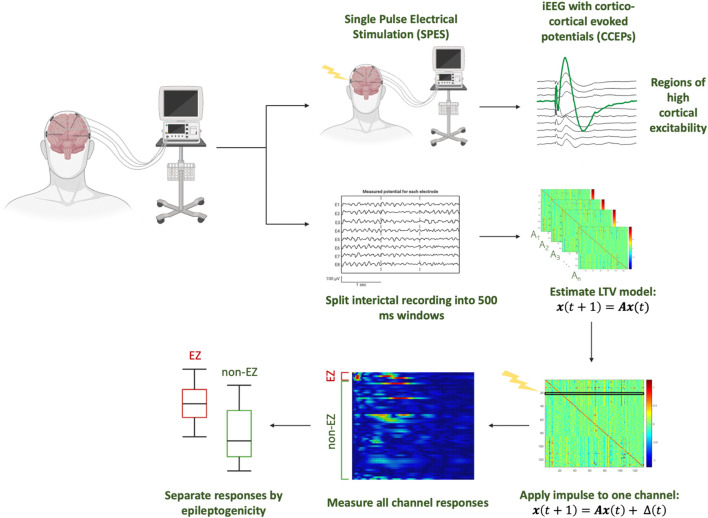
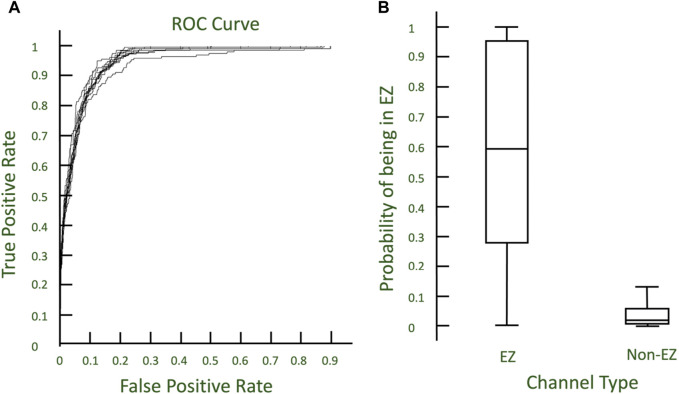
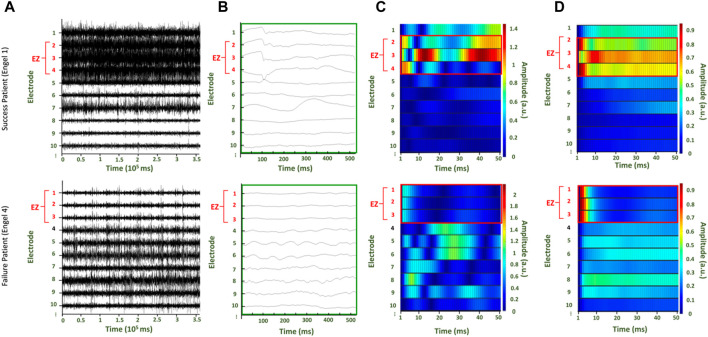
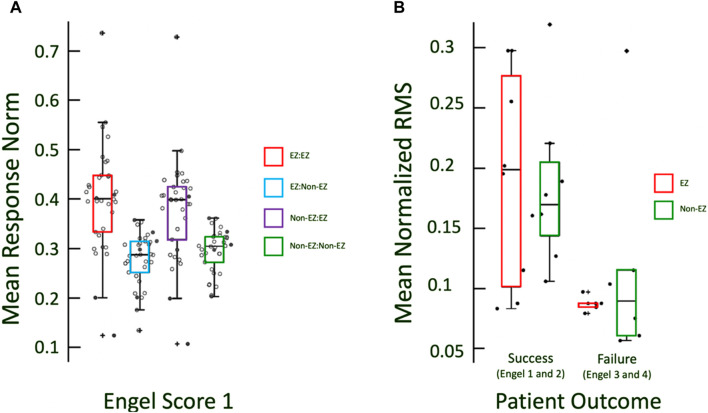
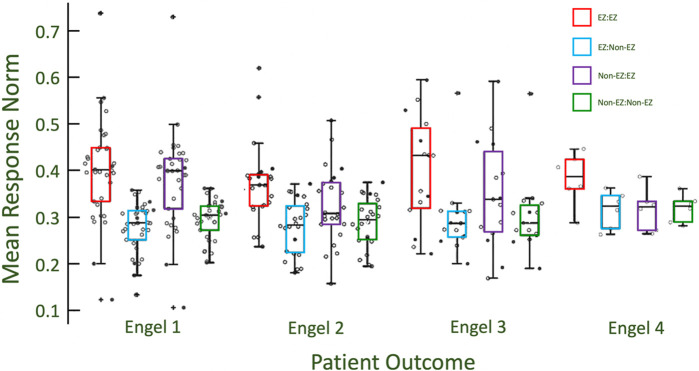
For patients with drug-resistant epilepsy, successful localization and surgical treatment of the epileptogenic zone (EZ) can bring seizure freedom. However, surgical success rates vary widely because there are currently no clinically validated biomarkers of the EZ. Highly epileptogenic regions often display increased levels of cortical excitability, which can be probed using single-pulse electrical stimulation (SPES), where brief pulses of electrical current are delivered to brain tissue. It has been shown that high-amplitude responses to SPES can localize EZ regions, indicating a decreased threshold of excitability. However, performing extensive SPES in the epilepsy monitoring unit (EMU) is time-consuming. Thus, we built patient-specific dynamical network models from interictal intracranial EEG (iEEG) to test whether virtual stimulation could reveal information about the underlying network to identify highly excitable brain regions similar to physical stimulation of the brain. We performed virtual stimulation in 69 patients that were evaluated at five centers and assessed for clinical outcome 1 year post surgery. We further investigated differences in observed SPES iEEG responses of 14 patients stratified by surgical outcome. Clinically-labeled EZ cortical regions exhibited higher excitability from virtual stimulation than non-EZ regions with most significant differences in successful patients and little difference in failure patients. These trends were also observed in responses to extensive SPES performed in the EMU. Finally, when excitability was used to predict whether a channel is in the EZ or not, the classifier achieved an accuracy of 91%. This study demonstrates how excitability determined via virtual stimulation can capture valuable information about the EZ from interictal intracranial EEG.
对于耐药性癫痫患者,成功定位并手术治疗致痫区(EZ)可实现无癫痫发作。然而,手术成功率差异很大,因为目前尚无经临床验证的EZ生物标志物。高度致痫区域通常表现出皮质兴奋性升高,可使用单脉冲电刺激(SPES)进行探测,即将短暂电流脉冲传递至脑组织。研究表明,对SPES的高幅反应可定位EZ区域,表明兴奋性阈值降低。然而,在癫痫监测单元(EMU)中进行广泛的SPES耗时较长。因此,我们根据发作间期颅内脑电图(iEEG)构建了患者特异性动态网络模型,以测试虚拟刺激是否能揭示潜在网络的信息,从而识别与大脑物理刺激类似的高度兴奋脑区。我们对在五个中心接受评估的69例患者进行了虚拟刺激,并在术后1年评估临床结果。我们进一步研究了14例根据手术结果分层的患者观察到的SPES iEEG反应差异。临床标记的EZ皮质区域在虚拟刺激下比非EZ区域表现出更高的兴奋性,成功患者差异最为显著,失败患者差异较小。在EMU中进行的广泛SPES反应中也观察到了这些趋势。最后,当使用兴奋性来预测一个通道是否在EZ中时,分类器的准确率达到了91%。这项研究证明了通过虚拟刺激确定的兴奋性如何从发作间期颅内脑电图中获取有关EZ的有价值信息。