Department of Oncology, University of Torino Medical School, Turin, Italy.
Candiolo Cancer Institute, FPO-IRCCS, Turin, Italy.
Cell Death Dis. 2024 Sep 4;15(9):647. doi: 10.1038/s41419-024-07037-2.
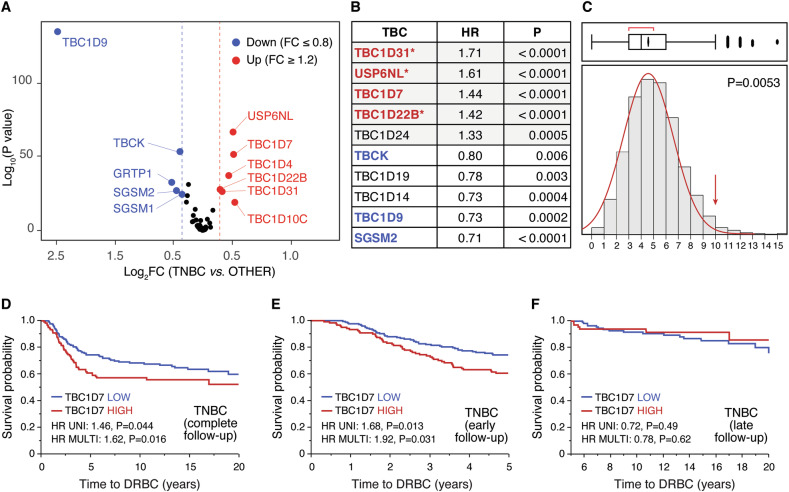
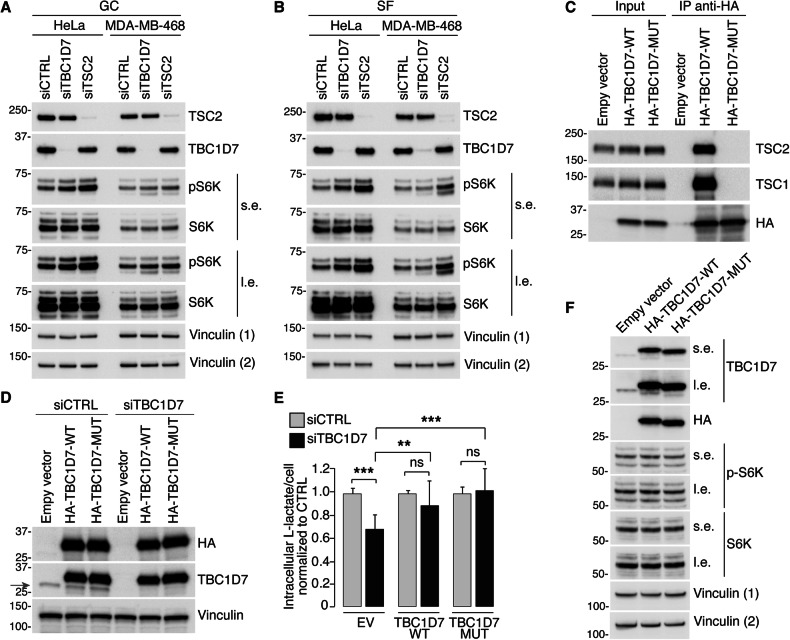
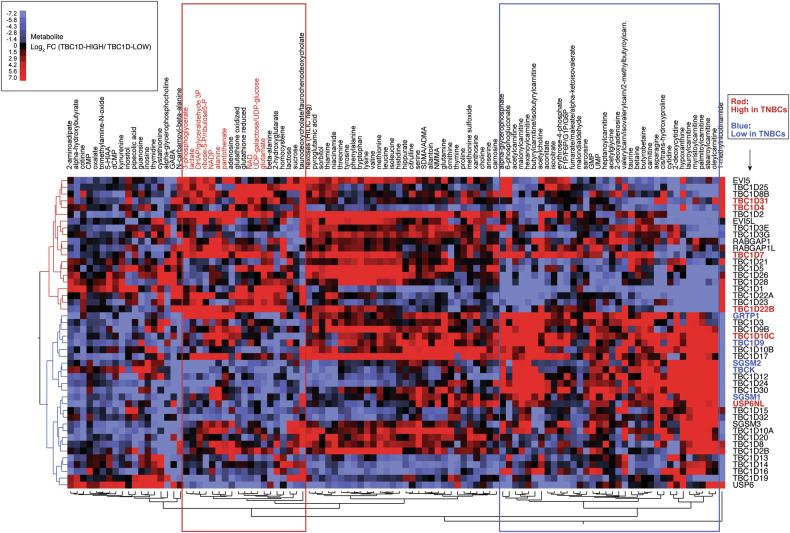
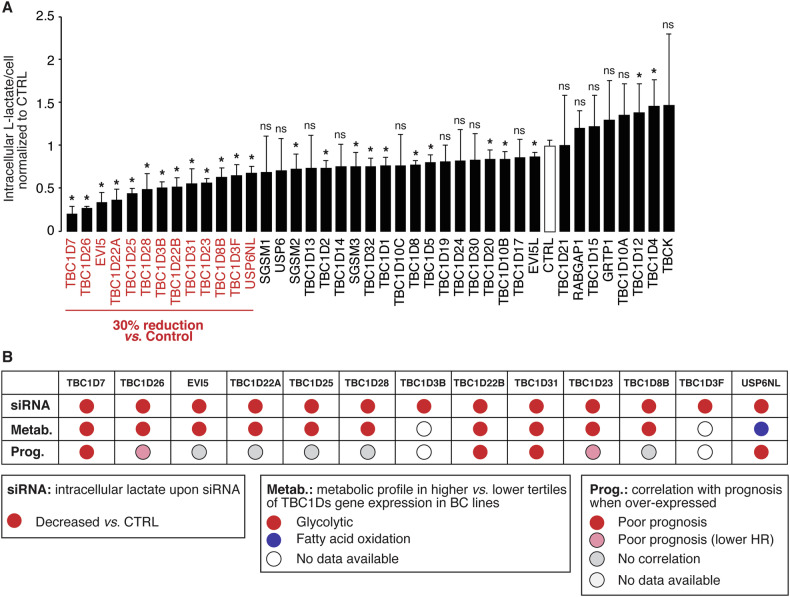
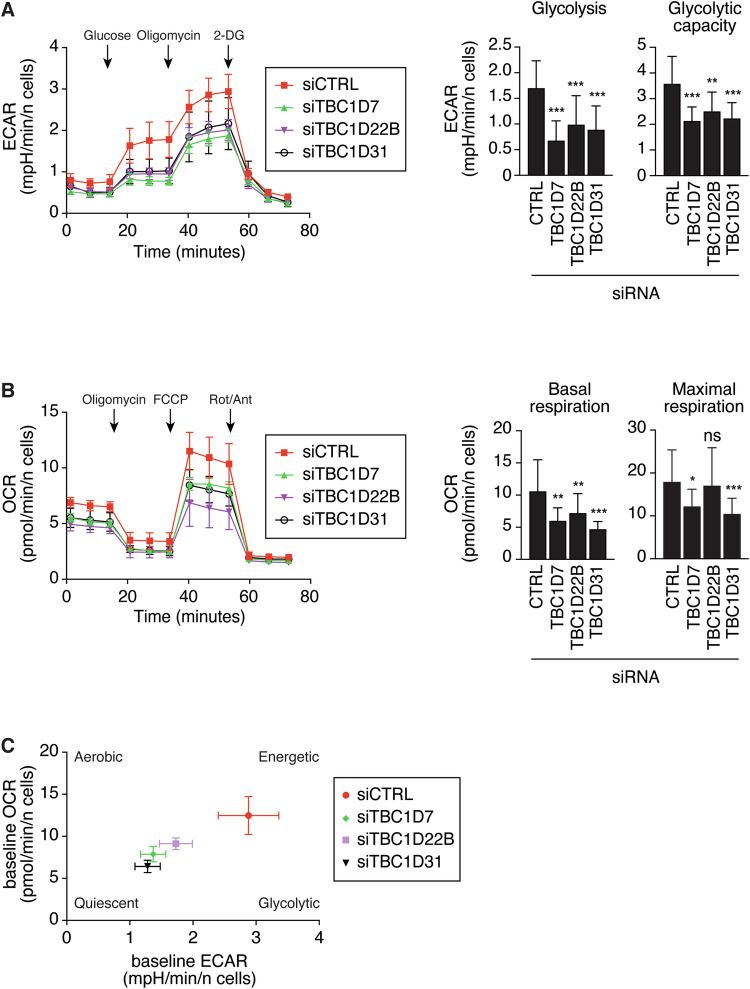
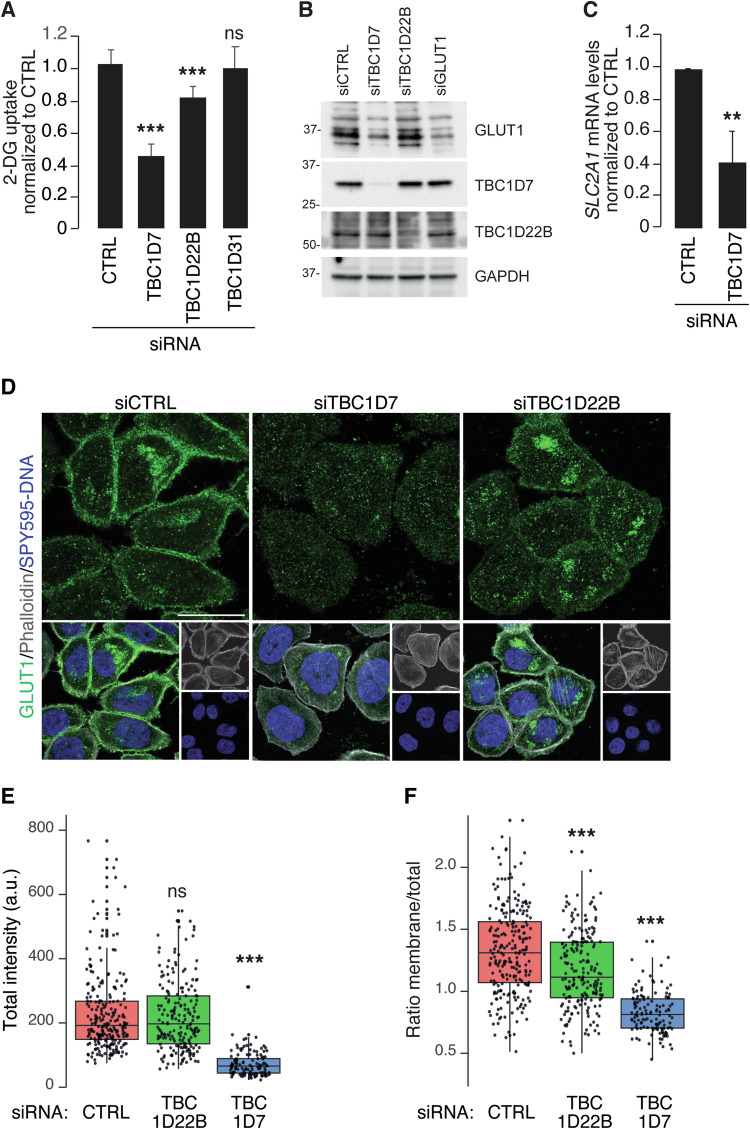
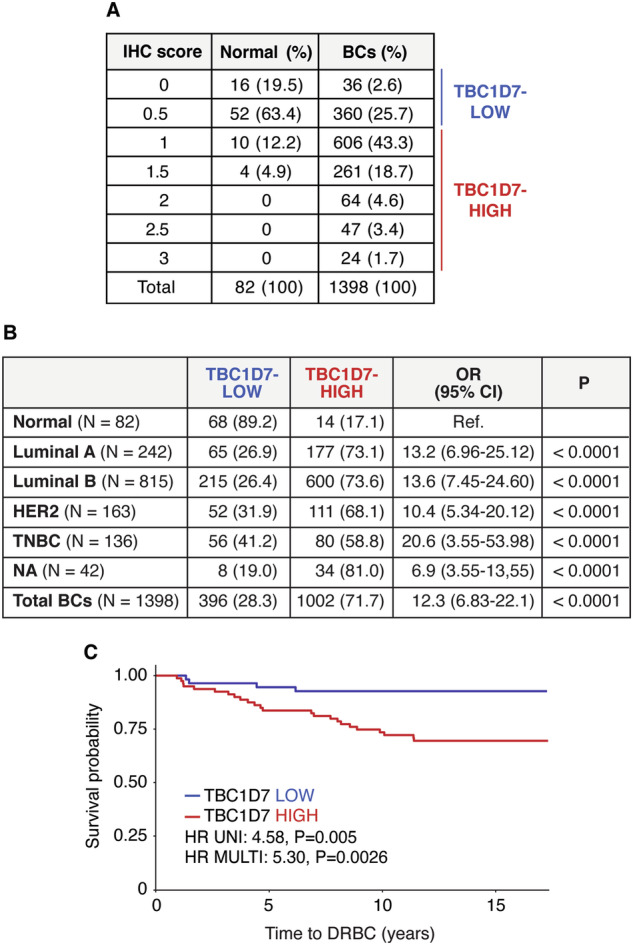
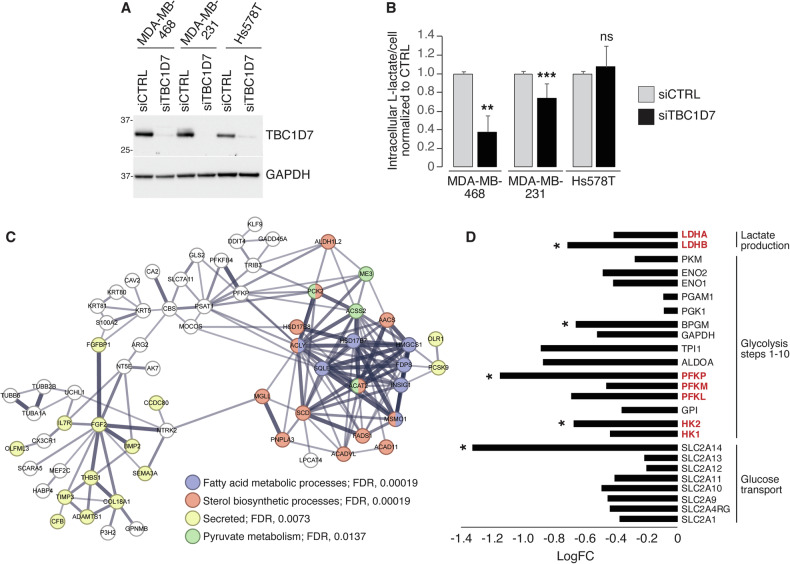
Metabolic plasticity is a hallmark of cancer, and metabolic alterations represent a promising therapeutic target. Since cellular metabolism is controlled by membrane traffic at multiple levels, we investigated the involvement of TBC1 domain-containing proteins (TBC1Ds) in the regulation of cancer metabolism. These proteins are characterized by the presence of a RAB-GAP domain, the TBC1 domain, and typically function as attenuators of RABs, the master switches of membrane traffic. However, a number of TBC1Ds harbor mutations in their catalytic residues, predicting biological functions different from direct regulation of RAB activities. Herein, we report that several genes encoding for TBC1Ds are expressed at higher levels in triple-negative breast cancers (TNBC) vs. other subtypes of breast cancers (BC), and predict prognosis. Orthogonal transcriptomics/metabolomics analysis revealed that the expression of prognostic TBC1Ds correlates with elevated glycolytic metabolism in BC cell lines. In-depth investigations of the three top hits from the previous analyses (TBC1D31, TBC1D22B and TBC1D7) revealed that their elevated expression is causal in determining a glycolytic phenotype in TNBC cell lines. We further showed that the impact of TBC1D7 on glycolytic metabolism of BC cells is independent of its known participation in the TSC1/TSC2 complex and consequent downregulation of mTORC1 activity. Since TBC1D7 behaves as an independent prognostic biomarker in TNBC, it could be used to distinguish good prognosis patients who could be spared aggressive therapy from those with a poor prognosis who might benefit from anti-glycolytic targeted therapies. Together, our results highlight how TBC1Ds connect disease aggressiveness with metabolic alterations in TNBC. Given the high level of heterogeneity among this BC subtype, TBC1Ds could represent important tools in predicting prognosis and guiding therapy decision-making.
代谢可塑性是癌症的一个标志,代谢改变代表了一个有前途的治疗靶点。由于细胞代谢在多个层面上受到膜转运的控制,我们研究了 TBC1 结构域包含蛋白(TBC1D)在调节癌症代谢中的作用。这些蛋白的特征是存在 RAB-GAP 结构域、TBC1 结构域,通常作为 RAB 的衰减因子发挥作用,RAB 是膜转运的主要开关。然而,许多 TBC1D 在其催化残基中存在突变,预示着与直接调节 RAB 活性不同的生物学功能。在此,我们报告称,在三阴性乳腺癌(TNBC)与其他类型的乳腺癌(BC)相比,编码 TBC1D 的几个基因表达水平更高,并预测预后。正交转录组学/代谢组学分析显示,预后 TBC1D 的表达与 BC 细胞系中糖酵解代谢的升高相关。对前分析中三个排名最高的基因(TBC1D31、TBC1D22B 和 TBC1D7)的深入研究表明,它们的高表达是决定 TNBC 细胞系糖酵解表型的原因。我们进一步表明,TBC1D7 对 BC 细胞糖酵解代谢的影响与其在 TSC1/TSC2 复合物中的已知参与和 mTORC1 活性的下调无关。由于 TBC1D7 在 TNBC 中是一个独立的预后生物标志物,它可以用于区分预后良好的患者,这些患者可以免受激进治疗的影响,而那些预后不良的患者可能受益于抗糖酵解靶向治疗。总之,我们的研究结果强调了 TBC1D 在 TNBC 中如何将疾病侵袭性与代谢改变联系起来。鉴于这种 BC 亚型的高度异质性,TBC1D 可能是预测预后和指导治疗决策的重要工具。