Department of Neurology and Neurosurgery, Montreal Neurological Institute, McGill, University, Montreal, Quebec, Canada.
J Biol Chem. 2024 Oct;300(10):107742. doi: 10.1016/j.jbc.2024.107742. Epub 2024 Sep 2.
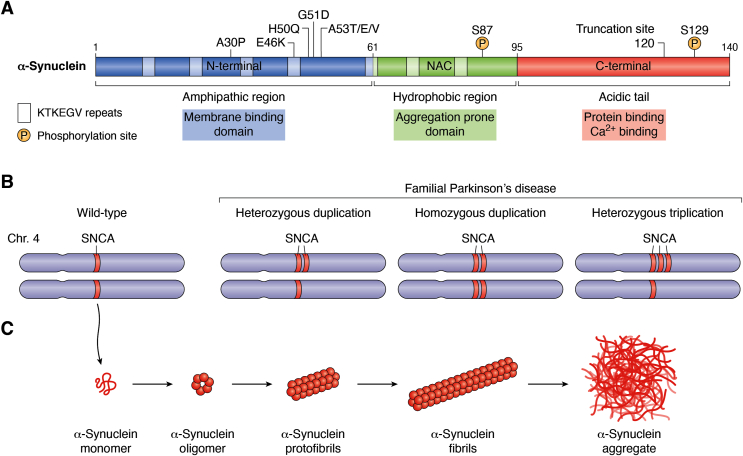
Research into the pathophysiology of Parkinson's disease (PD) is a fast-paced pursuit, with new findings about PD and other synucleinopathies being made each year. The involvement of various lysosomal proteins, such as TFEB, TMEM175, GBA, and LAMP1/2, marks the rising awareness about the importance of lysosomes in PD and other neurodegenerative disorders. This, along with recent developments regarding the involvement of microglia and the immune system in neurodegenerative diseases, has brought about a new era in neurodegeneration: the role of proinflammatory cytokines on the nervous system, and their downstream effects on mitochondria, lysosomal degradation, and autophagy. More effort is needed to understand the interplay between neuroimmunology and disease mechanisms, as many of the mechanisms remain enigmatic. α-synuclein, a key protein in PD and the main component of Lewy bodies, sits at the nexus between lysosomal degradation, autophagy, cellular stress, neuroimmunology, PD pathophysiology, and disease progression. This review revisits some fundamental knowledge about PD while capturing some of the latest trends in PD research, specifically as it relates to α-synuclein.
帕金森病(PD)的病理生理学研究是一个快速发展的领域,每年都有关于 PD 和其他突触核蛋白病的新发现。各种溶酶体蛋白的参与,如 TFEB、TMEM175、GBA 和 LAMP1/2,标志着人们越来越意识到溶酶体在 PD 和其他神经退行性疾病中的重要性。此外,最近关于小胶质细胞和免疫系统在神经退行性疾病中的作用的研究进展,带来了神经退行性疾病的新时代:促炎细胞因子对神经系统的作用,以及它们对线粒体、溶酶体降解和自噬的下游影响。需要进一步努力了解神经免疫和疾病机制之间的相互作用,因为许多机制仍然是个谜。α-突触核蛋白是 PD 的关键蛋白,也是路易体的主要成分,它位于溶酶体降解、自噬、细胞应激、神经免疫、PD 病理生理学和疾病进展之间的交汇点。这篇综述回顾了一些关于 PD 的基本知识,同时捕捉到了 PD 研究的一些最新趋势,特别是与 α-突触核蛋白有关的趋势。