School of Psychology, University of Leeds, Leeds, UK.
Faculty of Psychology, Universitas Muhammadiyah Surakarta, Surakarta City, Central Java, Indonesia.
Gerontologist. 2024 Nov 1;64(11). doi: 10.1093/geront/gnae128.
Physical capability, social support, loneliness, depression, and anxiety predict life satisfaction in older adults. Currently, no systematic review and meta-analysis have been conducted to investigate the strength of these associations globally. Therefore, this study quantified the strength of these associations.
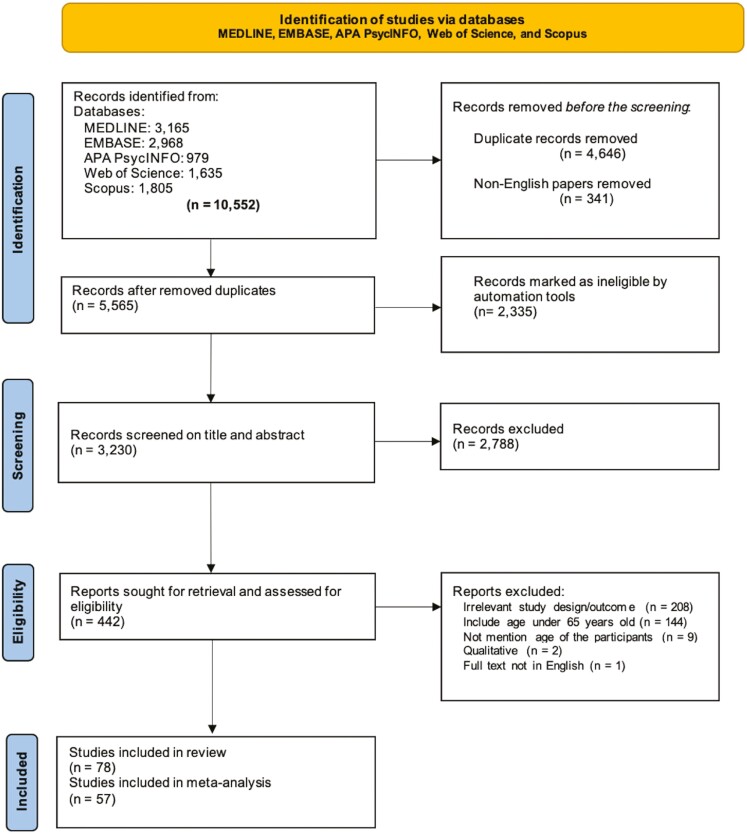
A systematic literature search was conducted using MEDLINE, EMBASE, APA PsycINFO, Web of Science, and Scopus. We included observational studies assessing the association between physical capability, social support, loneliness, depression, and anxiety with life satisfaction in adults aged 65+.
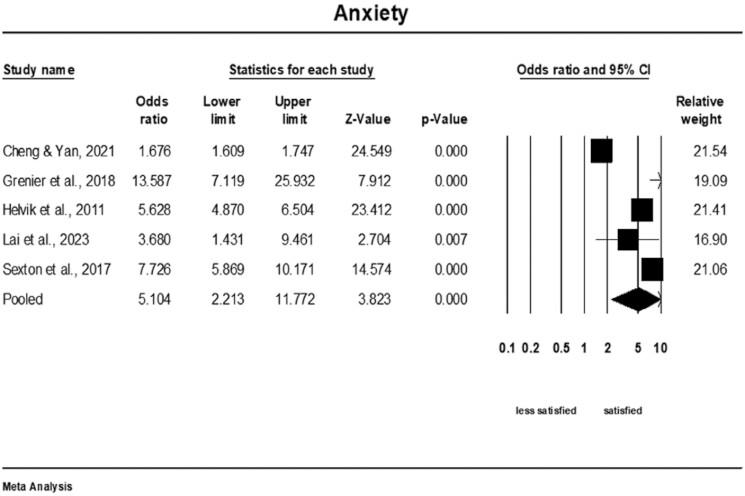
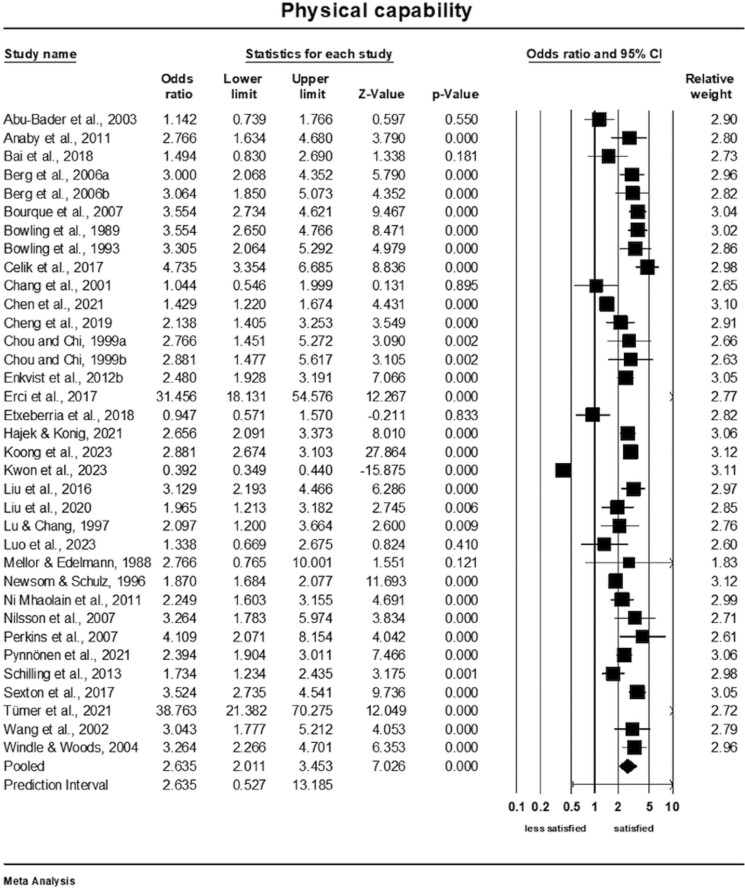
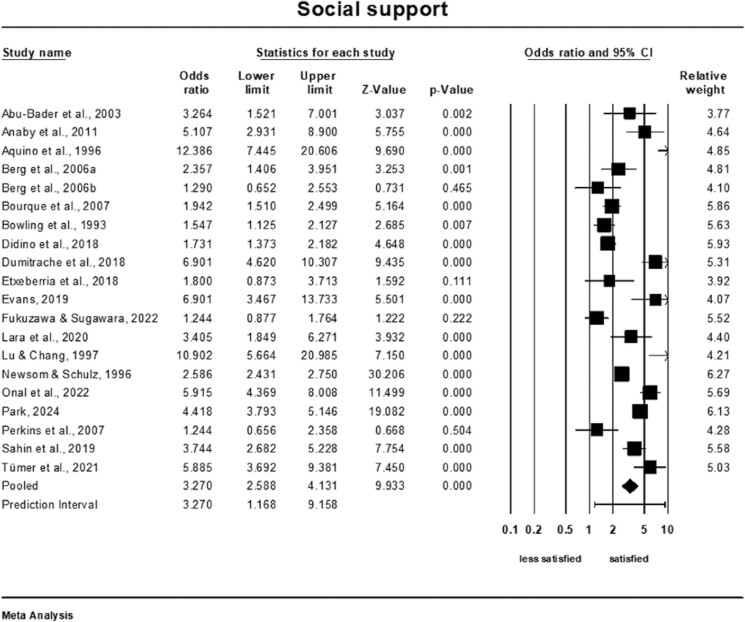
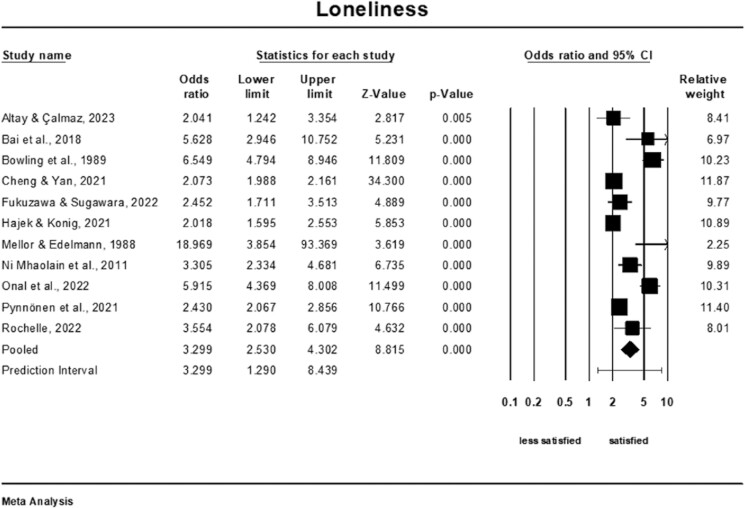
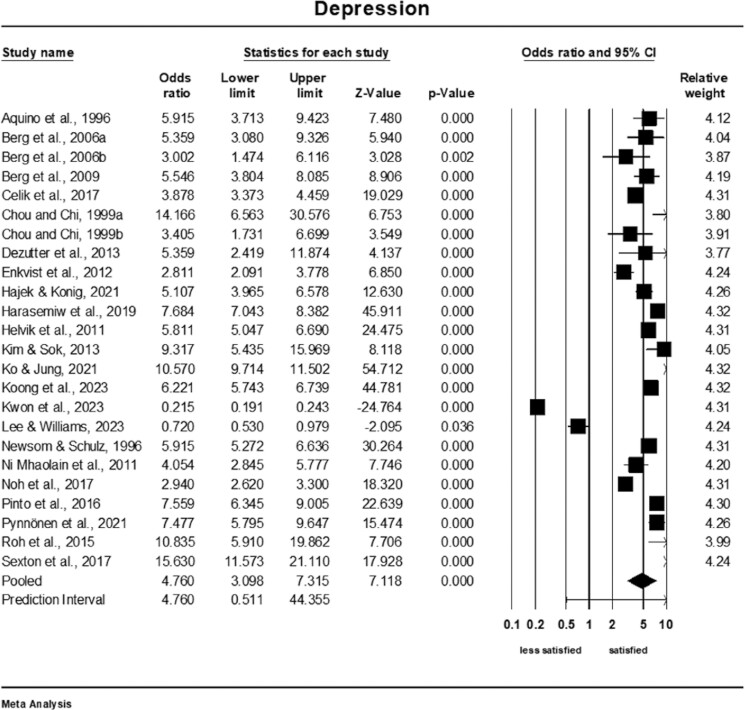
In total, 10,552 articles were identified, of which 78 studies in 164,478 participants were included in the systematic review and 57 were included in the meta-analysis. Greater life satisfaction was significantly associated with greater physical capabilities (odds ratio [OR] = 2.64; 95% confidence interval [CI]: 2.01-3.45; p < .001, k = 35, n = 33,732), higher social support (OR = 3.27; 95% CI: 2.59-4.13, k = 20 studies, n = 13,228), reduced loneliness (OR = 3.30; 95% CI: 2.53-4.30, k = 11, n = 33,638), depression (OR = 4.76; 95% CI: 3.10-7.32, k = 24, n = 64,097), and anxiety (OR = 5.10; 95% CI: 2.21-11.78, k = 5, n = 43,368). The strength of associations did not vary between Western and Eastern countries, year of publication, or quality. Gender was a moderator: Loneliness was more strongly associated with life satisfaction in females. Age was also a moderator; the association between social support and life satisfaction weakened with increasing age.
Improving the physical capabilities of older individuals, fostering social support, and alleviating feelings of loneliness, depression, and anxiety may help build life satisfaction in older individuals, which policy-makers and healthcare professionals should prioritize when implementing strategies.
身体能力、社会支持、孤独感、抑郁和焦虑会预测老年人的生活满意度。目前,尚无系统的综述和荟萃分析来全面研究这些关联的强度。因此,本研究对这些关联的强度进行了量化。
使用 MEDLINE、EMBASE、APA PsycINFO、Web of Science 和 Scopus 进行系统文献检索。我们纳入了评估 65 岁及以上成年人身体能力、社会支持、孤独感、抑郁和焦虑与生活满意度之间关联的观察性研究。
共确定了 10552 篇文章,其中 78 项研究纳入了 164478 名参与者进行系统综述,57 项研究纳入了荟萃分析。更高的生活满意度与更高的身体能力(比值比 [OR] = 2.64;95%置信区间 [CI]:2.01-3.45;p <.001,k = 35,n = 33732)、更高的社会支持(OR = 3.27;95%CI:2.59-4.13,k = 20 项研究,n = 13228)、更低的孤独感(OR = 3.30;95%CI:2.53-4.30,k = 11,n = 33638)、抑郁(OR = 4.76;95%CI:3.10-7.32,k = 24,n = 64097)和焦虑(OR = 5.10;95%CI:2.21-11.78,k = 5,n = 43368)显著相关。关联的强度在西方国家和东方国家、发表年份或质量之间没有差异。性别是一个调节因素:孤独感与女性的生活满意度相关性更强。年龄也是一个调节因素;随着年龄的增长,社会支持与生活满意度之间的关联减弱。
提高老年人的身体能力、促进社会支持以及缓解孤独感、抑郁和焦虑感,可能有助于提高老年人的生活满意度,政策制定者和医疗保健专业人员在实施策略时应将其作为优先事项。