Institute of Biotechnology (IBT), Vietnam Academy of Science and Technology (VAST), Hanoi, Vietnam.
Graduate University of Science and Technology (GUST), VAST, Hanoi, Vietnam.
Microb Biotechnol. 2024 Sep;17(9):e70007. doi: 10.1111/1751-7915.70007.
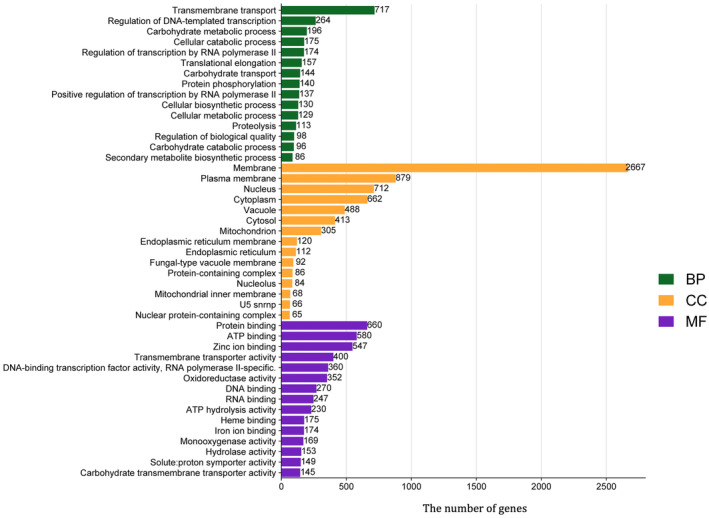
Previous studies have reported the functional role, biochemical features and synthesis pathway of podophyllotoxin (PTOX) in plants. In this study, we employed combined morphological and molecular techniques to identify an endophytic fungus and extract PTOX derivatives. Based on the analysis of ITS sequences and the phylogenetic tree, the isolate was classified as Penicillium herquei HGN12.1C, with a sequence identity of 98.58%. Morphologically, the HGN12.1C strain exhibits white colonies, short-branched mycelia and densely packed hyphae. Using PacBio sequencing at an average read depth of 195×, we obtained a high-quality genome for the HGN12.1C strain, which is 34.9 Mb in size, containing eight chromosomes, one mitochondrial genome and a GC content of 46.5%. Genome analysis revealed 10 genes potentially involved in PTOX biosynthesis. These genes include VdtD, Pinoresinollariciresinol reductase (PLR), Secoisolariciresinol dehydrogenase (SDH), CYP719A23, CYP71BE54, O-methyltransferase 1 (OMT1), O-methyltransferase 3 (OMT3), 2-ODD, CYP71CU and CYP82D61. Notably, the VdtD gene in fungi shares functional similarities with the DIR gene found in plants. Additionally, we identified peltatin, a PTOX derivative, in the HGN12.1C extract. Docking analysis suggests a potential role for the 2-ODD enzyme in converting yatein to deoxypodophyllotoxin. These findings offer invaluable insights into the synthesis mechanism of PTOX in fungi, shedding light on the relationship between host plants and endophytes.
先前的研究已经报道了鬼臼毒素(PTOX)在植物中的功能作用、生化特征和合成途径。在本研究中,我们采用了形态学和分子技术相结合的方法来鉴定一种内生真菌并提取 PTOX 衍生物。根据 ITS 序列分析和系统发育树,该分离物被分类为 Penicillium herquei HGN12.1C,其序列同一性为 98.58%。形态上,HGN12.1C 菌株表现出白色菌落、短分支的菌丝和密集的菌丝。使用 PacBio 测序,平均读深度为 195×,我们获得了 HGN12.1C 菌株的高质量基因组,大小为 34.9 Mb,包含八个染色体、一个线粒体基因组和 46.5%的 GC 含量。基因组分析显示了 10 个可能参与 PTOX 生物合成的基因。这些基因包括 VdtD、松柏脂素-橄榄脂素还原酶(PLR)、丁香脂素脱氢酶(SDH)、CYP719A23、CYP71BE54、O-甲基转移酶 1(OMT1)、O-甲基转移酶 3(OMT3)、2-ODD、CYP71CU 和 CYP82D61。值得注意的是,真菌中的 VdtD 基因与植物中的 DIR 基因具有功能相似性。此外,我们在 HGN12.1C 提取物中鉴定出了鬼臼毒素的衍生物 peltatin。对接分析表明,2-ODD 酶在将 yatein 转化为脱氧鬼臼毒素方面可能发挥作用。这些发现为真菌中 PTOX 的合成机制提供了宝贵的见解,并揭示了宿主植物和内生真菌之间的关系。