The Affiliated Cancer Hospital of Zhengzhou University and Henan Cancer Hospital, Zhengzhou 450008, China.
Henan Provincial Chest Hospital, Zhengzhou University, Zhengzhou 450000, China.
Aging (Albany NY). 2024 May 30;16(11):9498-9517. doi: 10.18632/aging.205880.
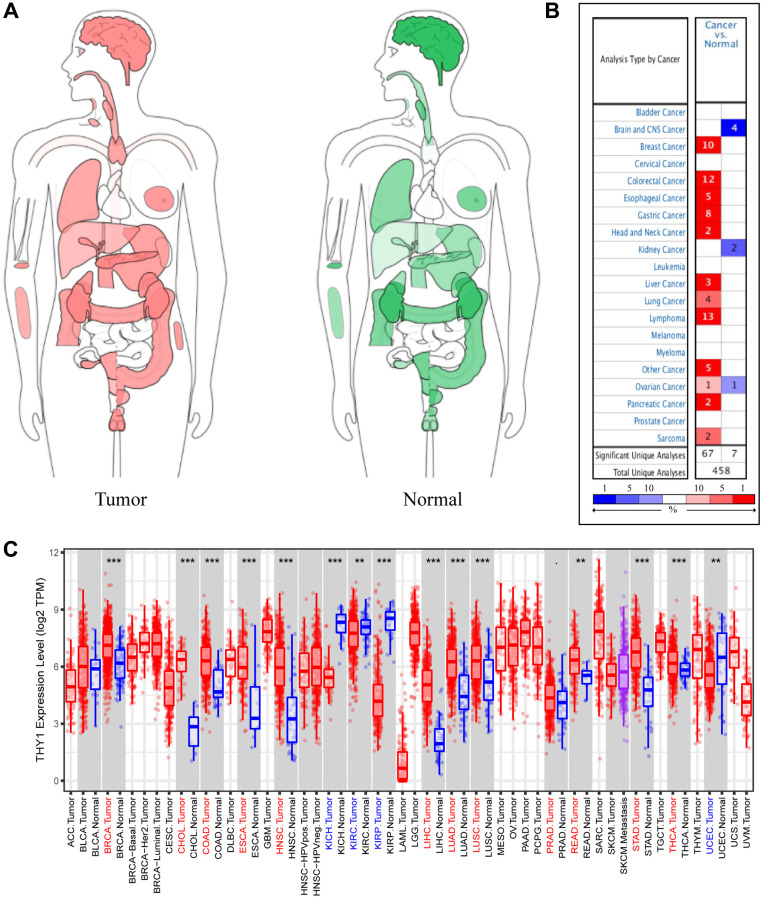
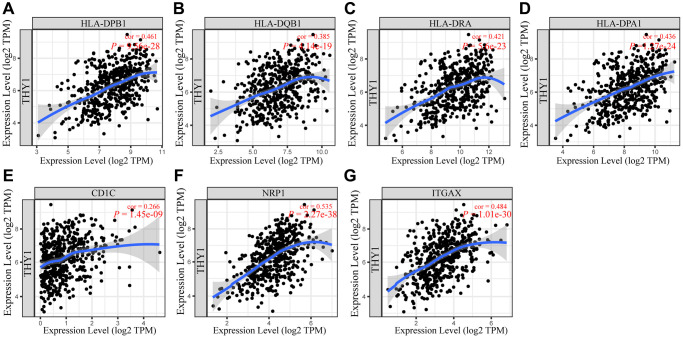
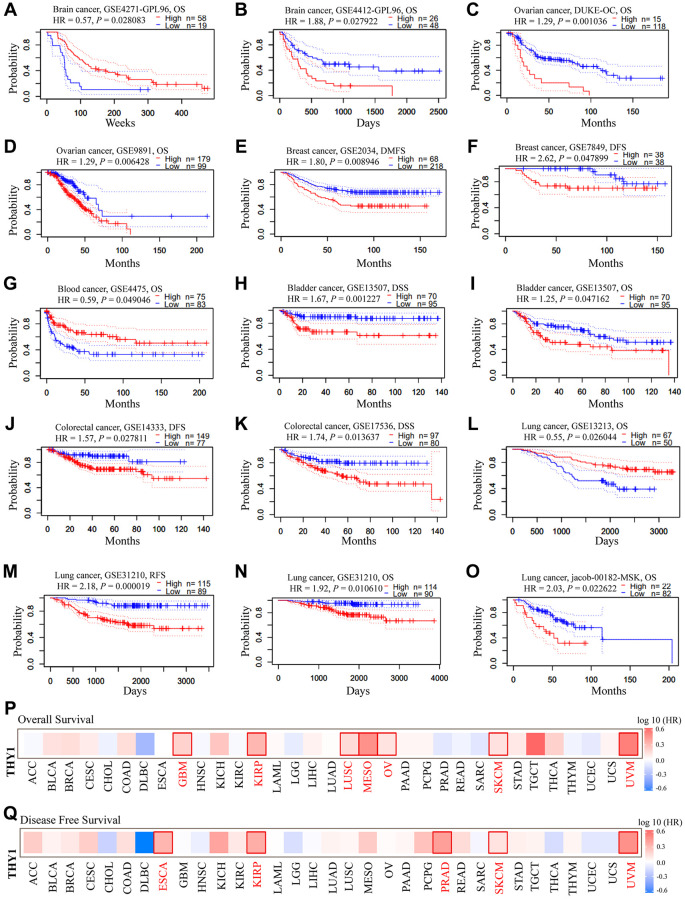
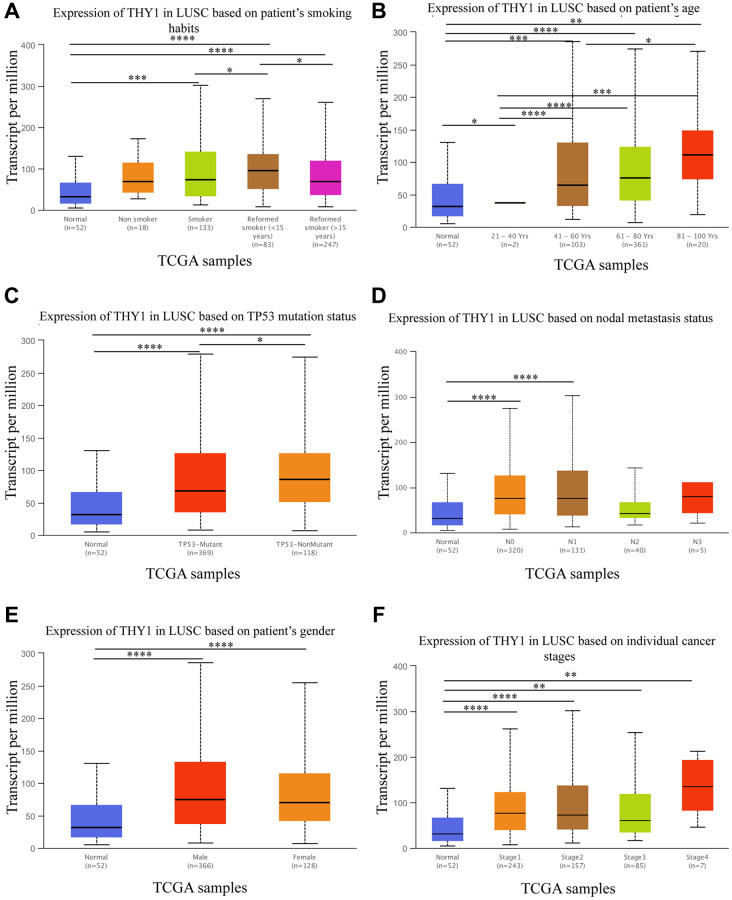
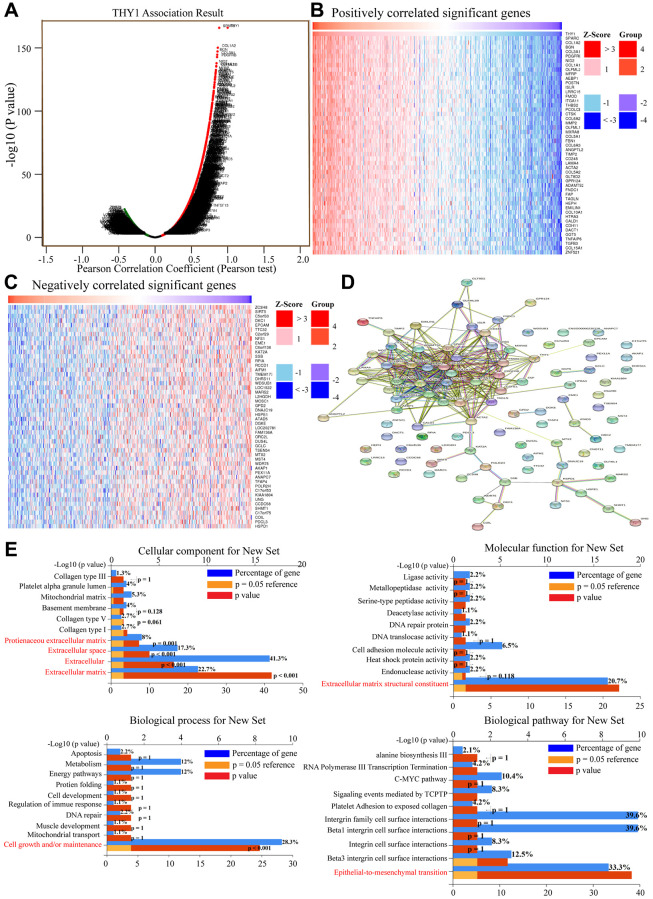
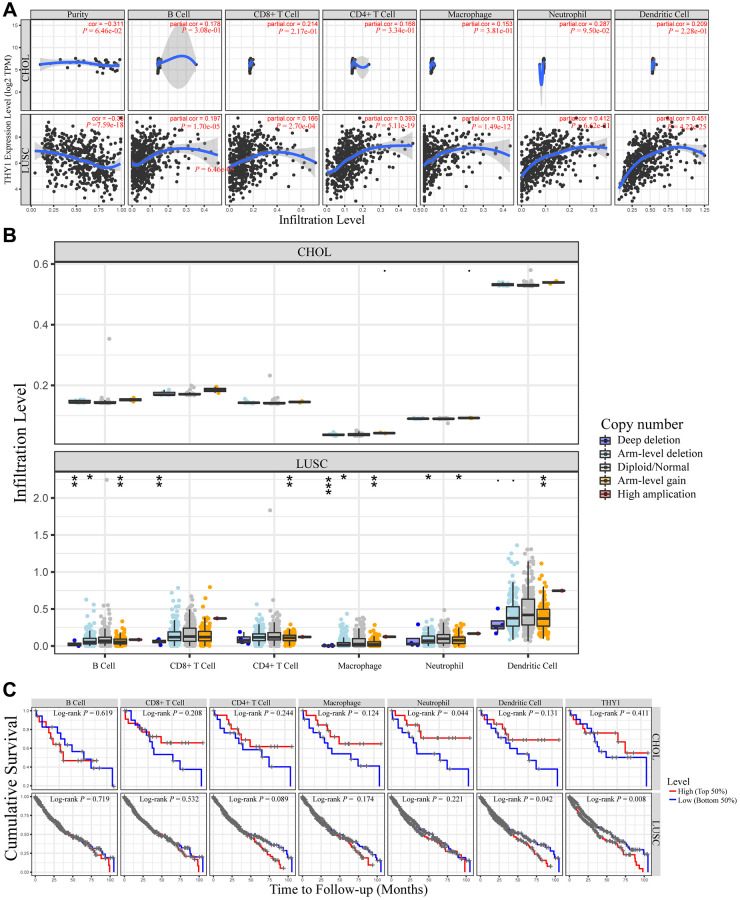
Thymus cell antigen 1 () has been proven to play pivotal roles in many diseases. However, we do not fully understand its functional mechanism, especially in lung squamous cell carcinoma (LUSC). Here, we aimed to perform a comprehensive analysis to explore the expression and prognostic values of in LUSC using bioinformatic technology. Some online public databases (e.g., ONCOMINE, PrognoScan, TIMER, Kaplan-Meier plotter, STRING, LinkedOmics, and GEPIA) were used to explore the expression, prognostic significance, and potential molecular mechanism of . The analysis indicated that was significantly up-regulated and closely correlated with poor prognosis in many malignant tumors, including LUSC. Further analysis revealed that over-expression of was significantly correlated with clinicopathological parameters (e.g., individual cancer stage, age, smoking habits, nodal metastasis status, and mutation status) in LUSC. The CpG islands methylation of was negatively correlated with mRNA expression in The Cancer Genome Atlas Program (TCGA). Further enrichment analysis of correlated genes revealed that they were mainly correlated with the formation of extracellular matrix (ECM), and got involved in the pathway of epithelial mesenchymal transition (EMT). Furthermore, differentially expressed was significantly correlated with immune cell infiltrations and poor prognosis in LUSC. In summary, bioinformatic analysis demonstrated that was significantly over-expressed and closely correlated with unfavorable prognosis in LUSC, which may apply as a promising diagnostic and therapeutic biomarker for LUSC in the future.
胸腺细胞抗原 1 () 已被证明在许多疾病中发挥关键作用。然而,我们并不完全了解其功能机制,特别是在肺鳞状细胞癌 (LUSC) 中。在这里,我们旨在使用生物信息学技术对 LUSC 中 进行全面分析,以探索其表达和预后价值。使用一些在线公共数据库(例如 ONCOMINE、PrognoScan、TIMER、Kaplan-Meier plotter、STRING、LinkedOmics 和 GEPIA)来探讨 的表达、预后意义和潜在的分子机制。分析表明,在许多恶性肿瘤中,包括 LUSC, 显著上调且与不良预后密切相关。进一步分析表明,在 LUSC 中, 的高表达与临床病理参数(例如个体癌症分期、年龄、吸烟习惯、淋巴结转移状态和 突变状态)显著相关。在癌症基因组图谱计划 (TCGA) 中, 的 CpG 岛甲基化与 mRNA 表达呈负相关。与 相关基因的进一步富集分析表明,它们主要与细胞外基质 (ECM) 的形成相关,并参与上皮间质转化 (EMT) 途径。此外,差异表达的 与 LUSC 中的免疫细胞浸润和不良预后显著相关。总之,生物信息学分析表明, 在 LUSC 中显著过表达且与不良预后密切相关,这可能成为未来 LUSC 有前途的诊断和治疗生物标志物。