Department of Psychiatry, Case Western Reserve University School of Medicine, Cleveland, OH, USA; Brain Health Medicines Center, Harrington Discovery Institute, University Hospitals Cleveland Medical Center, Cleveland, OH, USA; Geriatric Psychiatry, GRECC, Louis Stokes VA Medical Center, Cleveland, OH, USA; Institute for Transformative Molecular Medicine, School of Medicine, Case Western Reserve University School of Medicine, Cleveland, OH, USA; Department of Neurosciences, Case Western Reserve University School of Medicine, Cleveland, OH, USA.
Department of Psychiatry, Case Western Reserve University School of Medicine, Cleveland, OH, USA; Brain Health Medicines Center, Harrington Discovery Institute, University Hospitals Cleveland Medical Center, Cleveland, OH, USA; Geriatric Psychiatry, GRECC, Louis Stokes VA Medical Center, Cleveland, OH, USA; Institute for Transformative Molecular Medicine, School of Medicine, Case Western Reserve University School of Medicine, Cleveland, OH, USA; Department of Pathology, Case Western Reserve University School of Medicine, Cleveland, OH, USA.
Cell Rep Med. 2024 Sep 17;5(9):101715. doi: 10.1016/j.xcrm.2024.101715. Epub 2024 Sep 5.
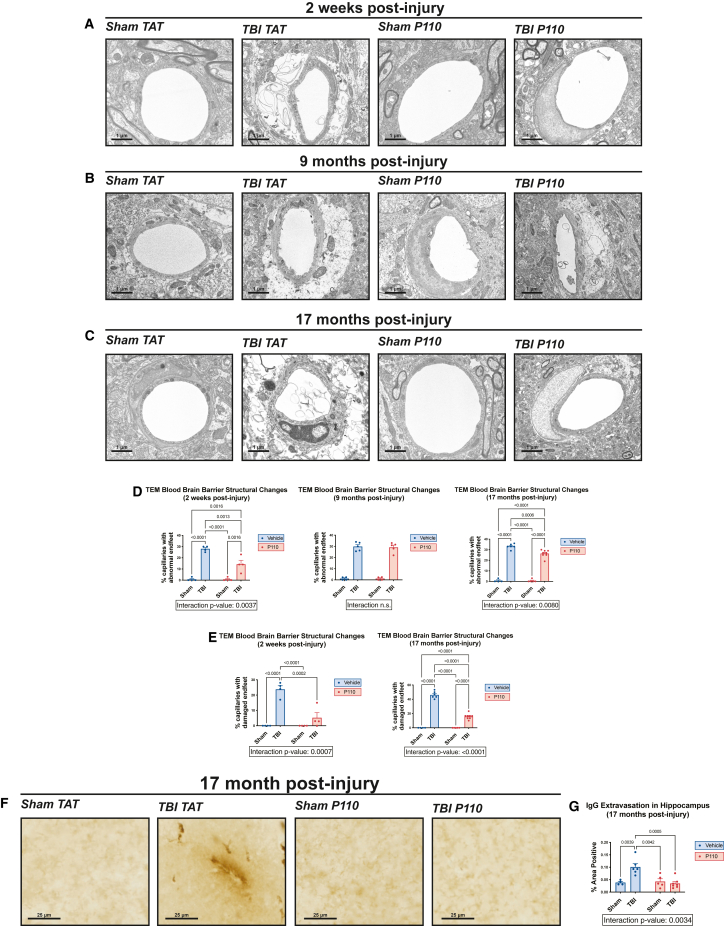
Progression of acute traumatic brain injury (TBI) into chronic neurodegeneration is a major health problem with no protective treatments. Here, we report that acutely elevated mitochondrial fission after TBI in mice triggers chronic neurodegeneration persisting 17 months later, equivalent to many human decades. We show that increased mitochondrial fission after mouse TBI is related to increased brain levels of mitochondrial fission 1 protein (Fis1) and that brain Fis1 is also elevated in human TBI. Pharmacologically preventing Fis1 from binding its mitochondrial partner, dynamin-related protein 1 (Drp1), for 2 weeks after TBI normalizes the balance of mitochondrial fission/fusion and prevents chronically impaired mitochondrial bioenergetics, oxidative damage, microglial activation and lipid droplet formation, blood-brain barrier deterioration, neurodegeneration, and cognitive impairment. Delaying treatment until 8 months after TBI offers no protection. Thus, time-sensitive inhibition of acutely elevated mitochondrial fission may represent a strategy to protect human TBI patients from chronic neurodegeneration.
急性创伤性脑损伤(TBI)进展为慢性神经退行性变是一个重大的健康问题,目前尚无保护治疗方法。在这里,我们报告说,小鼠 TBI 后线粒体裂变的急性升高会引发持续 17 个月的慢性神经退行性变,相当于人类的几十年。我们表明,小鼠 TBI 后线粒体裂变的增加与线粒体裂变 1 蛋白(Fis1)的脑内水平升高有关,并且人类 TBI 中脑 Fis1 也升高。在 TBI 后 2 周内用药物阻止 Fis1 与其线粒体伴侣动力相关蛋白 1(Drp1)结合,可使线粒体裂变/融合平衡正常化,并防止慢性受损的线粒体生物能、氧化损伤、小胶质细胞激活和脂滴形成、血脑屏障恶化、神经退行性变和认知障碍。在 TBI 后 8 个月延迟治疗则没有保护作用。因此,急性升高的线粒体裂变的时间敏感抑制可能代表一种保护人类 TBI 患者免受慢性神经退行性变的策略。