College of Health, Wellbeing and Life Sciences, Sheffield Hallam University, Collegiate Campus, Sheffield, S10 2DN, UK.
Nursing and Midwifery College of Health, Wellbeing and Life Sciences, Sheffield Hallam University, Collegiate Campus, Sheffield, S10 2DN, UK.
BMC Pregnancy Childbirth. 2024 Sep 6;24(1):582. doi: 10.1186/s12884-024-06735-1.
Despite its known benefits, breastfeeding rates among mothers with perinatal mental health conditions are staggeringly low. Systematic evidence on experiences of breastfeeding among women with perinatal mental health conditions is limited. This systematic review was designed to synthesise existing literature on breastfeeding experiences of women with a wide range of perinatal mental health conditions.
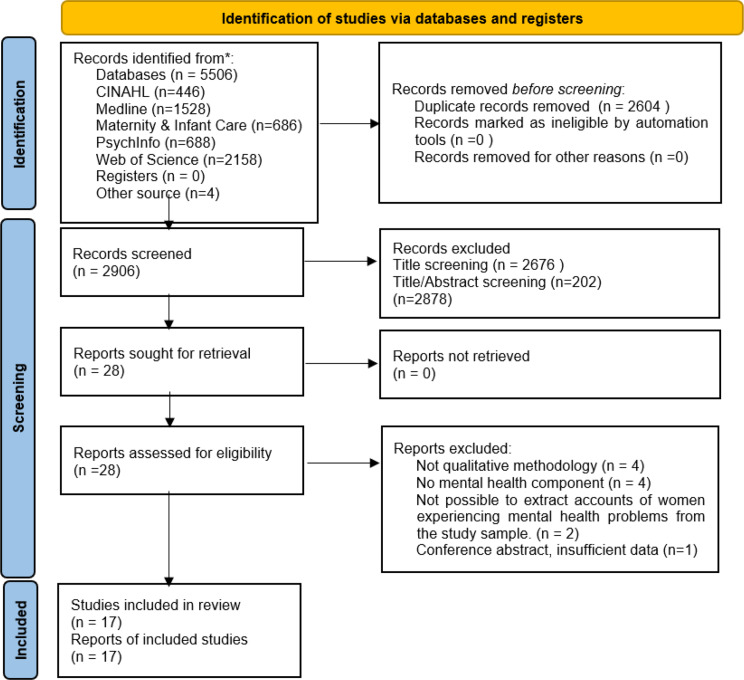
A systematic search of five databases was carried out considering published qualitative research between 2003 and November 2021. Two reviewers conducted study selection, data extraction and critical appraisal of included studies independently and data were synthesised thematically.
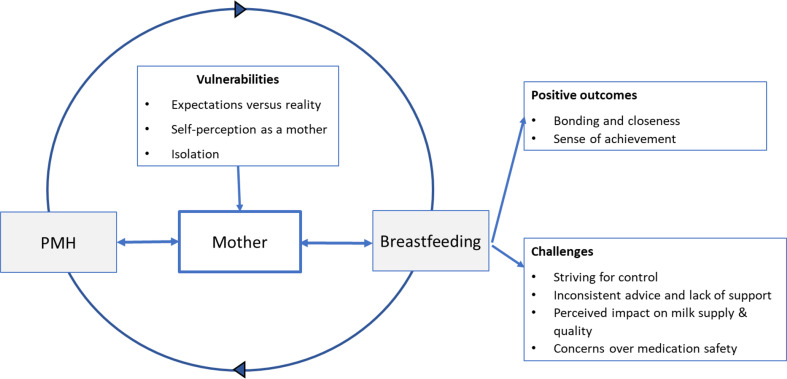
Seventeen articles were included in this review. These included a variety of perinatal mental health conditions (e.g., postnatal depression, post-traumatic stress disorders, previous severe mental illnesses, eating disorders and obsessive-compulsive disorders). The emerging themes and subthemes included: (1) Vulnerabilities: Expectations versus reality; Self-perception as a mother; Isolation. (2) Positive outcomes: Bonding and closeness; Sense of achievement. (3) Challenges: Striving for control; Inconsistent advice and lack of support; Concerns over medication safety; and Perceived impact on milk quality and supply.
Positive breastfeeding experiences of mothers with perinatal mental health conditions can mediate positive outcomes such as enhanced mother/infant bonding, increased self-esteem, and a perceived potential for healing. Alternatively, a lack of consistent support and advice from healthcare professionals, particularly around health concerns and medication safety, can lead to feelings of confusion, negatively impact breastfeeding choices, and potentially aggravate perinatal mental health symptoms. Appropriate support, adequate breastfeeding education, and clear advice, particularly around medication safety, are required to improve breastfeeding experiences for women with varied perinatal mental health conditions.
尽管母乳喂养有已知的益处,但患有围产期心理健康问题的母亲的母乳喂养率却低得惊人。针对患有围产期心理健康问题的女性母乳喂养经历的系统证据有限。本系统评价旨在综合现有文献,以了解各种围产期心理健康状况的女性的母乳喂养经历。
对五个数据库进行了系统搜索,考虑了 2003 年至 2021 年 11 月期间发表的定性研究。两位审查员独立进行了研究选择、数据提取和纳入研究的批判性评价,并对数据进行了主题分析。
本综述共纳入 17 篇文章。这些文章涉及各种围产期心理健康问题(如产后抑郁、创伤后应激障碍、既往严重精神疾病、饮食障碍和强迫症)。出现的主题和子主题包括:(1)脆弱性:期望与现实;自我认知为母亲;孤立。(2)积极结果:亲密关系和亲近感;成就感。(3)挑战:努力控制;建议不一致且缺乏支持;对药物安全性的担忧;以及对母乳质量和供应的担忧。
患有围产期心理健康问题的母亲的积极母乳喂养经历可以介导积极的结果,例如增强母婴关系、提高自尊心和感知治愈的潜力。相反,医疗保健专业人员缺乏一致的支持和建议,尤其是在健康问题和药物安全性方面,可能导致困惑、对母乳喂养选择产生负面影响,并可能加重围产期心理健康症状。需要提供适当的支持、充分的母乳喂养教育以及明确的建议,特别是在药物安全性方面,以改善患有各种围产期心理健康问题的女性的母乳喂养经历。