Division of Asthma Research, Department of Pediatrics, Cincinnati Children's Hospital Medical Center, University of Cincinnati, Cincinnati, OH, USA.
Division of Human Genetics, Department of Pediatrics, Cincinnati Children's Hospital Medical Center, University of Cincinnati, Cincinnati, OH, USA.
HGG Adv. 2024 Oct 10;5(4):100350. doi: 10.1016/j.xhgg.2024.100350. Epub 2024 Sep 7.
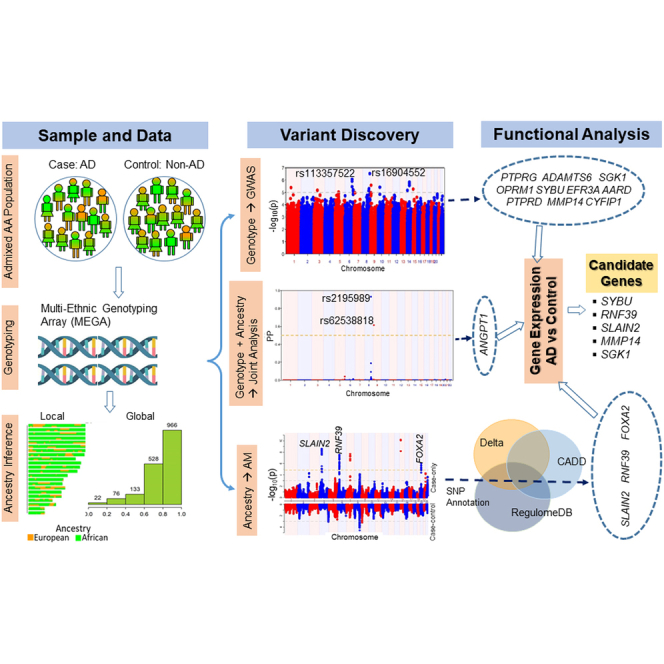
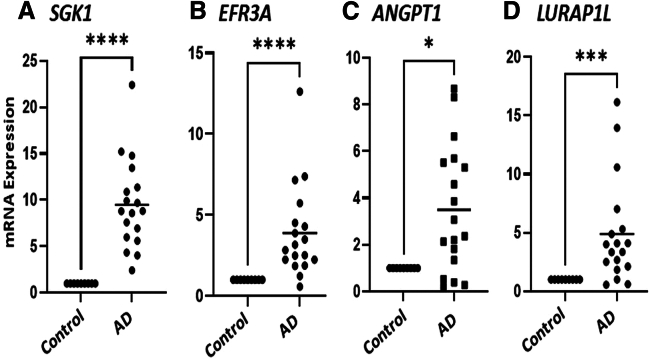
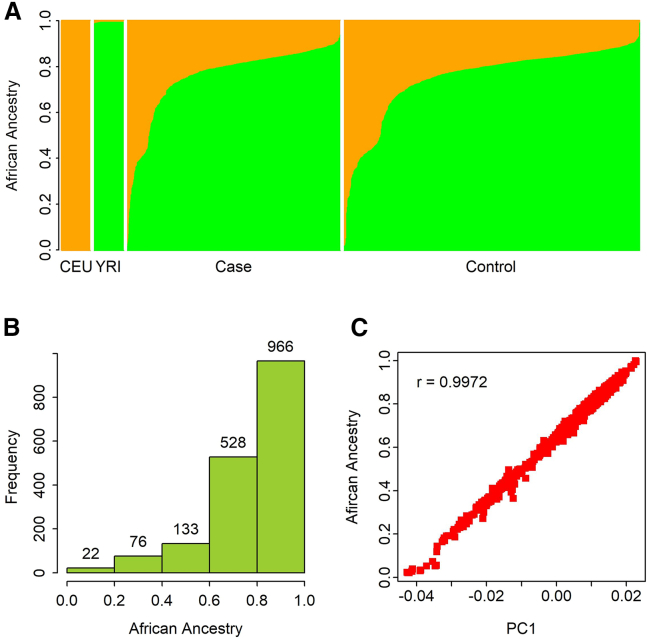
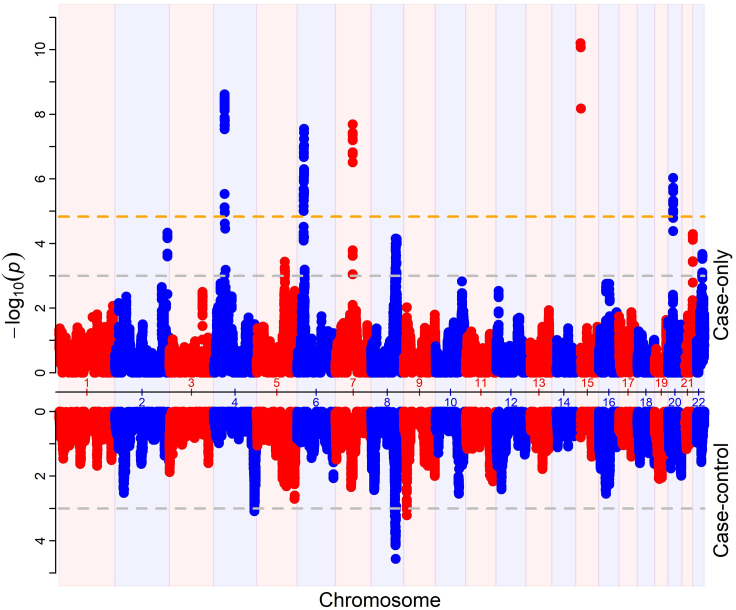
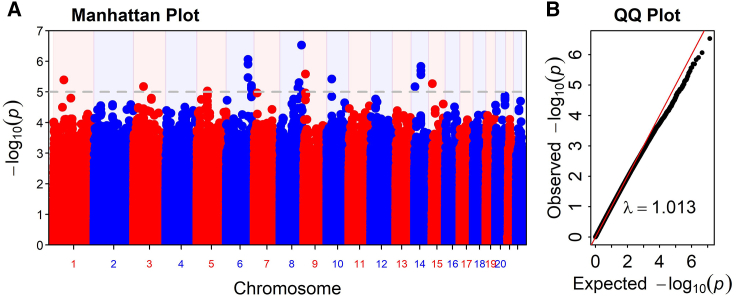
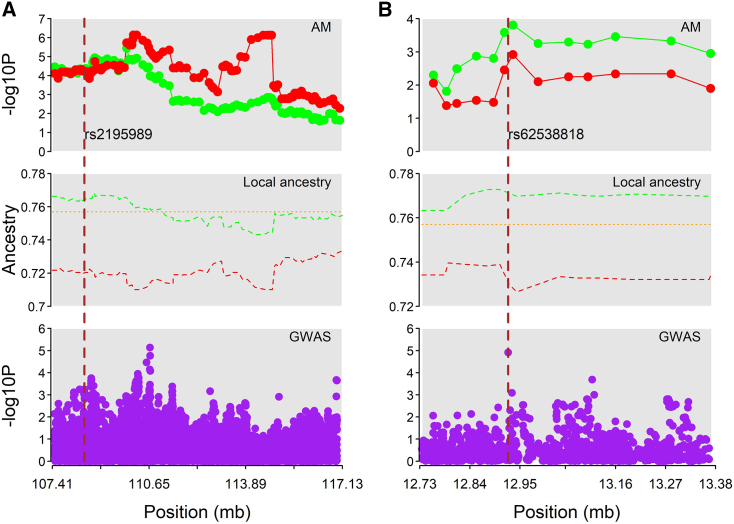
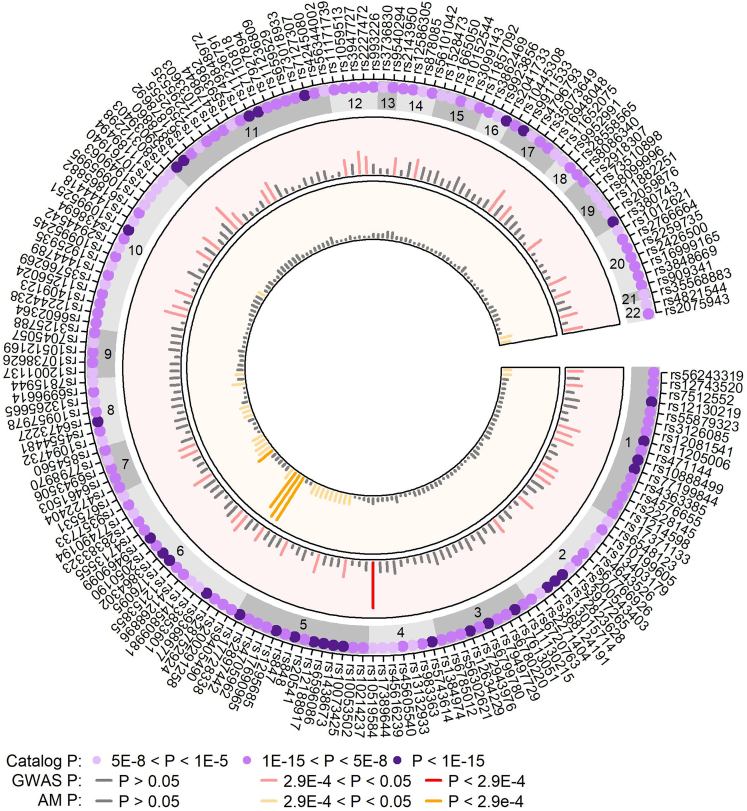
Atopic dermatitis (AD) is a chronic itchy inflammatory disease of the skin. Genetic studies have identified multiple risk factors linked to the disease; however, most of the studies have been derived from European and East Asian populations. The admixed African American (AA) genome may provide an opportunity to discovery ancestry-specific loci involved in AD susceptibility. Herein, we present joint analysis of ancestry and genotype effects followed by validation using differential gene expression analysis on AD using 726 AD-affected individuals and 999 non-AD control individuals from the AA population, genotyped using Multi-Ethnic Global Array (MEGA) followed by imputation using the Consortium on Asthma among African Ancestry Populations in the Americas (CAAPA) reference panel. The joint analysis identified two novel AD-susceptibility loci, rs2195989 in gene ANGPT1 (8q23.1) and rs62538818 in the intergenic region between genes LURAP1L and MPDZ (9p23). Admixture mapping (AM) results showed potential genomic inflation, and we implemented genomic control and identified five ancestry-of-origin loci with European ancestry effects. The multi-omics functional prioritization of variants in AM signals prioritized the loci SLAIN2, RNF39, and FOXA2. Genome-wide association study (GWAS) identified variants significantly associated with AD in the AA population, including SGK1 (rs113357522, odds ratio [OR] = 2.81), EFR3A (rs16904552, OR = 1.725), and MMP14 (rs911912, OR = 1.791). GWAS variants were common in the AA but rare in the European population, which suggests an African-ancestry-specific risk of AD. Four genes (ANGPT1, LURAP1L, EFR3A, and SGK1) were further validated using qPCR from AD and healthy skin. This study highlighted the importance of genetic studies on admixed populations, as well as local ancestry and genotype-ancestry joint effects to identify risk loci for AD.
特应性皮炎(AD)是一种慢性瘙痒性炎症性皮肤病。遗传研究已经确定了与该疾病相关的多个风险因素;然而,大多数研究都来自欧洲和东亚人群。混合的非裔美国人(AA)基因组可能为发现与 AD 易感性相关的特定祖先基因座提供机会。在此,我们介绍了对祖先和基因型效应的联合分析,然后使用来自 AA 人群的 726 名 AD 患者和 999 名非 AD 对照个体的 AD 差异基因表达分析进行验证,这些个体使用多族裔全球阵列(MEGA)进行基因分型,然后使用美洲非洲裔人群哮喘联盟(CAAPA)参考面板进行 imputation。联合分析确定了两个新的 AD 易感基因座,位于基因 ANGPT1(8q23.1)的 rs2195989 和基因 LURAP1L 和 MPDZ 之间的基因间区域的 rs62538818。混合映射(AM)结果显示出潜在的基因组膨胀,我们实施了基因组控制,并确定了五个具有欧洲祖先效应的祖先起源基因座。AM 信号中的变体的多组学功能优先级将 SLAIN2、RNF39 和 FOXA2 基因座置于首位。全基因组关联研究(GWAS)在 AA 人群中鉴定出与 AD 显著相关的变体,包括 SGK1(rs113357522,优势比[OR] = 2.81)、EFR3A(rs16904552,OR = 1.725)和 MMP14(rs911912,OR = 1.791)。GWAS 变体在 AA 中很常见,但在欧洲人群中很少见,这表明 AD 具有非洲祖先特异性风险。进一步使用 AD 和健康皮肤的 qPCR 对四个基因(ANGPT1、LURAP1L、EFR3A 和 SGK1)进行验证。这项研究强调了在混合人群中进行遗传研究以及局部祖先和基因型-祖先联合效应对 AD 风险基因座进行鉴定的重要性。