Schulte Lennart, Uhrig Lilien, Eichberg Johanna, Schwartze Michael, Auth Ingve, Schulz Miriam, Lindner Thomas, Hien Paul, Hardes Kornelia, Vilcinskas Andreas, Lüddecke Tim
Institute for Insect Biotechnology, Justus Liebig University Giessen, Faculty 09 Agricultural Sciences, Nutritional Sciences and Environmental Management, Giessen, Hessen, Germany.
Department of Biodiversity Research, Fraunhofer Institute for Molecular Biology and Applied Ecology IME Branch for Bioresources, Gießen, Hessen, Germany.
R Soc Open Sci. 2024 Sep 11;11(9):241268. doi: 10.1098/rsos.241268. eCollection 2024 Sep.
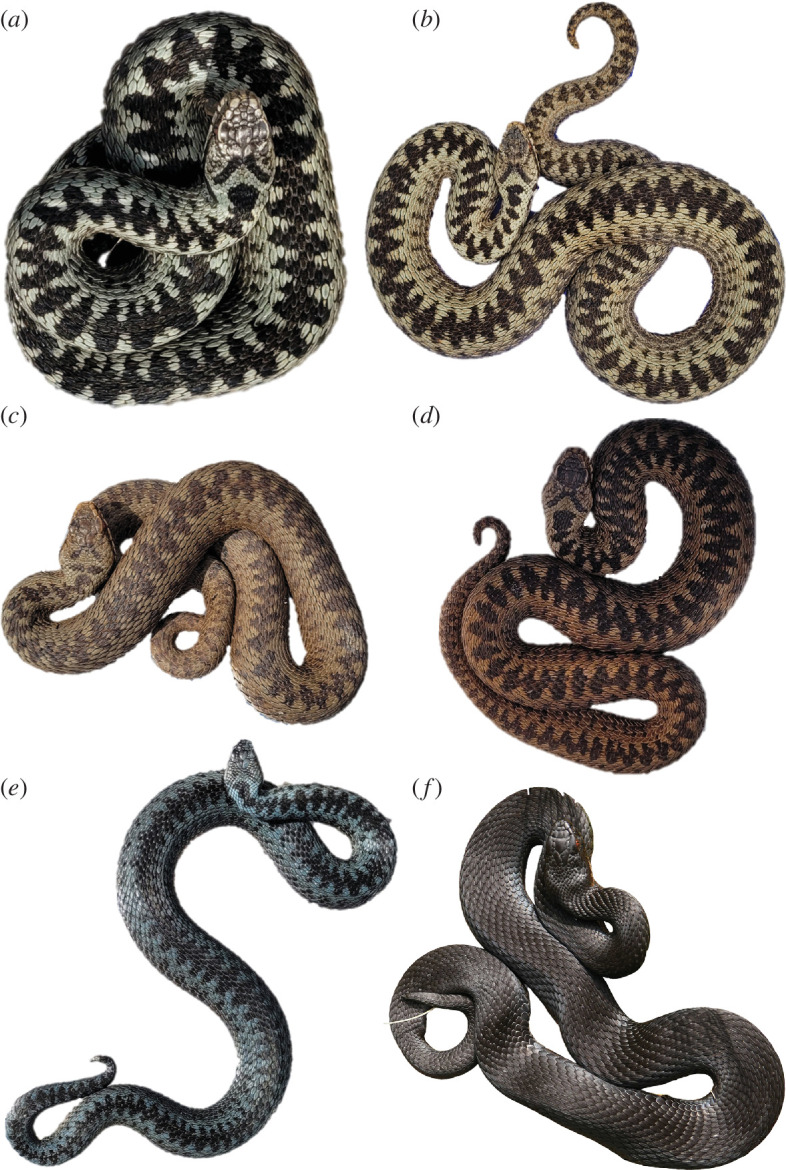
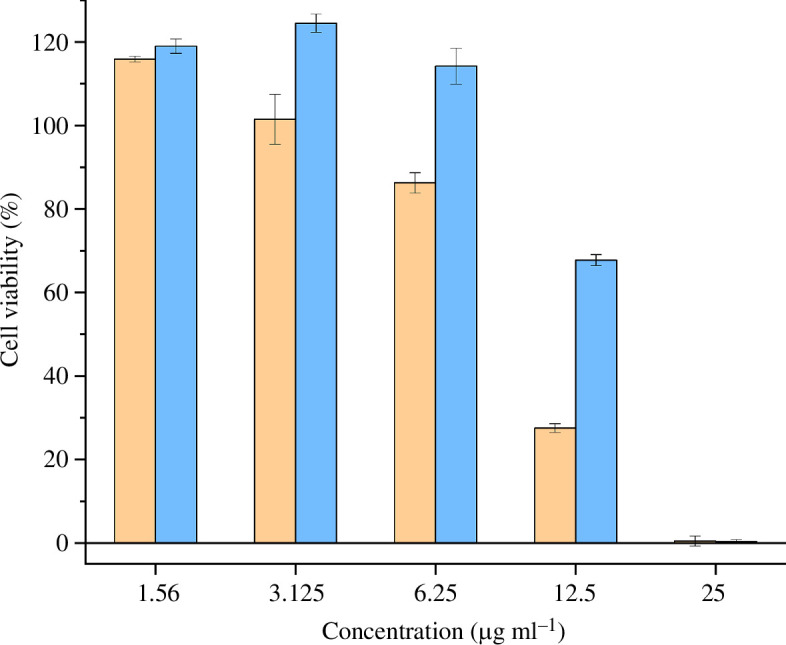
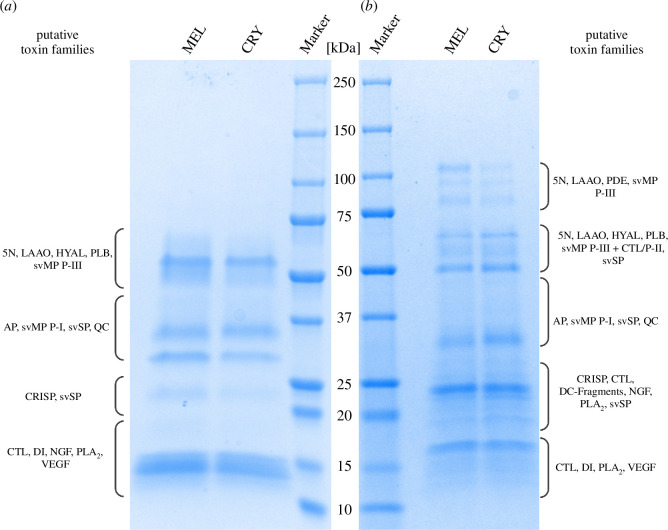
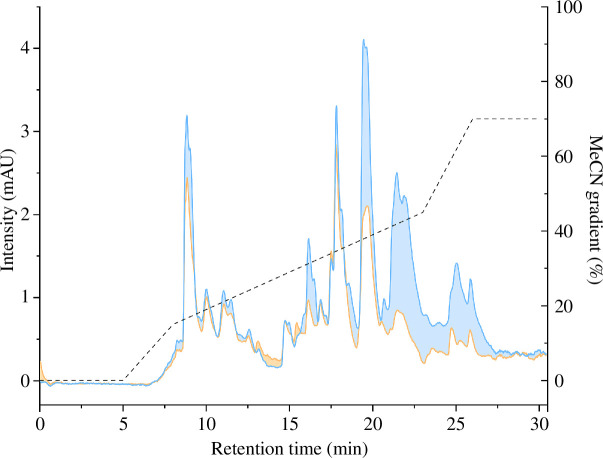
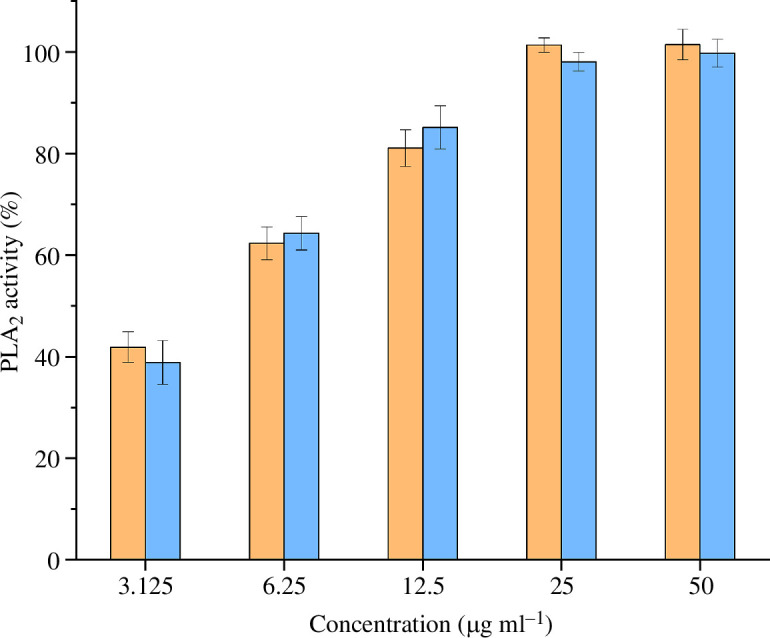
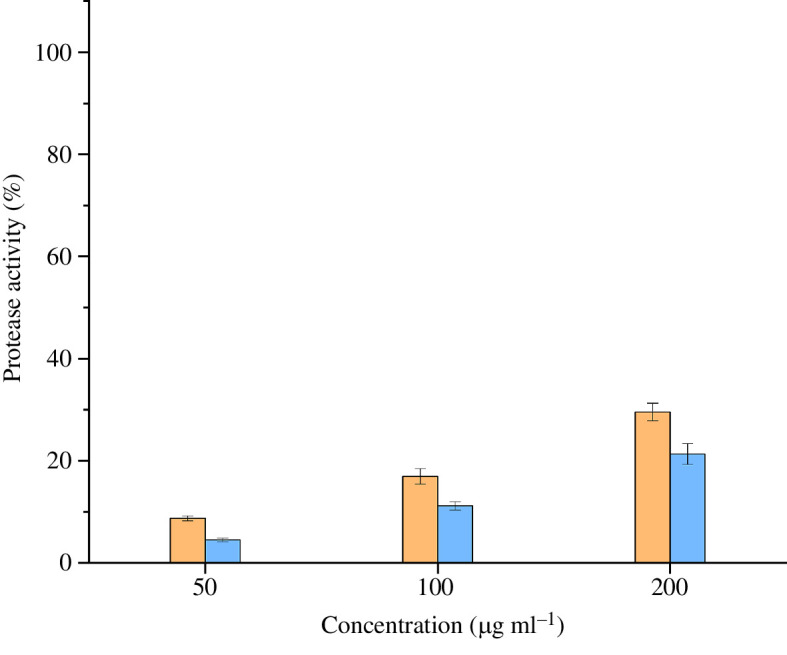
Snake venom is an ecologically relevant functional trait directly linked with a snake's fitness and survival, facilitating predation and defence. Snake venom variation occurs at all taxonomic levels, but the study at the intraspecific level is still in its early stages. The common adder () exhibits considerable variation in colour phenotypes across its distribution range. Melanistic (fully black) individuals are the subject of myths and fairytales, and in German folklore such 'hell adders' are considered more toxic than their normally coloured conspecifics despite any formal investigation. Here, we provide the first comparative analysis of venoms from melanistic and normally coloured common adders. Specifically, we compared the venom profiles by sodium dodecylsulfate polyacrylamide gel electrophoresis and reversed-phase high-performance liquid chromatography and tested the venoms' protease, phospholipase A and cytotoxic activities. Phospholipase A activity was similar in both phenotypes, whereas general protease activity was higher in the melanistic venom, which was also more cytotoxic at two concentrations (6.25 and 12.5 µg ml). These minor differences between the venoms of melanistic and normally coloured adders are unlikely to be of clinical relevance in the context of human envenomation. In light of our results, the claim that melanistic adders produce more toxic venom than their normally coloured conspecifics appears rooted entirely in folklore.
蛇毒是一种与生态相关的功能性状,直接与蛇的健康和生存相关联,有助于捕食和防御。蛇毒变异在所有分类水平上都存在,但种内水平的研究仍处于早期阶段。普通蝰蛇( )在其分布范围内的颜色表型存在相当大的差异。黑化(全黑)个体是神话和童话故事的主题,在德国民间传说中,尽管没有任何正式调查,但这种“地狱蝰蛇”被认为比正常颜色的同种蝰蛇毒性更强。在这里,我们首次对黑化和正常颜色的普通蝰蛇的毒液进行了比较分析。具体来说,我们通过十二烷基硫酸钠聚丙烯酰胺凝胶电泳和反相高效液相色谱比较了毒液谱,并测试了毒液的蛋白酶、磷脂酶A和细胞毒性活性。两种表型的磷脂酶A活性相似,而黑化毒液中的一般蛋白酶活性较高,在两种浓度(6.25和12.5 µg/ml)下其细胞毒性也更强。黑化和正常颜色蝰蛇毒液之间的这些微小差异在人类中毒的情况下不太可能具有临床相关性。根据我们的研究结果,黑化蝰蛇产生的毒液比正常颜色的同种蝰蛇毒性更强这一说法似乎完全源于民间传说。