Department of Biochemistry, Microbiology and Bio-informatics, Laval University, Québec, Canada.
Neuroscience Axis, CHU de Québec Research Center (CHUL), Québec, Canada.
Elife. 2024 Sep 12;13:RP95412. doi: 10.7554/eLife.95412.
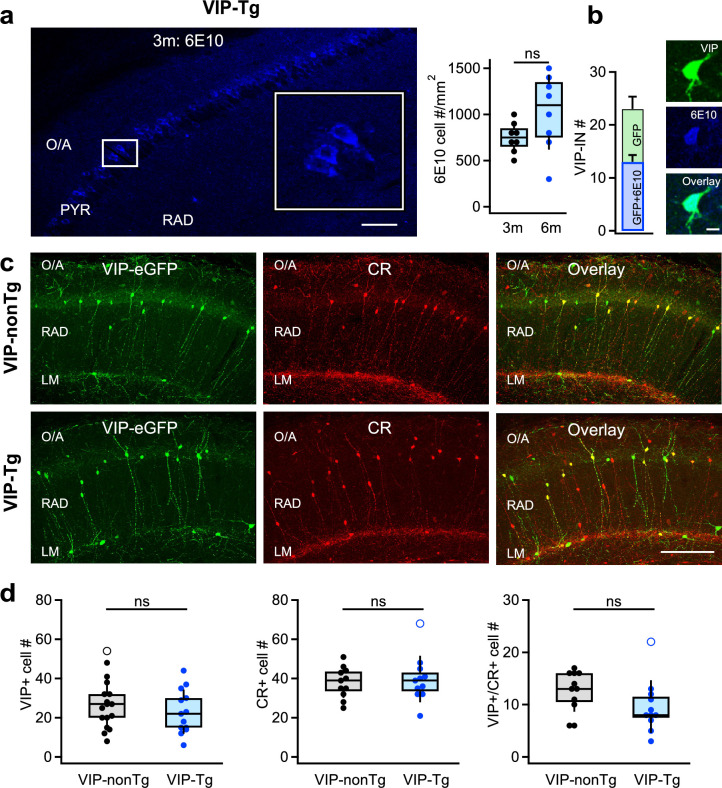
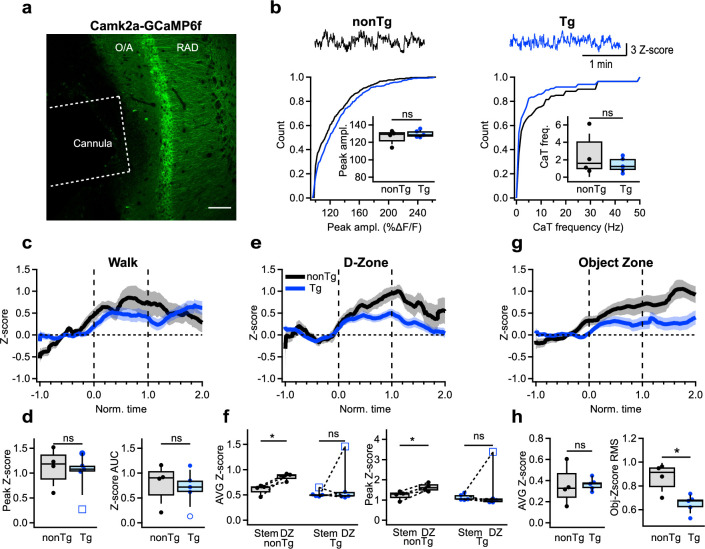
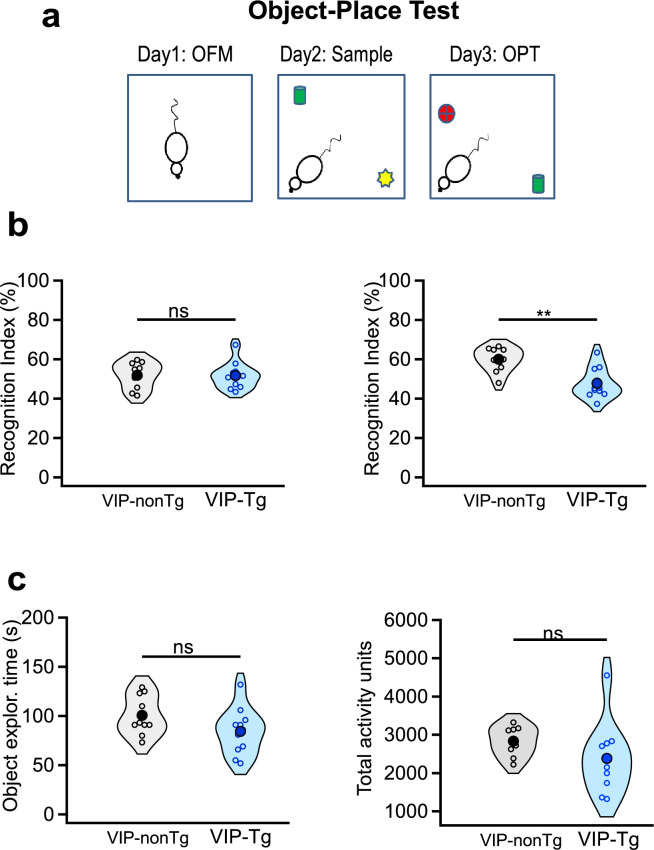
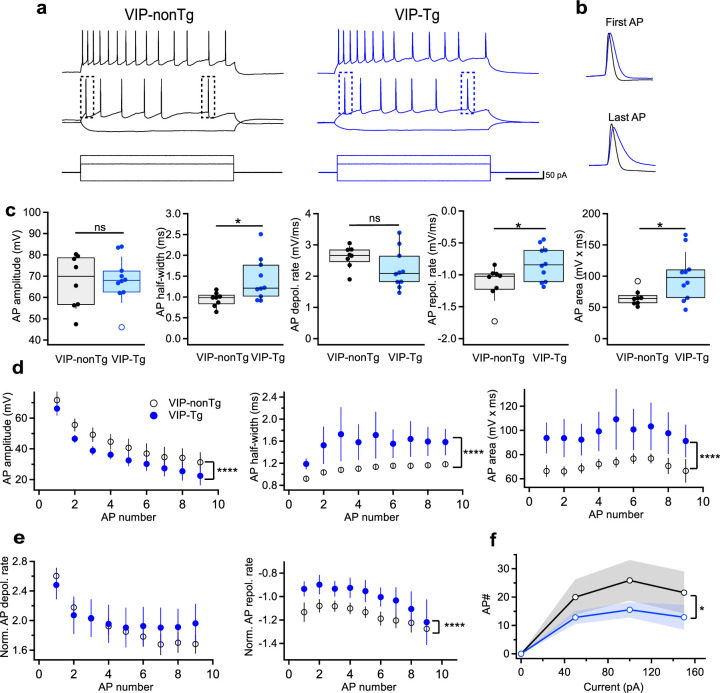
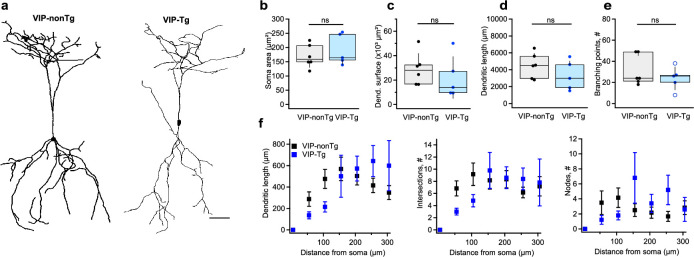
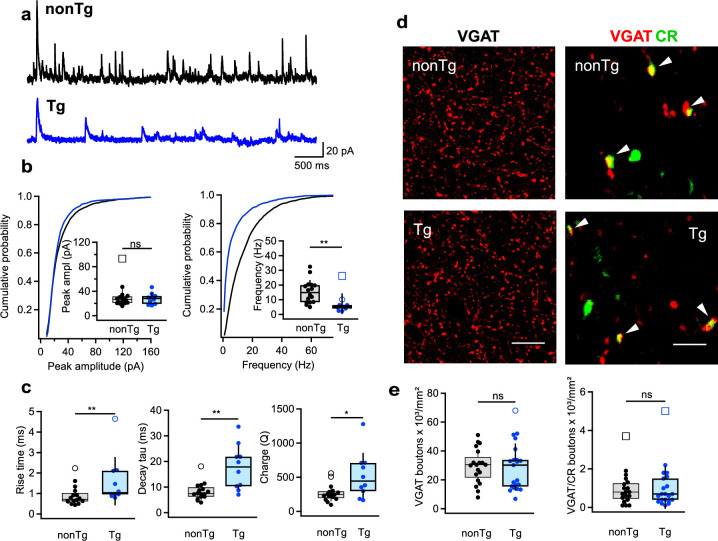
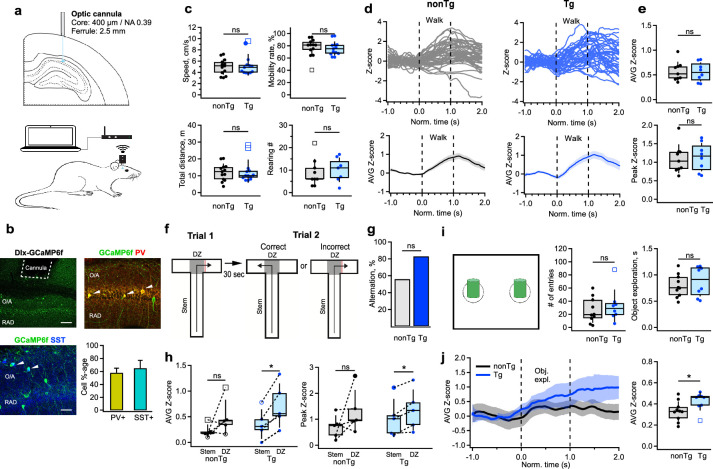
Alzheimer's disease (AD) leads to progressive memory decline, and alterations in hippocampal function are among the earliest pathological features observed in human and animal studies. GABAergic interneurons (INs) within the hippocampus coordinate network activity, among which type 3 interneuron-specific (I-S3) cells expressing vasoactive intestinal polypeptide and calretinin play a crucial role. These cells provide primarily disinhibition to principal excitatory cells (PCs) in the hippocampal CA1 region, regulating incoming inputs and memory formation. However, it remains unclear whether AD pathology induces changes in the activity of I-S3 cells, impacting the hippocampal network motifs. Here, using young adult 3xTg-AD mice, we found that while the density and morphology of I-S3 cells remain unaffected, there were significant changes in their firing output. Specifically, I-S3 cells displayed elongated action potentials and decreased firing rates, which was associated with a reduced inhibition of CA1 INs and their higher recruitment during spatial decision-making and object exploration tasks. Furthermore, the activation of CA1 PCs was also impacted, signifying early disruptions in CA1 network functionality. These findings suggest that altered firing patterns of I-S3 cells might initiate early-stage dysfunction in hippocampal CA1 circuits, potentially influencing the progression of AD pathology.
阿尔茨海默病(AD)导致进行性记忆衰退,而海马功能的改变是在人类和动物研究中最早观察到的病理特征之一。海马中的 GABA 能中间神经元(INs)协调网络活动,其中表达血管活性肠肽和钙视网膜蛋白的 3 型中间神经元特异性(I-S3)细胞起着至关重要的作用。这些细胞主要对海马 CA1 区的主要兴奋性细胞(PCs)产生去抑制作用,调节传入输入和记忆形成。然而,AD 病理学是否会引起 I-S3 细胞活性的变化,从而影响海马网络模式,目前仍不清楚。在这里,我们使用年轻成年的 3xTg-AD 小鼠发现,尽管 I-S3 细胞的密度和形态保持不变,但它们的放电输出却发生了显著变化。具体来说,I-S3 细胞显示出延长的动作电位和降低的放电率,这与 CA1 INs 的抑制减少以及在空间决策和物体探索任务中它们的更高募集有关。此外,CA1 PCs 的激活也受到影响,表明 CA1 网络功能的早期中断。这些发现表明,I-S3 细胞放电模式的改变可能会引发海马 CA1 回路的早期功能障碍,从而可能影响 AD 病理的进展。