William J. Hybl Sports Medicine and Performance Center, Department of Human Physiology and Nutrition, University of Colorado, Colorado Springs, CO, USA.
Department of Physiology, Yoo Long Lin School of Medicine, National University of Singapore, Singapore, Singapore.
Environ Health. 2024 Sep 12;23(1):73. doi: 10.1186/s12940-024-01113-y.
Ethyl alcohol (ethanol) consumption is ostensibly known to increase the risk of morbidity and mortality during hot weather and heatwaves. However, how alcohol independently alters physiological, perceptual, and behavioral responses to heat stress remains poorly understood. Therefore, we conducted a systematic scoping review to understand how alcohol consumption affects thermoregulatory responses to the heat.
We searched five databases employing the following eligibility criteria, studies must have: 1) involved the oral consumption of ethanol, 2) employed a randomized or crossover-control study design with a control trial consisting of a volume-matched, non-alcoholic beverage, 3) been conducted in healthy adult humans, 4) reported thermophysiological, perceptual, hydration status markers, and/or behavioral outcomes, 5) been published in English, 6) been conducted in air or water at temperatures of > 28°C, 7) involved passive rest or exercise, and 8) been published before October 4th, 2023.
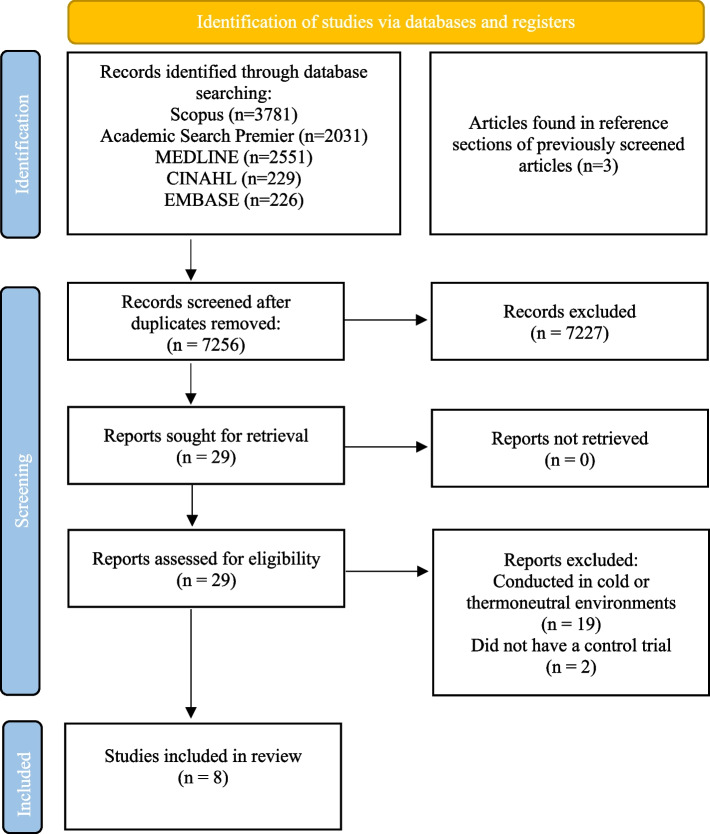
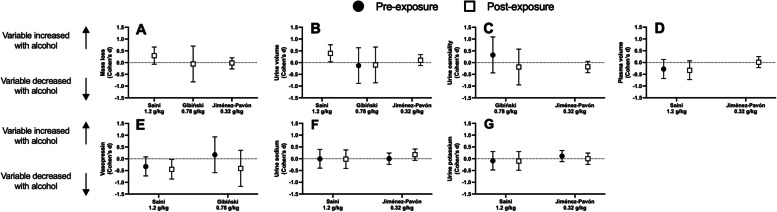
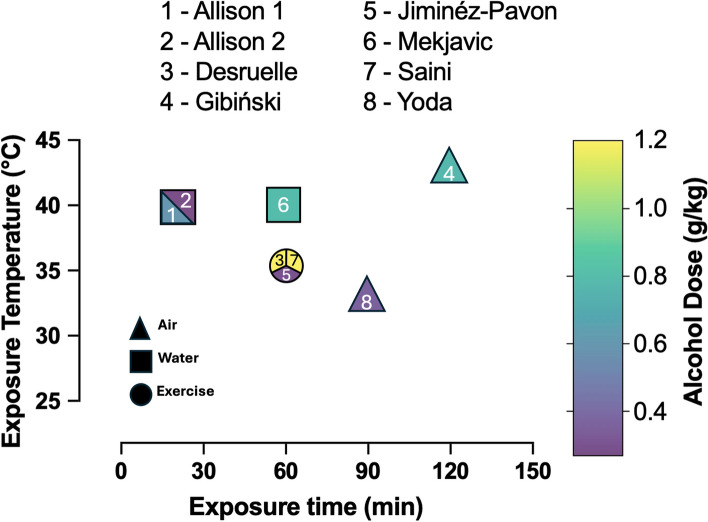
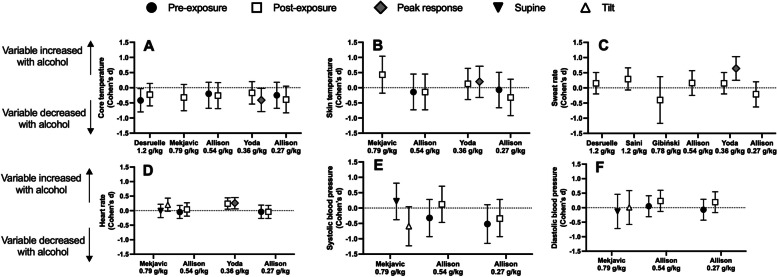
After removing duplicates, 7256 titles were screened, 29 papers were assessed for eligibility and 8 papers were included in the final review. Across the 8 studies, there were a total of 93 participants (93 male/0 female), the average time of heat exposure was 70 min and average alcohol dose was 0.68 g·kg. There were 23 unique outcome variables analyzed from the studies. The physiological marker most influenced by alcohol was core temperature (lowered with alcohol consumption in 3/4 studies). Additionally, skin blood flow was increased with alcohol consumption in the one study that measured it. Typical markers of dehydration, such as increased urine volume (1/3 studies), mass loss (1/3 studies) and decreased plasma volume (0/2 studies) were not consistently observed in these studies, except for in the study with the highest alcohol dose.
The effect of alcohol consumption on thermoregulatory responses is understudied, and is limited by moderate doses of alcohol consumption, short durations of heat exposure, and only conducted in young-healthy males. Contrary to current heat-health advice, the available literature suggests that alcohol consumption does not seem to impair physiological responses to heat in young healthy males.
乙醇(酒精)的摄入显然会增加在炎热天气和热浪期间发病和死亡的风险。然而,酒精如何独立改变对热应激的生理、感知和行为反应仍知之甚少。因此,我们进行了系统的范围审查,以了解酒精摄入如何影响对热量的体温调节反应。
我们使用以下纳入标准在五个数据库中进行了搜索,研究必须:1)涉及口服乙醇,2)采用随机或交叉对照研究设计,对照试验包括体积匹配的非酒精饮料,3)在健康成年人群中进行,4)报告体温生理、感知、水合状态标志物和/或行为结果,5)用英语发表,6)在空气或水中进行,温度高于 28°C,7)涉及被动休息或运动,8)在 2023 年 10 月 4 日之前发表。
去除重复项后,筛选了 7256 个标题,有 29 篇论文评估了资格,有 8 篇论文纳入了最终审查。在 8 项研究中,共有 93 名参与者(93 名男性/0 名女性),平均热暴露时间为 70 分钟,平均酒精剂量为 0.68 g·kg。从研究中分析了 23 个独特的结果变量。受酒精影响最大的生理标志物是核心体温(在 4/4 的研究中,饮酒后降低)。此外,在测量皮肤血流的一项研究中,饮酒后皮肤血流增加。脱水的典型标志物,如尿量增加(3/3 的研究)、体重减轻(3/3 的研究)和血浆体积减少(2/2 的研究)在这些研究中并不常见,除了酒精剂量最高的研究。
酒精摄入对体温调节反应的影响研究不足,并且受到中等剂量酒精摄入、短时间热暴露以及仅在年轻健康男性中进行的限制。与当前的热健康建议相反,现有文献表明,酒精摄入似乎不会损害年轻健康男性对热的生理反应。