Ahearn Caitlin E, Brand Jennie E, Zhou Xiang
University of California-Los Angeles, Los Angeles, CA, USA.
Harvard University, Cambridge, MA, USA.
Res High Educ. 2023 Jun;64(4):574-597. doi: 10.1007/s11162-022-09717-4. Epub 2022 Sep 14.
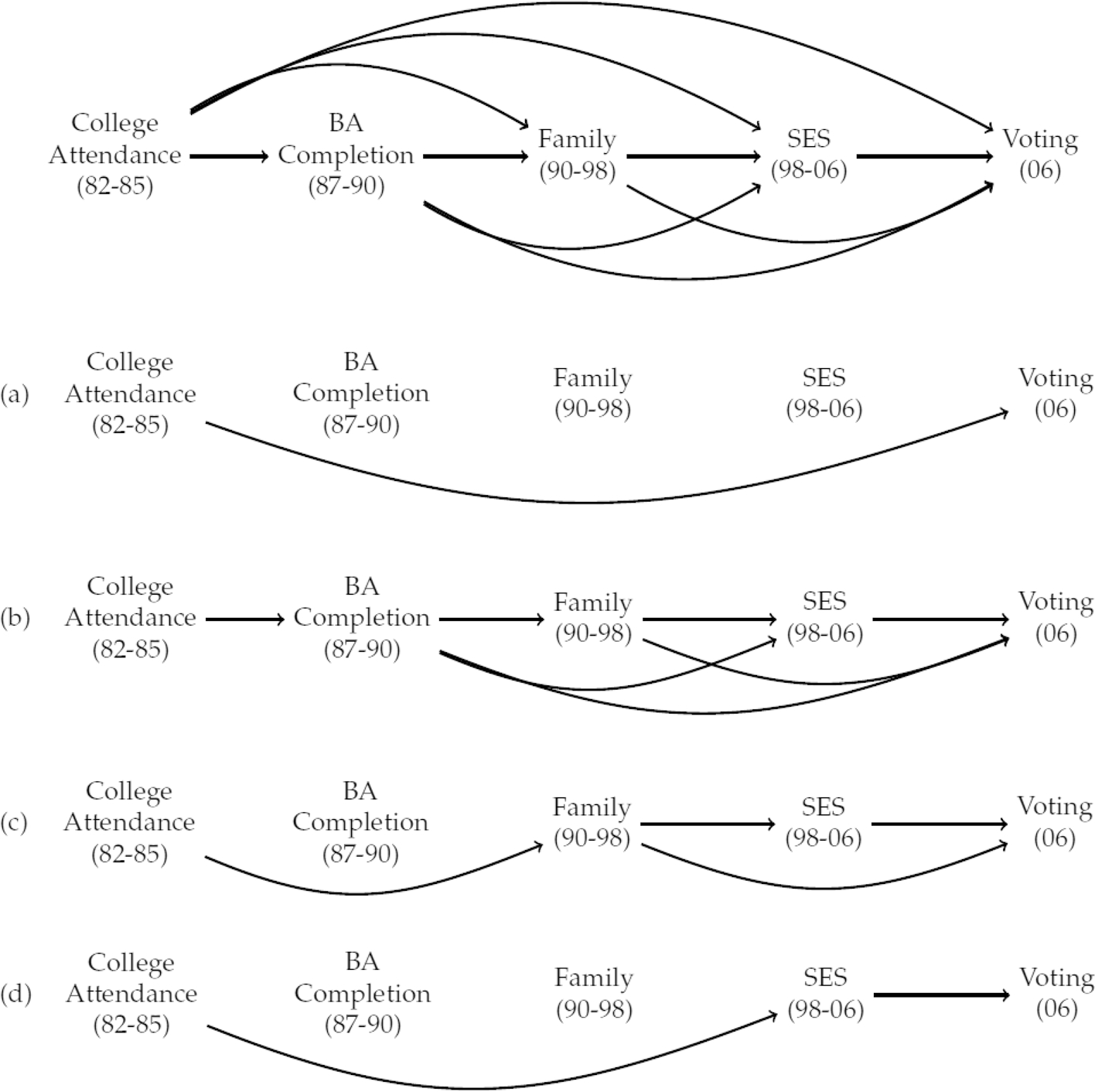
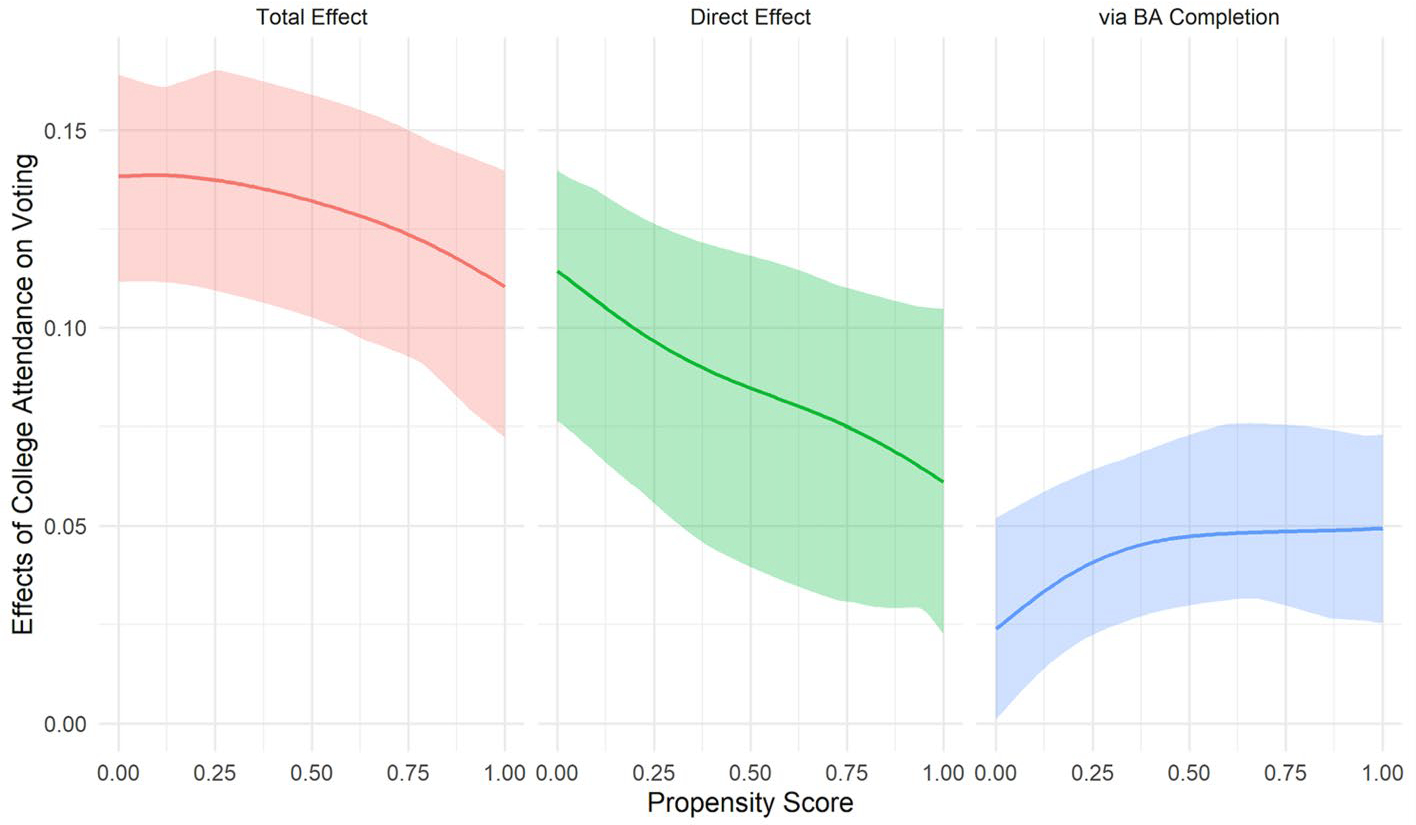
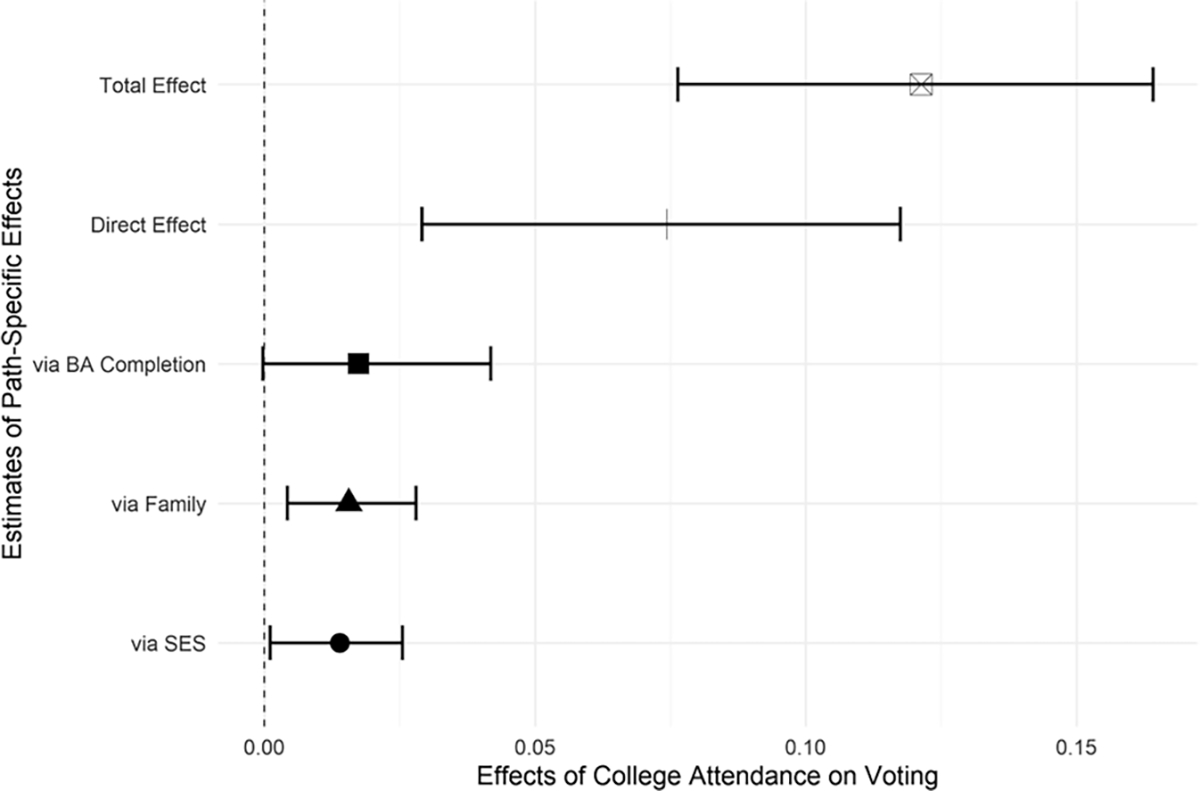
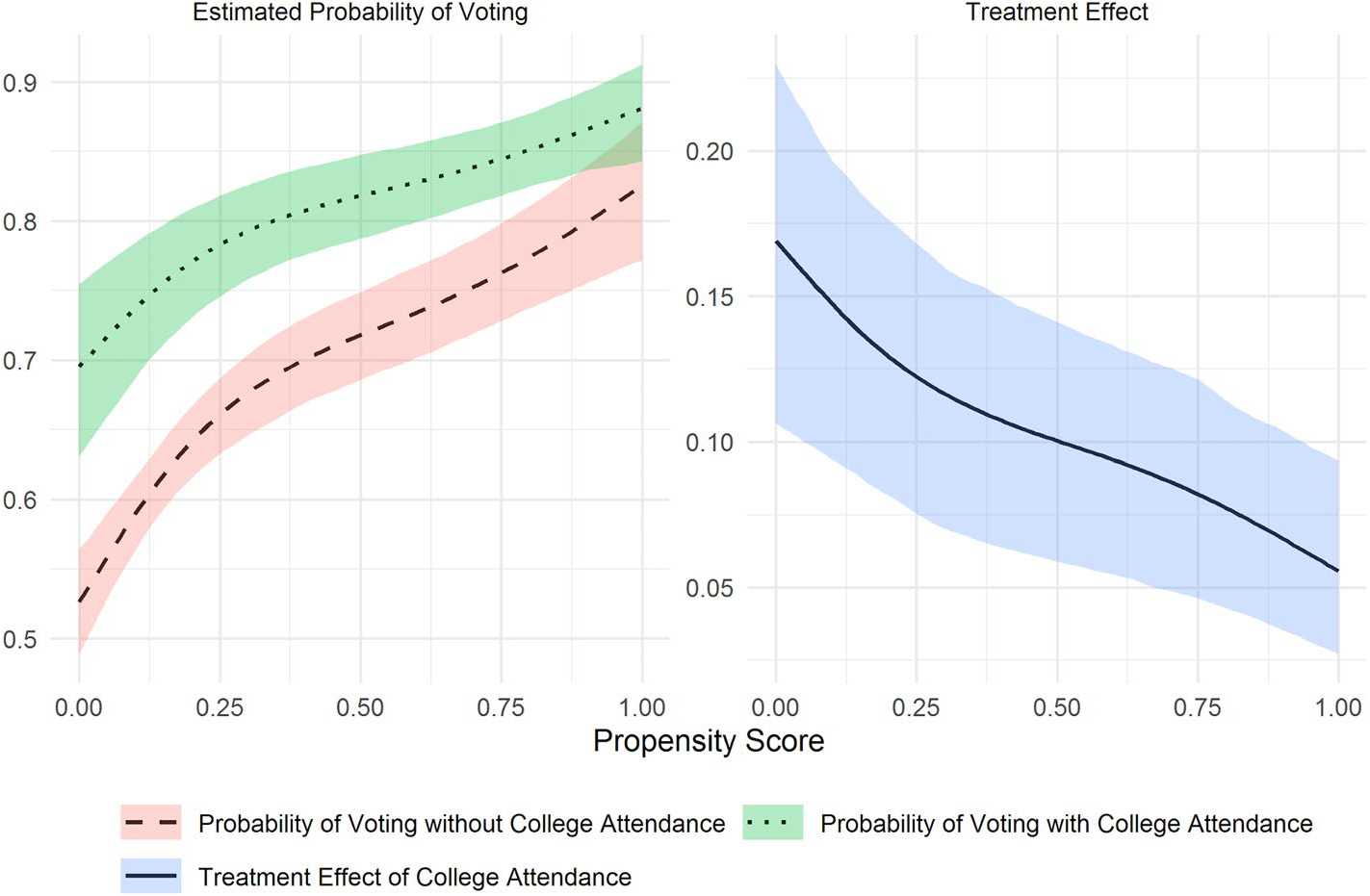
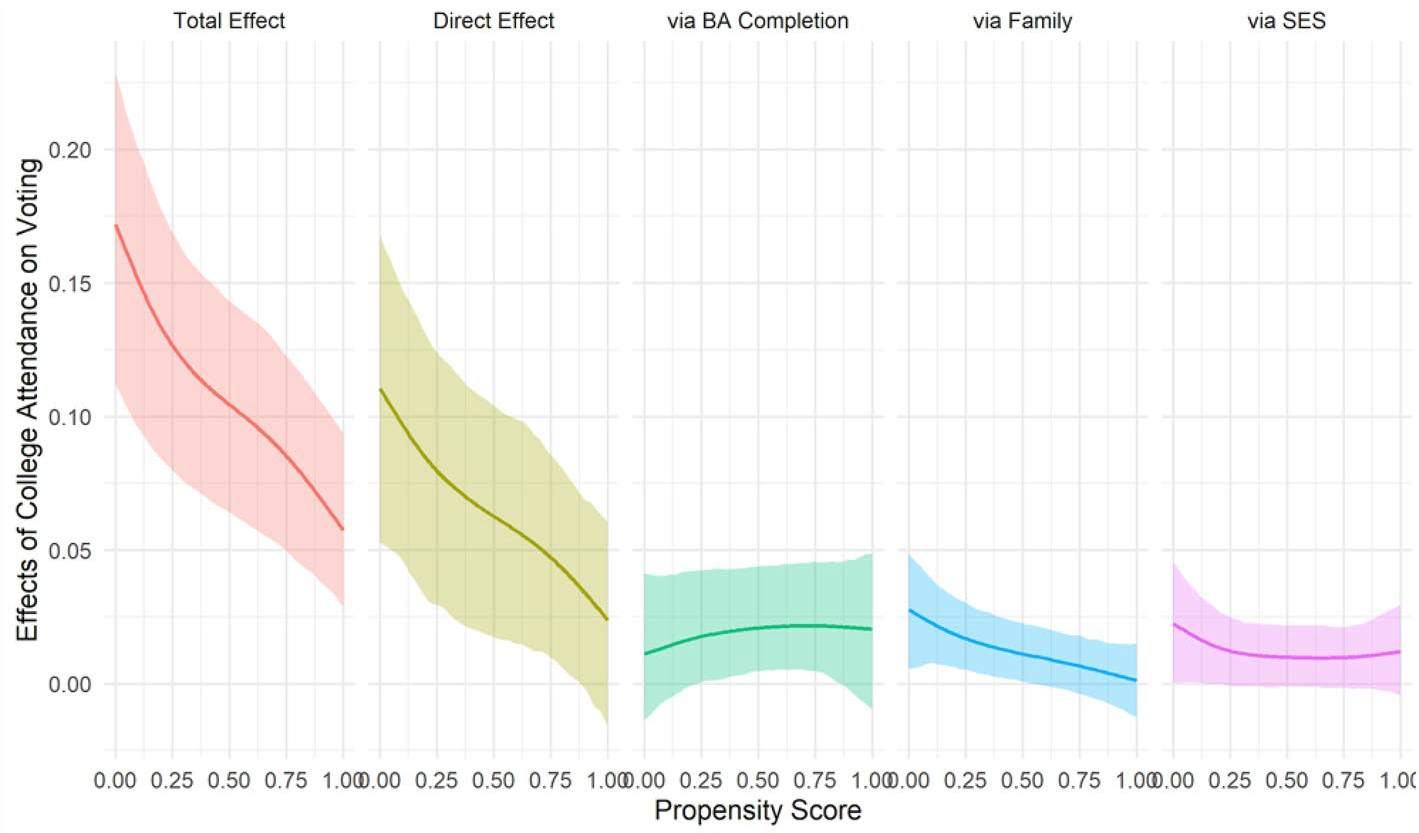
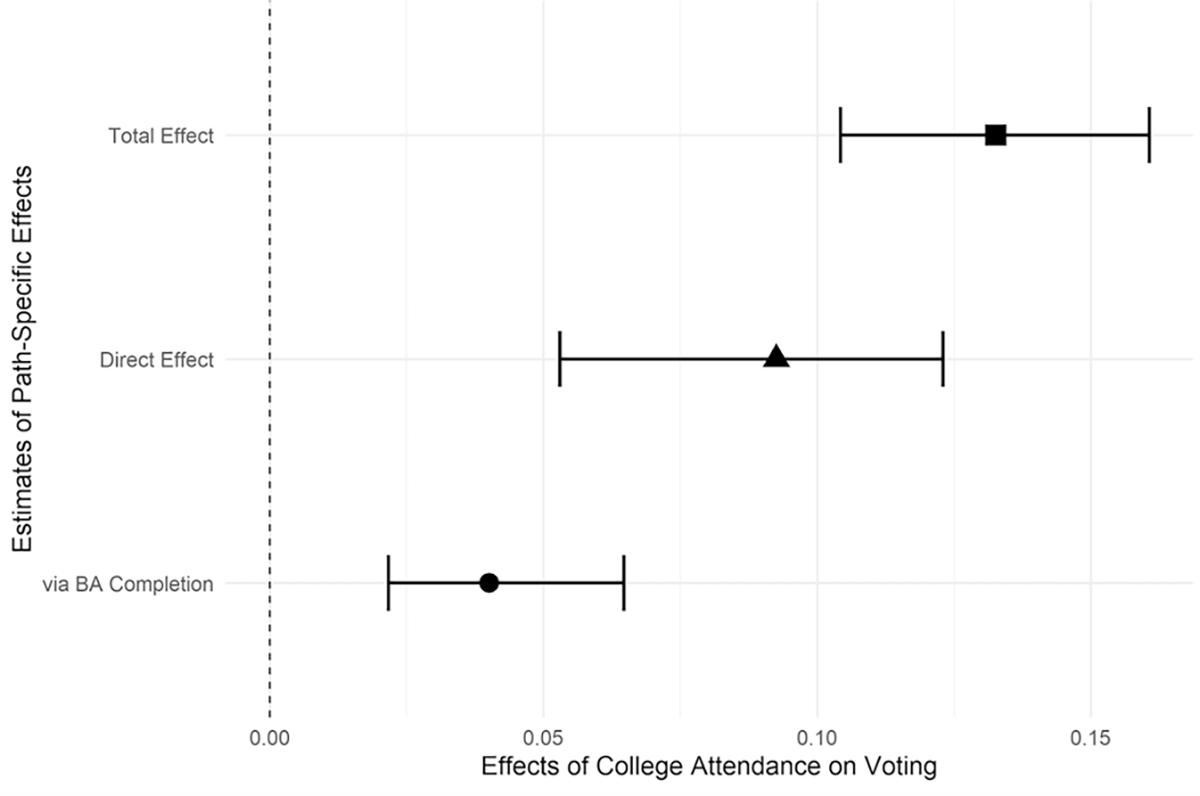
The college-educated are more likely to vote than are those with less education. Prior research suggests that the effect of college attendance on voting operates directly, by increasing an individual's interest and engagement in politics through social networks or human capital accumulation. College may also increase voting indirectly by leading to degree attainment and increasing socioeconomic status, thus facilitating political participation. However, few studies have empirically tested these direct and indirect pathways or examined how these effects vary across individuals. To bridge this gap, we employ a nonparametric causal mediation analysis to examine the total, direct, and indirect effects of college attendance on voting and how these effects differ across individuals with different propensities of attending college. Using data from the 1979 and 1997 cohorts of National Longitudinal Surveys of Youth, we find large direct effects of college on self-reported voting and comparably smaller indirect effects that operate through degree completion and socioeconomic attainment. We find the largest impact of college on voting for individuals unlikely to attend, a pattern due primarily to heterogeneity in the direct effect of college. Our findings suggest that civic returns to college are not contingent upon degree completion or socioeconomic returns. An exclusive focus on the economic returns to college can mask the broader societal benefits of expanding higher education to disadvantaged youth.
受过大学教育的人比受教育程度较低的人更有可能投票。先前的研究表明,大学教育对投票的影响是直接的,通过社交网络或人力资本积累增加个人对政治的兴趣和参与度来实现。大学教育也可能通过导致获得学位和提高社会经济地位来间接增加投票率,从而促进政治参与。然而,很少有研究对这些直接和间接途径进行实证检验,也没有考察这些影响如何因个体而异。为了弥补这一差距,我们采用非参数因果中介分析来检验大学教育对投票的总体、直接和间接影响,以及这些影响在不同上大学倾向的个体之间如何不同。利用1979年和1997年全国青年纵向调查队列的数据,我们发现大学对自我报告投票有很大的直接影响,而通过完成学位和社会经济成就产生的间接影响相对较小。我们发现大学对不太可能上大学的个体的投票影响最大,这种模式主要是由于大学直接影响的异质性。我们的研究结果表明,大学的公民回报并不取决于学位完成情况或社会经济回报。只关注大学的经济回报可能会掩盖向弱势青年扩大高等教育带来的更广泛的社会效益。