NHC Key Laboratory of Medical Virology and Viral Diseases, National Institute for Viral Disease Control and Prevention, Chinese Center for Disease Control and Prevention, Beijing, China.
Shandong Center for Disease Control and Prevention, Jinan, China.
BMC Infect Dis. 2024 Sep 13;24(1):966. doi: 10.1186/s12879-024-09864-2.
Rabies is an incessant public health threat in China. The Ministry of Health implemented the Central Payment for Rabies Prevention and Control Project to assist with rabies prevention and control in a few representative provinces in 2006.
Data on human rabies cases reported by the National Infectious Disease Reporting Information Management System and national surveillance sites from 2006 to 2022 were collected, and statistical and multivariate analyses were then used to assess the effectiveness of current prevention and control efforts.
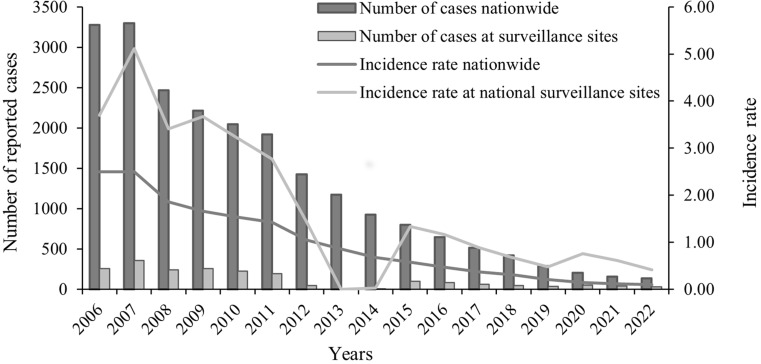
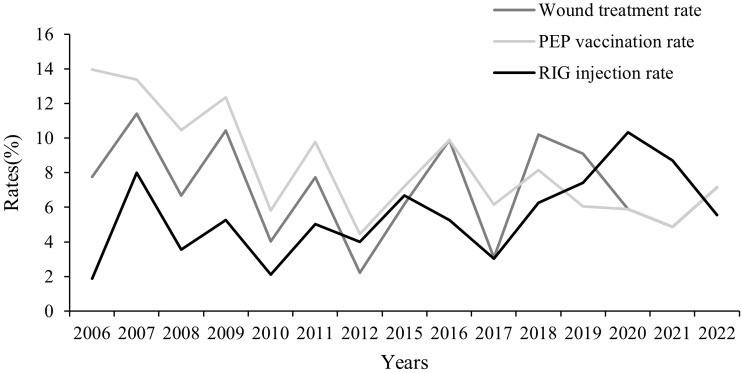
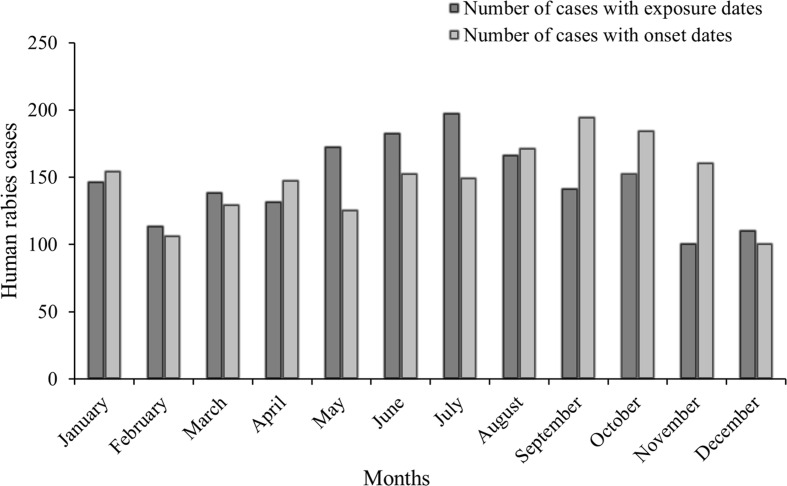
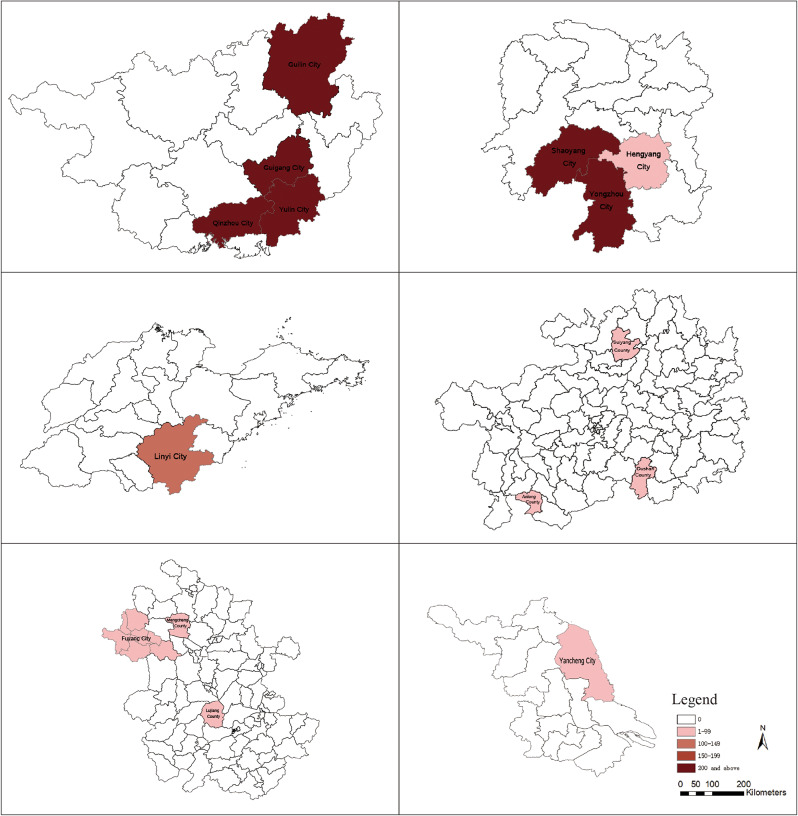
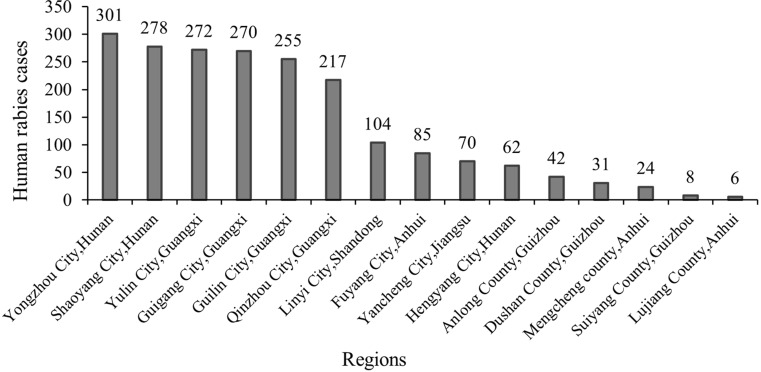
During 2006-2022, a total of 2025 human rabies cases were collected by the national surveillance sites, with incidence rates far above the national average, but the incidence rate was consistent with the national trend. Human rabies cases demonstrated a dual peak distribution in terms of exposure and onset dates, with the peak exposure dates falling mostly in the spring and summer and the peak onset dates occurring mostly in the summer and autumn. Three danger categories are shown by the geographical distribution: high, medium and low. Dogs had a high infection rate (86.93%), with own domesticated dogs accounting for the majority of infections. The rates of post-exposure prophylaxis are not constant. The median incubation period was 71 days.
Various measures and policies implemented by the government have played a key role in reducing the incidence of rabies. To effectively prevent and control the resurgence of epidemics and halt the spread of the virus among host animals, it is imperative to prioritize and implement a robust dog management system, accelerate research and development of animal vaccines and improve the level of post-exposure prophylaxis.
狂犬病在中国一直是一项严峻的公共卫生威胁。2006 年,卫生部启动了中央补助地方狂犬病防治项目,协助部分有代表性的省份开展狂犬病防治工作。
收集 2006 年至 2022 年国家传染病报告信息管理系统和国家级监测点报告的人间狂犬病病例数据,采用统计和多因素分析评估当前防治效果。
2006-2022 年,国家级监测点共收集人间狂犬病病例 2025 例,发病率远高于全国平均水平,但呈与全国一致的变化趋势。人间狂犬病病例暴露和发病日期均呈双峰分布,暴露高峰多在春夏季,发病高峰多在夏秋季。地理分布显示三个危险类别:高、中、低。狗的感染率很高(86.93%),其中大部分感染来自家养犬。暴露后预防的比例并不稳定。潜伏期中位数为 71 天。
政府实施的各种措施和政策在降低狂犬病发病率方面发挥了关键作用。为了有效预防和控制疫情的反弹,遏制病毒在宿主动物中的传播,必须优先并实施强有力的犬管理系统,加快动物疫苗的研发,并提高暴露后预防的水平。