Institute for Biology, Engineering and Medicine, School of Engineering, Brown University, Providence, RI 02912, USA.
Int J Mol Sci. 2024 Sep 5;25(17):9627. doi: 10.3390/ijms25179627.
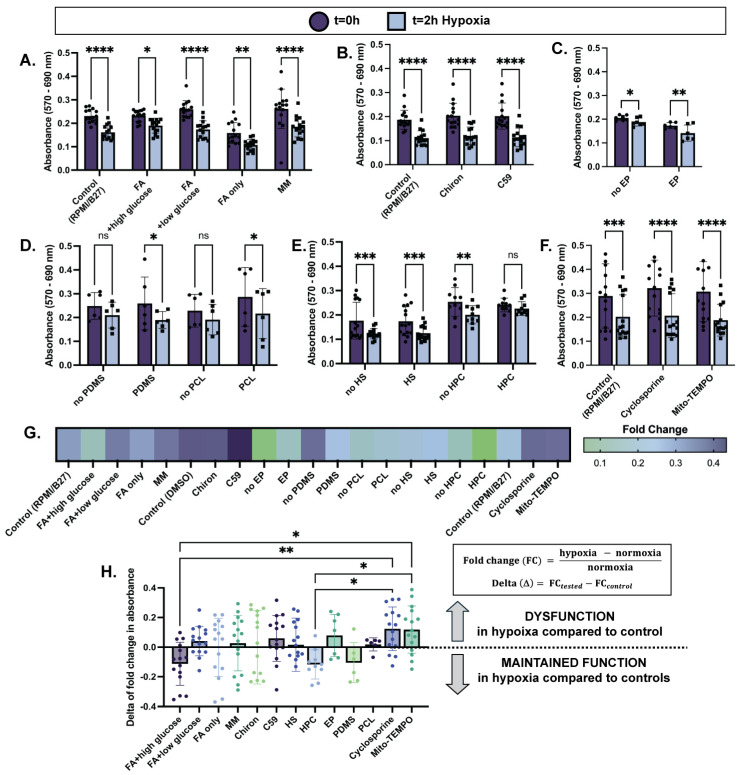
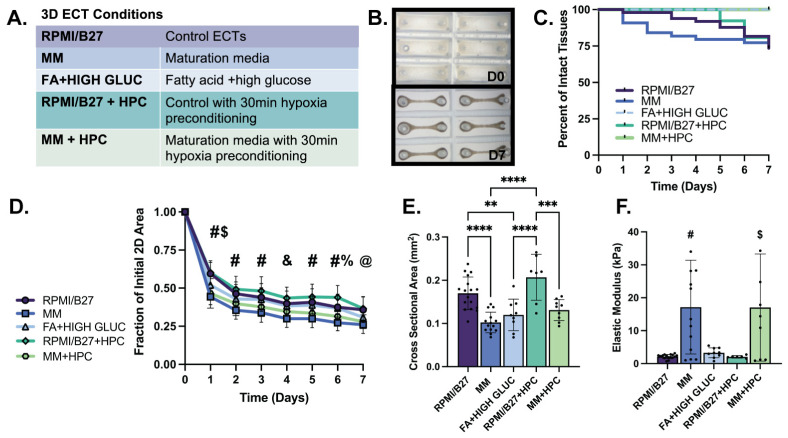
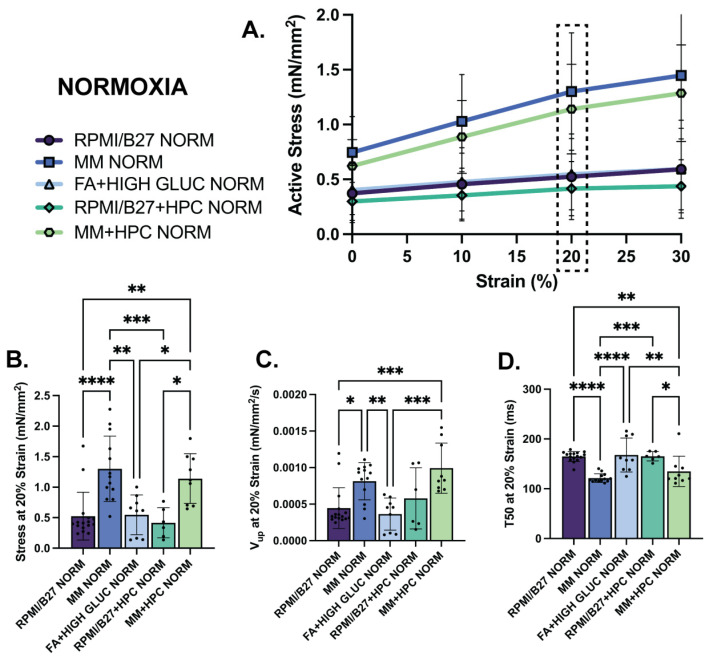
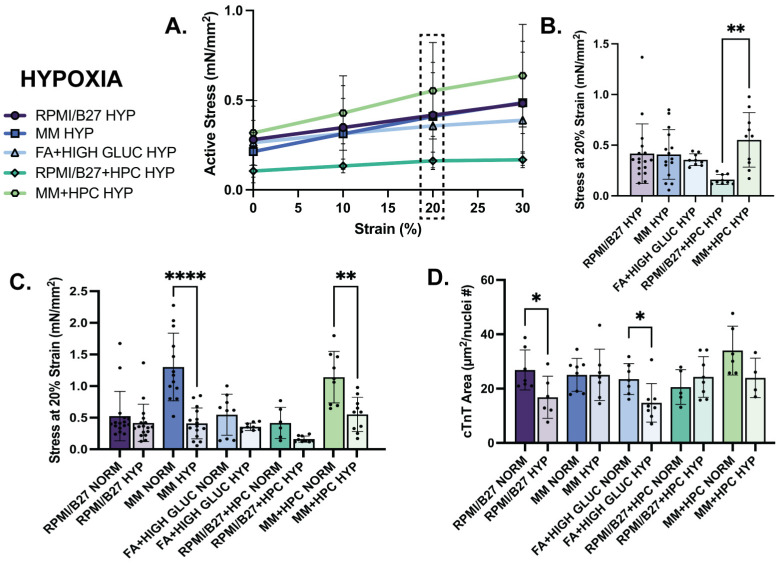
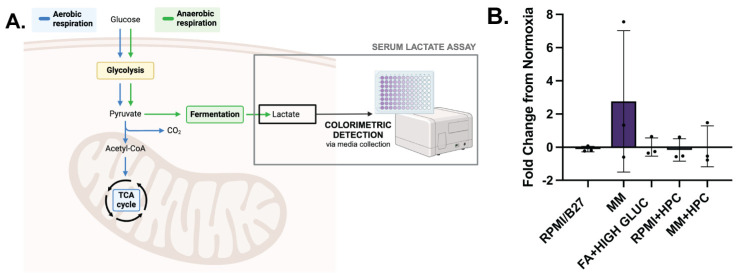
Acute myocardial infarction (MI) is a sudden, severe cardiac ischemic event that results in the death of up to one billion cardiomyocytes (CMs) and subsequent decrease in cardiac function. Engineered cardiac tissues (ECTs) are a promising approach to deliver the necessary mass of CMs to remuscularize the heart. However, the hypoxic environment of the heart post-MI presents a critical challenge for CM engraftment. Here, we present a high-throughput, systematic study targeting several physiological features of human induced pluripotent stem cell-derived CMs (hiPSC-CMs), including metabolism, Wnt signaling, substrate, heat shock, apoptosis, and mitochondrial stabilization, to assess their efficacy in promoting ischemia resistance in hiPSC-CMs. The results of 2D experiments identify hypoxia preconditioning (HPC) and metabolic conditioning as having a significant influence on hiPSC-CM function in normoxia and hypoxia. Within 3D engineered cardiac tissues (ECTs), metabolic conditioning with maturation media (MM), featuring high fatty acid and calcium concentration, results in a 1.5-fold increase in active stress generation as compared to RPMI/B27 control ECTs in normoxic conditions. Yet, this functional improvement is lost after hypoxia treatment. Interestingly, HPC can partially rescue the function of MM-treated ECTs after hypoxia. Our systematic and iterative approach provides a strong foundation for assessing and leveraging in vitro culture conditions to enhance the hypoxia resistance, and thus the successful clinical translation, of hiPSC-CMs in cardiac regenerative therapies.
急性心肌梗死(MI)是一种突发的严重心肌缺血事件,可导致多达十亿个心肌细胞(CMs)死亡,并随后导致心脏功能下降。工程化心脏组织(ECTs)是一种很有前途的方法,可以提供必要数量的 CMs 来使心脏重新肌肉化。然而,MI 后心脏的缺氧环境对 CM 移植提出了一个关键挑战。在这里,我们进行了一项高通量、系统性的研究,针对人诱导多能干细胞衍生的心肌细胞(hiPSC-CMs)的几个生理特征,包括代谢、Wnt 信号、基质、热休克、细胞凋亡和线粒体稳定,以评估它们在促进 hiPSC-CM 缺血抗性方面的功效。2D 实验结果表明,缺氧预处理(HPC)和代谢条件对 hiPSC-CM 在常氧和缺氧条件下的功能有显著影响。在 3D 工程化心脏组织(ECTs)中,用富含脂肪酸和钙的成熟培养基(MM)进行代谢条件处理,与 RPMI/B27 对照 ECTs 相比,在常氧条件下可使活性应激生成增加 1.5 倍。然而,这种功能改善在缺氧处理后消失了。有趣的是,HPC 可以部分挽救 MM 处理的 ECTs 在缺氧后的功能。我们的系统和迭代方法为评估和利用体外培养条件提供了坚实的基础,以增强 hiPSC-CMs 的缺氧抗性,从而成功地将其应用于心脏再生治疗中。