Ramadhan Roy N, Rampengan Derren D, Yumnanisha Defin A, Setiono Sabrina Bv, Tjandra Kevin C, Ariyanto Melissa V, Idrisov Bulat, Empitu Maulana A
Faculty of Medicine, Universitas Airlangga, Surabaya, Indonesia.
Faculty of Medicine, Universitas Sam Ratulangi, Manado, Indonesia.
Narra J. 2024 Aug;4(2):e786. doi: 10.52225/narra.v4i2.786. Epub 2024 Aug 7.
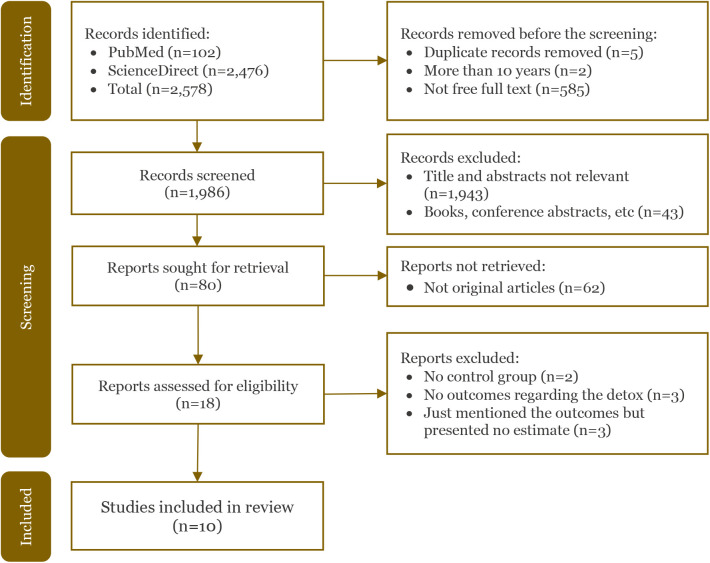
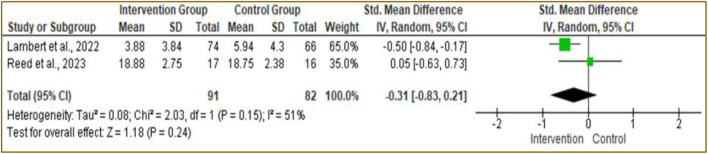
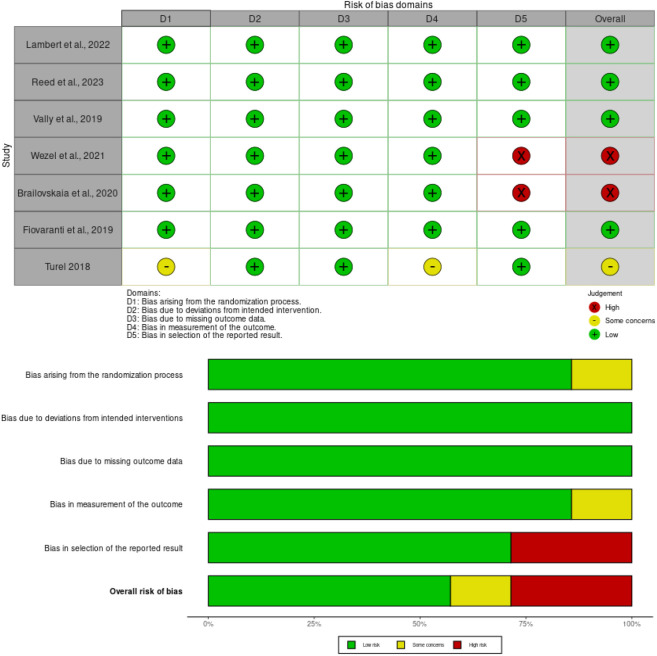
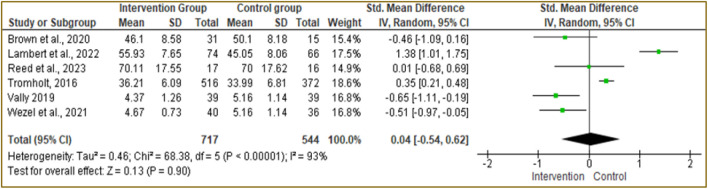
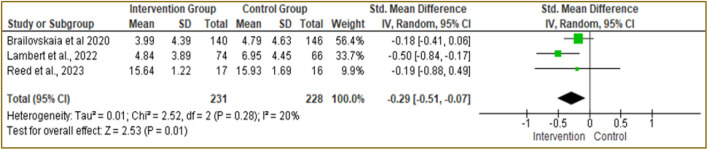
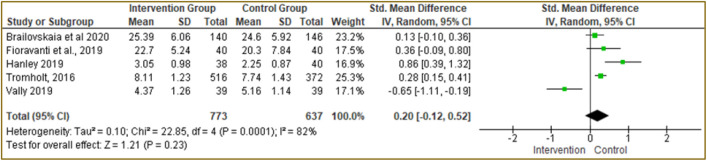
The impact of social media has been significant on various aspects of life, particularly mental health. Growing concerns about the adverse effects of social media use have prompted the exploration of experimental interventions, defined as digital detox interventions. However, it remains unclear whether digital detox interventions are effective for mental health outcomes. The aim of this study was to provide comprehensive insights into the effects of digital detox interventions on various mental health outcomes, including depression, life satisfaction, stress, and mental well-being. Following the PRISMA guidelines, systematic searches were carried out in online databases, including PubMed and ScienceDirect, within the publication range of 2013 and 2023. A total of 2578 titles and abstracts were screened, and 10 studies were included in the analysis. A risk of bias assessment was conducted using RoB 2.0 and the Newcastle-Ottawa scale, while statistical analysis was conducted using RevMan 5.4.1. Our data indicated a significant effect of digital detox in mitigating depression with the standardized mean difference (SMD: -0.29; 95%CI: -0.51, -0.07, =0.01). No statistically significant effects were discerned in terms of life satisfaction (SMD: 0.20; 95%CI: -0.12, 0.52, =0.23), stress (SMD: -0.31; 95%CI: -0.83, 0.21, =0.24), and overall mental well-being (SMD: 0.04; 95%CI: -0.54, 0.62, =0.90). These data underscore the nuanced and selective influence of digital detox on distinct facets of mental health. In conclusion, digital detox interventions significantly reduce depressive symptoms, suggesting that intentional reduction or cessation of digital engagement may help alleviate contributing factors. However, no statistically significant effects were observed in mental well-being, life satisfaction, and stress. This discrepancy may be due to the complex nature of these constructs, involving various factors beyond the scope of digital detox interventions.
社交媒体对生活的各个方面都产生了重大影响,尤其是对心理健康。人们对使用社交媒体的负面影响日益担忧,这促使了对实验性干预措施的探索,即数字排毒干预措施。然而,数字排毒干预措施对心理健康结果是否有效仍不清楚。本研究的目的是全面洞察数字排毒干预措施对各种心理健康结果的影响,包括抑郁、生活满意度、压力和心理健康状况。按照PRISMA指南,在2013年至2023年的出版范围内,在包括PubMed和ScienceDirect在内的在线数据库中进行了系统检索。共筛选了2578个标题和摘要,10项研究纳入分析。使用RoB 2.0和纽卡斯尔-渥太华量表进行偏倚风险评估,同时使用RevMan 5.4.1进行统计分析。我们的数据表明,数字排毒在减轻抑郁方面有显著效果,标准化平均差为-0.29;95%置信区间为-0.51,-0.07,P = 0.01。在生活满意度(标准化平均差:0.20;95%置信区间:-0.12,0.52,P = 0.23)、压力(标准化平均差:-0.31;95%置信区间:-0.83,0.21,P = 0.24)和总体心理健康状况(标准化平均差:0.04;95%置信区间:-0.54,0.62,P = 0.90)方面未发现统计学上的显著影响。这些数据强调了数字排毒对心理健康不同方面的细微和选择性影响。总之,数字排毒干预措施显著减轻了抑郁症状,这表明有意识地减少或停止数字参与可能有助于缓解促成因素。然而,在心理健康状况、生活满意度和压力方面未观察到统计学上的显著影响。这种差异可能是由于这些结构的复杂性,涉及数字排毒干预措施范围之外的各种因素。