• 文献检索
  • 文档翻译
  • 深度研究
  • 学术资讯
  • Suppr Zotero 插件Zotero 插件
  • 邀请有礼
  • 套餐&价格
  • 历史记录
应用&插件
Suppr Zotero 插件Zotero 插件浏览器插件Mac 客户端Windows 客户端微信小程序
定价
高级版会员购买积分包购买API积分包
服务
文献检索文档翻译深度研究API 文档MCP 服务
关于我们
关于 Suppr公司介绍联系我们用户协议隐私条款
关注我们

Suppr 超能文献

核心技术专利:CN118964589B侵权必究
粤ICP备2023148730 号-1Suppr @ 2026

文献检索

告别复杂PubMed语法,用中文像聊天一样搜索,搜遍4000万医学文献。AI智能推荐,让科研检索更轻松。

立即免费搜索

文件翻译

保留排版,准确专业,支持PDF/Word/PPT等文件格式,支持 12+语言互译。

免费翻译文档

深度研究

AI帮你快速写综述,25分钟生成高质量综述,智能提取关键信息,辅助科研写作。

立即免费体验

数字技术使用对大脑健康的影响。

Brain health consequences of digital technology use
.

机构信息

Department of Psychiatry and Biobehavioral Sciences and Semel Institute for Neuroscience and Human Behavior, the UCLA Longevity Center, David Geffen School of Medicine at the University of California, Los Angeles, California, US.

出版信息

Dialogues Clin Neurosci. 2020 Jun;22(2):179-187. doi: 10.31887/DCNS.2020.22.2/gsmall.

DOI:10.31887/DCNS.2020.22.2/gsmall
PMID:32699518
原文链接:https://pmc.ncbi.nlm.nih.gov/articles/PMC7366948/
Abstract

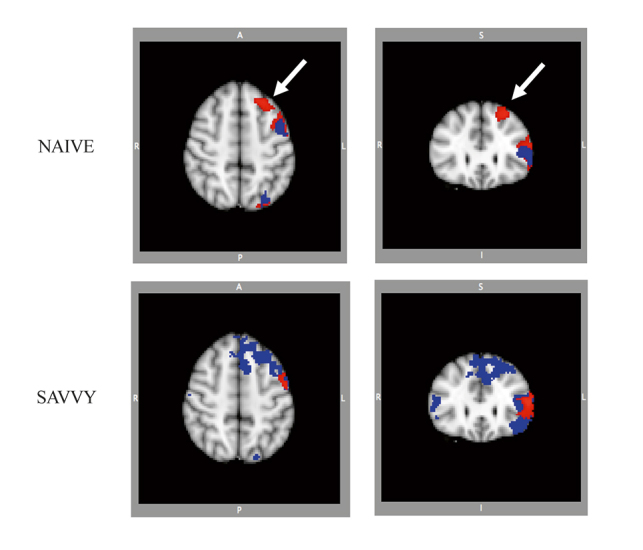
Emerging scientific evidence indicates that frequent digital technology use has a significant impact-both negative and positive-on brain function and behavior. Potential harmful effects of extensive screen time and technology use include heightened attention-deficit symptoms, impaired emotional and social intelligence, technology addiction, social isolation, impaired brain development, and disrupted sleep. However, various apps, videogames, and other online tools may benefit brain health. Functional imaging scans show that internet-naive older adults who learn to search online show significant increases in brain neural activity during simulated internet searches. Certain computer programs and videogames may improve memory, multitasking skills, fluid intelligence, and other cognitive abilities. Some apps and digital tools offer mental health interventions providing self-management, monitoring, skills training, and other interventions that may improve mood and behavior. Additional research on the positive and negative brain health effects of technology is needed to elucidate mechanisms and underlying causal relationships.
.

摘要

新兴科学证据表明,频繁使用数字技术对大脑功能和行为有重大影响——既有负面的,也有正面的。过度使用屏幕和技术可能带来的潜在有害影响包括注意力缺陷症状加剧、情绪和社交智力受损、技术成瘾、社交孤立、大脑发育受损以及睡眠紊乱。然而,各种应用程序、视频游戏和其他在线工具可能有益于大脑健康。功能成像扫描显示,学习在线搜索的互联网新手老年人在模拟在线搜索过程中大脑神经活动显著增加。某些计算机程序和视频游戏可以提高记忆力、多任务处理技能、流体智力和其他认知能力。一些应用程序和数字工具提供心理健康干预措施,提供自我管理、监测、技能培训和其他干预措施,可能改善情绪和行为。需要更多关于技术对大脑健康的积极和消极影响的研究,以阐明机制和潜在的因果关系。
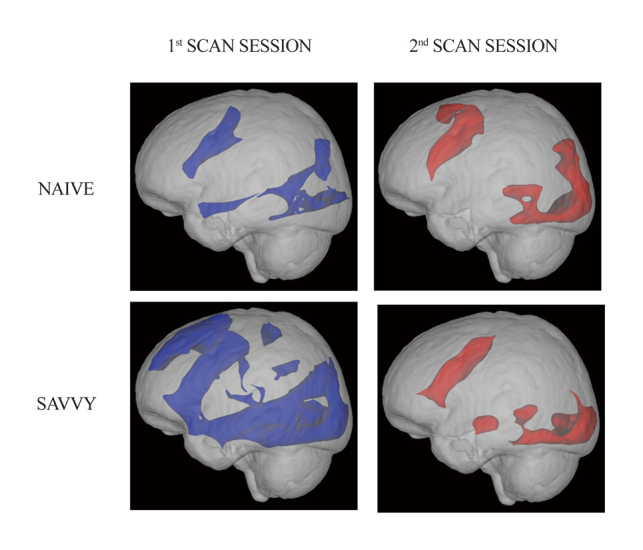
https://cdn.ncbi.nlm.nih.gov/pmc/blobs/8642/7366948/d18262a391e7/DCNS_22.2_Small_figure2.jpg
https://cdn.ncbi.nlm.nih.gov/pmc/blobs/8642/7366948/e077006827cf/DCNS_22.2_Small_figure1.jpg
https://cdn.ncbi.nlm.nih.gov/pmc/blobs/8642/7366948/d18262a391e7/DCNS_22.2_Small_figure2.jpg
https://cdn.ncbi.nlm.nih.gov/pmc/blobs/8642/7366948/e077006827cf/DCNS_22.2_Small_figure1.jpg
https://cdn.ncbi.nlm.nih.gov/pmc/blobs/8642/7366948/d18262a391e7/DCNS_22.2_Small_figure2.jpg

相似文献

1
Brain health consequences of digital technology use
.数字技术使用对大脑健康的影响。
Dialogues Clin Neurosci. 2020 Jun;22(2):179-187. doi: 10.31887/DCNS.2020.22.2/gsmall.
2
The impact of the digital revolution 
on human brain and behavior: where 
do we stand?
.数字革命对人类大脑和行为的影响:我们处于什么位置?
Dialogues Clin Neurosci. 2020 Jun;22(2):101-111. doi: 10.31887/DCNS.2020.22.2/mkorte.
3
Adolescent development and growing divides in the digital age
.青少年发展与数字时代的成长鸿沟
Dialogues Clin Neurosci. 2020 Jun;22(2):143-149. doi: 10.31887/DCNS.2020.22.2/codgers.
4
Beyond the Trial: Systematic Review of Real-World Uptake and Engagement With Digital Self-Help Interventions for Depression, Low Mood, or Anxiety.试验之外:对抑郁症、情绪低落或焦虑症数字自助干预措施的现实世界采用情况和参与度的系统评价
J Med Internet Res. 2018 Jun 6;20(6):e199. doi: 10.2196/jmir.9275.
5
Internet Addiction and Attention Deficit Hyperactivity Disorder Among Schoolchildren.学龄儿童中的网络成瘾与注意力缺陷多动障碍
Isr Med Assoc J. 2015 Dec;17(12):731-4.
6
Enrichment Effects on Adult Cognitive Development: Can the Functional Capacity of Older Adults Be Preserved and Enhanced?丰富化对成人认知发展的影响:老年人的功能能力能否得到保持和增强?
Psychol Sci Public Interest. 2008 Oct;9(1):1-65. doi: 10.1111/j.1539-6053.2009.01034.x. Epub 2008 Oct 1.
7
Adolescent brain and the natural allure of digital media
.青少年大脑与数字媒体的天然吸引力
Dialogues Clin Neurosci. 2020 Jun;22(2):127-133. doi: 10.31887/DCNS.2020.22.2/jgiedd.
8
The impact of digital technology use on adolescent well-being
.数字技术使用对青少年健康的影响。
Dialogues Clin Neurosci. 2020 Jun;22(2):135-142. doi: 10.31887/DCNS.2020.22.2/tdienlin.
9
Your brain on Google: patterns of cerebral activation during internet searching.谷歌影响下的大脑:网络搜索过程中的大脑激活模式
Am J Geriatr Psychiatry. 2009 Feb;17(2):116-26. doi: 10.1097/JGP.0b013e3181953a02.
10
Searching for digital technology's effects on well-being.探寻数字技术对幸福感的影响。
Nature. 2018 Nov;563(7733):S138-S140. doi: 10.1038/d41586-018-07503-w.

引用本文的文献

1
Alterations of the default mode network, salience network, and frontoparietal network in non-problematic Internet use and their association with mood regulation: from an internet literacy perspective.非问题性互联网使用中默认模式网络、突显网络和额顶叶网络的改变及其与情绪调节的关联:基于网络素养视角
Front Neurosci. 2025 Jul 1;19:1599987. doi: 10.3389/fnins.2025.1599987. eCollection 2025.
2
From screens to cognition: A scoping review of the impact of screen time on cognitive function in midlife and older adults.从屏幕到认知:关于屏幕使用时间对中年及老年成年人认知功能影响的范围综述
Digit Health. 2025 Jul 10;11:20552076251343989. doi: 10.1177/20552076251343989. eCollection 2025 Jan-Dec.
3

本文引用的文献

1
Outcomes of Online Mindfulness-Based Cognitive Therapy for Patients With Residual Depressive Symptoms: A Randomized Clinical Trial.在线正念认知疗法治疗残留抑郁症状患者的结局:一项随机临床试验。
JAMA Psychiatry. 2020 Jun 1;77(6):563-573. doi: 10.1001/jamapsychiatry.2019.4693.
2
The Digital Psychiatrist: In Search of Evidence-Based Apps for Anxiety and Depression.数字精神科医生:寻找基于证据的焦虑和抑郁应用程序。
Front Psychiatry. 2019 Nov 15;10:831. doi: 10.3389/fpsyt.2019.00831. eCollection 2019.
3
Associations Between Screen-Based Media Use and Brain White Matter Integrity in Preschool-Aged Children.
Longitudinal relationships between ADHD symptoms and internet addiction among Chinese adolescents: a cross-lagged panel network analysis.
中国青少年多动症症状与网络成瘾之间的纵向关系:一项交叉滞后面板网络分析
Soc Psychiatry Psychiatr Epidemiol. 2025 Jun 5. doi: 10.1007/s00127-025-02940-1.
4
Fast-paced and violent media exposure are positively associated with ADHD and impulsivity in college students.接触快节奏和暴力媒体与大学生的注意力缺陷多动障碍及冲动性呈正相关。
Front Psychol. 2025 May 12;16:1572895. doi: 10.3389/fpsyg.2025.1572895. eCollection 2025.
5
Smartphone dependency, digital amnesia, and somatic symptoms among nursing students: the challenge of artificial intelligence.护理专业学生中的智能手机依赖、数字失忆与躯体症状:人工智能的挑战
BMC Nurs. 2025 May 26;24(1):599. doi: 10.1186/s12912-025-03228-0.
6
Positive ADHD Scores are Associated With Higher Screen Time and Anxiety Symptoms in Medical Students: Cross-sectional Study.医学生中注意力缺陷多动障碍(ADHD)阳性评分与更长的屏幕使用时间及焦虑症状相关:横断面研究
Actas Esp Psiquiatr. 2025 May;53(3):494-503. doi: 10.62641/aep.v53i3.1892.
7
Effects of Digital Neurohabilitation on Attention and Memory in Patients with a Diagnosis of Pediatric Obesity: Case Series.数字神经康复对诊断为小儿肥胖症患者注意力和记忆力的影响:病例系列
Brain Sci. 2025 Mar 28;15(4):353. doi: 10.3390/brainsci15040353.
8
[Indicators of abusive use of video games in adolescents aged 12 to 14 years. Assessment by a panel of experts].[12至14岁青少年过度使用电子游戏的指标。由专家小组进行评估]
Aten Primaria. 2025 Apr 21;57(10):103255. doi: 10.1016/j.aprim.2025.103255.
9
[Use of screens by female adolescents in Brazil: practice and perceptionsUso de pantallas por parte de las adolescentes en Brasil: prácticas y percepciones].巴西女性青少年使用屏幕的情况:实践与认知 巴西青少年使用屏幕的情况:实践与认知
Rev Panam Salud Publica. 2025 Apr 18;49:e17. doi: 10.26633/RPSP.2025.17. eCollection 2025.
10
A meta-analysis of technology use and cognitive aging.技术使用与认知衰老的荟萃分析。
Nat Hum Behav. 2025 Apr 14. doi: 10.1038/s41562-025-02159-9.
屏幕媒体使用与学龄前儿童脑白质完整性的关联。
JAMA Pediatr. 2020 Jan 1;174(1):e193869. doi: 10.1001/jamapediatrics.2019.3869. Epub 2020 Jan 6.
4
Behavioral and Neural Correlates of Cognitive-Motor Interference during Multitasking in Young and Old Adults.年轻人和老年人在多任务处理中认知-运动干扰的行为和神经相关性。
Neural Plast. 2019 Jul 1;2019:9478656. doi: 10.1155/2019/9478656. eCollection 2019.
5
Problematic Social Media Use and Perceived Social Isolation in Older Adults: A Cross-Sectional Study.老年人有问题的社交媒体使用与感知社会隔离:一项横断面研究。
Gerontology. 2020;66(2):160-168. doi: 10.1159/000502577. Epub 2019 Sep 13.
6
Effectiveness of an Online CBT-I Intervention and a Face-to-Face Treatment for Shift Work Sleep Disorder: A Comparison of Sleep Diary Data.在线认知行为疗法干预和面对面治疗对轮班工作睡眠障碍的疗效比较:睡眠日记数据。
Int J Environ Res Public Health. 2019 Aug 24;16(17):3081. doi: 10.3390/ijerph16173081.
7
Use of Smartphone Apps, Social Media, and Web-Based Resources to Support Mental Health and Well-Being: Online Survey.使用智能手机应用程序、社交媒体和基于网络的资源来支持心理健康和幸福:在线调查。
JMIR Ment Health. 2019 Jul 12;6(7):e12546. doi: 10.2196/12546.
8
The "online brain": how the Internet may be changing our cognition.“在线大脑”:互联网如何改变我们的认知。
World Psychiatry. 2019 Jun;18(2):119-129. doi: 10.1002/wps.20617.
9
Telecommunication devices use, screen time and sleep in adolescents.青少年的通讯设备使用、屏幕时间与睡眠
Environ Res. 2019 Apr;171:341-347. doi: 10.1016/j.envres.2018.10.036. Epub 2018 Nov 1.
10
Risk factors for delayed social-emotional development and behavior problems at age two: Results from the All Our Babies/Families (AOB/F) cohort.两岁时社会情感发展延迟和行为问题的风险因素:来自“我们所有的婴儿/家庭”(AOB/F)队列的结果。
Health Sci Rep. 2018 Aug 28;1(10):e82. doi: 10.1002/hsr2.82. eCollection 2018 Oct.