• 文献检索
  • 文档翻译
  • 深度研究
  • 学术资讯
  • Suppr Zotero 插件Zotero 插件
  • 邀请有礼
  • 套餐&价格
  • 历史记录
应用&插件
Suppr Zotero 插件Zotero 插件浏览器插件Mac 客户端Windows 客户端微信小程序
定价
高级版会员购买积分包购买API积分包
服务
文献检索文档翻译深度研究API 文档MCP 服务
关于我们
关于 Suppr公司介绍联系我们用户协议隐私条款
关注我们

Suppr 超能文献

核心技术专利:CN118964589B侵权必究
粤ICP备2023148730 号-1Suppr @ 2026

文献检索

告别复杂PubMed语法,用中文像聊天一样搜索,搜遍4000万医学文献。AI智能推荐,让科研检索更轻松。

立即免费搜索

文件翻译

保留排版,准确专业,支持PDF/Word/PPT等文件格式,支持 12+语言互译。

免费翻译文档

深度研究

AI帮你快速写综述,25分钟生成高质量综述,智能提取关键信息,辅助科研写作。

立即免费体验

用于个性化疼痛医学的人工智能引导的传感器与设备

Sensors and Devices Guided by Artificial Intelligence for Personalized Pain Medicine.

作者信息

Xing Yantao, Yang Kaiyuan, Lu Albert, Mackie Ken, Guo Feng

机构信息

Department of Intelligent Systems Engineering, Indiana University Bloomington, Bloomington, IN 47405, USA.

Culver Academies High School, Culver, IN 46511, USA.

出版信息

Cyborg Bionic Syst. 2024 Sep 13;5:0160. doi: 10.34133/cbsystems.0160. eCollection 2024.

DOI:10.34133/cbsystems.0160
PMID:39282019
原文链接:https://pmc.ncbi.nlm.nih.gov/articles/PMC11395709/
Abstract

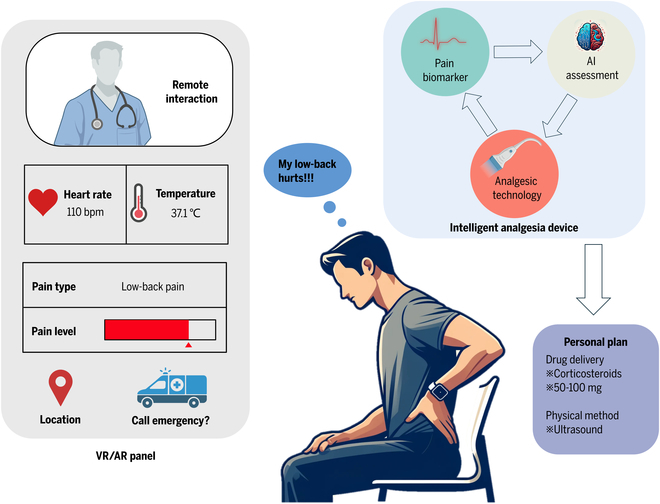
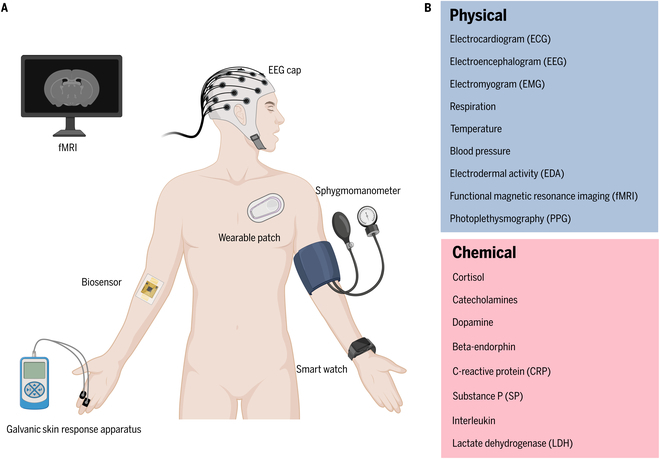
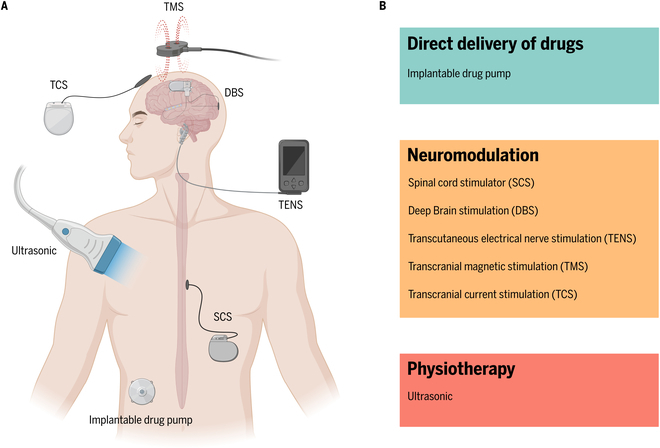
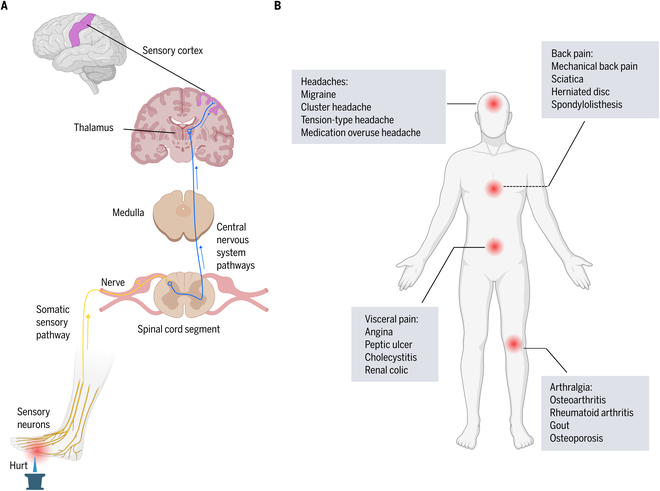
Personalized pain medicine aims to tailor pain treatment strategies for the specific needs and characteristics of an individual patient, holding the potential for improving treatment outcomes, reducing side effects, and enhancing patient satisfaction. Despite existing pain markers and treatments, challenges remain in understanding, detecting, and treating complex pain conditions. Here, we review recent engineering efforts in developing various sensors and devices for addressing challenges in the personalized treatment of pain. We summarize the basics of pain pathology and introduce various sensors and devices for pain monitoring, assessment, and relief. We also discuss advancements taking advantage of rapidly developing medical artificial intelligence (AI), such as AI-based analgesia devices, wearable sensors, and healthcare systems. We believe that these innovative technologies may lead to more precise and responsive personalized medicine, greatly improved patient quality of life, increased efficiency of medical systems, and reducing the incidence of addiction and substance use disorders.

摘要

个性化疼痛医学旨在根据个体患者的特定需求和特征量身定制疼痛治疗策略,具有改善治疗效果、减少副作用和提高患者满意度的潜力。尽管存在现有的疼痛标志物和治疗方法,但在理解、检测和治疗复杂疼痛状况方面仍存在挑战。在此,我们回顾了近期在开发各种传感器和设备以应对个性化疼痛治疗挑战方面的工程努力。我们总结了疼痛病理学的基础知识,并介绍了用于疼痛监测、评估和缓解的各种传感器和设备。我们还讨论了利用快速发展的医学人工智能(AI)取得的进展,如基于AI的镇痛设备、可穿戴传感器和医疗保健系统。我们相信,这些创新技术可能会带来更精确、更具响应性的个性化医学,极大地改善患者生活质量,提高医疗系统效率,并降低成瘾和物质使用障碍的发生率。
https://cdn.ncbi.nlm.nih.gov/pmc/blobs/d315/11395709/0c5188478872/cbsystems.0160.fig.004.jpg
https://cdn.ncbi.nlm.nih.gov/pmc/blobs/d315/11395709/d007d7b4fc24/cbsystems.0160.fig.001.jpg
https://cdn.ncbi.nlm.nih.gov/pmc/blobs/d315/11395709/9d9ce3651197/cbsystems.0160.fig.002.jpg
https://cdn.ncbi.nlm.nih.gov/pmc/blobs/d315/11395709/570c2ae7c359/cbsystems.0160.fig.003.jpg
https://cdn.ncbi.nlm.nih.gov/pmc/blobs/d315/11395709/0c5188478872/cbsystems.0160.fig.004.jpg
https://cdn.ncbi.nlm.nih.gov/pmc/blobs/d315/11395709/d007d7b4fc24/cbsystems.0160.fig.001.jpg
https://cdn.ncbi.nlm.nih.gov/pmc/blobs/d315/11395709/9d9ce3651197/cbsystems.0160.fig.002.jpg
https://cdn.ncbi.nlm.nih.gov/pmc/blobs/d315/11395709/570c2ae7c359/cbsystems.0160.fig.003.jpg
https://cdn.ncbi.nlm.nih.gov/pmc/blobs/d315/11395709/0c5188478872/cbsystems.0160.fig.004.jpg

相似文献

1
Sensors and Devices Guided by Artificial Intelligence for Personalized Pain Medicine.用于个性化疼痛医学的人工智能引导的传感器与设备
Cyborg Bionic Syst. 2024 Sep 13;5:0160. doi: 10.34133/cbsystems.0160. eCollection 2024.
2
A Comprehensive Review on Advancements in Wearable Technologies: Revolutionizing Cardiovascular Medicine.可穿戴技术进展综述:变革心血管医学
Cureus. 2024 May 29;16(5):e61312. doi: 10.7759/cureus.61312. eCollection 2024 May.
3
The Emergence of AI-Based Wearable Sensors for Digital Health Technology: A Review.人工智能可穿戴传感器在数字健康技术中的应用:综述
Sensors (Basel). 2023 Nov 29;23(23):9498. doi: 10.3390/s23239498.
4
The synergy of artificial intelligence and personalized medicine for the enhanced diagnosis, treatment, and prevention of disease.人工智能与个性化医学的协同作用,用于增强疾病的诊断、治疗和预防。
Drug Metab Pers Ther. 2024 Jul 15;39(2):47-58. doi: 10.1515/dmpt-2024-0003. eCollection 2024 Jun 1.
5
Integrating Artificial Intelligence-Driven Wearable Technology in Oncology Decision-Making: A Narrative Review.将人工智能驱动的可穿戴技术整合到肿瘤学决策中:一项叙述性综述。
Oncology. 2025;103(1):69-82. doi: 10.1159/000540494. Epub 2024 Jul 25.
6
Revolutionizing Sleep Health: The Emergence and Impact of Personalized Sleep Medicine.变革睡眠健康:个性化睡眠医学的兴起与影响
J Pers Med. 2024 Jun 4;14(6):598. doi: 10.3390/jpm14060598.
7
Artificial Intelligence (AI) and Internet of Medical Things (IoMT) Assisted Biomedical Systems for Intelligent Healthcare.人工智能 (AI) 和医疗物联网 (IoMT) 辅助的生物医学系统用于智能医疗保健。
Biosensors (Basel). 2022 Jul 25;12(8):562. doi: 10.3390/bios12080562.
8
The Role and Applications of Artificial Intelligence in the Treatment of Chronic Pain.人工智能在慢性疼痛治疗中的作用和应用。
Curr Pain Headache Rep. 2024 Aug;28(8):769-784. doi: 10.1007/s11916-024-01264-0. Epub 2024 Jun 1.
9
Charting Tomorrow's Healthcare: A Traditional Literature Review for an Artificial Intelligence-Driven Future.绘制明日医疗保健蓝图:对人工智能驱动的未来进行的传统文献综述
Cureus. 2024 Apr 11;16(4):e58032. doi: 10.7759/cureus.58032. eCollection 2024 Apr.
10
Artificial Intelligence in Medical Sensors for Clinical Decisions.用于临床决策的医学传感器中的人工智能
ACS Nano. 2021 Mar 23;15(3):3557-3567. doi: 10.1021/acsnano.1c00085. Epub 2021 Feb 23.

引用本文的文献

1
Tailored Therapies in Addiction Medicine: Redefining Opioid Use Disorder Treatment with Precision Medicine.成瘾医学中的个性化疗法:用精准医学重新定义阿片类物质使用障碍的治疗
J Pers Med. 2025 Jul 24;15(8):328. doi: 10.3390/jpm15080328.
2
Intelligent sensing devices and systems for personalized mental health.用于个性化心理健康的智能传感设备与系统。
Med X. 2025 Dec;3(1). doi: 10.1007/s44258-025-00057-3. Epub 2025 Apr 2.
3
Decoding Pain: Next-Generation In Vitro Systems for Mechanistic Insights and Drug Discovery.解码疼痛:用于机理洞察和药物发现的下一代体外系统

本文引用的文献

1
Exploiting Sound for Emerging Applications of Extracellular Vesicles.利用声音实现细胞外囊泡的新兴应用
Nano Res. 2024 Feb;17(2):462-475. doi: 10.1007/s12274-023-5840-6. Epub 2023 Jul 1.
2
Virtual Reality in Acute and Chronic Pain Medicine: An Updated Review.虚拟现实在急慢性疼痛医学中的应用:最新综述
Curr Pain Headache Rep. 2024 Sep;28(9):893-928. doi: 10.1007/s11916-024-01246-2. Epub 2024 Apr 8.
3
Performance of Artificial Intelligence (AI)-Powered Chatbots in the Assessment of Medical Case Reports: Qualitative Insights From Simulated Scenarios.
FASEB J. 2025 Aug 31;39(16):e70914. doi: 10.1096/fj.202501025RR.
4
Integrating Artificial Intelligence and Virtual Reality in Orthopedic Surgery: A Comprehensive Review.骨科手术中人工智能与虚拟现实技术的整合:综述
HSS J. 2025 Jun 17;21(3):15563316251345479. doi: 10.1177/15563316251345479.
5
Wearable sensors-based assistive technologies for patient health monitoring.基于可穿戴传感器的患者健康监测辅助技术。
Front Bioeng Biotechnol. 2025 Jun 2;13:1437877. doi: 10.3389/fbioe.2025.1437877. eCollection 2025.
6
The Role of Artificial Intelligence in Identifying Gene Variants and Improving Diagnosis.人工智能在识别基因变异和改善诊断方面的作用。
Genes (Basel). 2025 May 7;16(5):560. doi: 10.3390/genes16050560.
7
Core-Sheath Structured Yarn for Biomechanical Sensing in Health Monitoring.用于健康监测中生物力学传感的核壳结构纱线
Biomimetics (Basel). 2025 May 9;10(5):304. doi: 10.3390/biomimetics10050304.
8
The first birthday of OpenAI's Sora: A promising but cautious future in medicine.OpenAI的Sora一岁生日:医学领域充满希望但需谨慎的未来。
Int J Surg. 2025 Jun 1;111(6):4151-4154. doi: 10.1097/JS9.0000000000002432. Epub 2025 May 12.
9
Robotic Ultrasound Scanning End-Effector with Adjustable Constant Contact Force.具有可调节恒定接触力的机器人超声扫描末端执行器。
Cyborg Bionic Syst. 2025 May 2;6:0251. doi: 10.34133/cbsystems.0251. eCollection 2025.
10
Artificial Intelligence-Powered Quality Assurance: Transforming Diagnostics, Surgery, and Patient Care-Innovations, Limitations, and Future Directions.人工智能驱动的质量保证:变革诊断、手术及患者护理——创新、局限与未来方向
Life (Basel). 2025 Apr 16;15(4):654. doi: 10.3390/life15040654.
人工智能驱动的聊天机器人在医学病例报告评估中的表现:来自模拟场景的定性见解
Cureus. 2024 Feb 9;16(2):e53899. doi: 10.7759/cureus.53899. eCollection 2024 Feb.
4
Opportunities and challenges of artificial intelligence and distributed systems to improve the quality of healthcare service.人工智能和分布式系统提高医疗服务质量的机遇与挑战。
Artif Intell Med. 2024 Mar;149:102779. doi: 10.1016/j.artmed.2024.102779. Epub 2024 Jan 24.
5
Does unequal economic development contribute to the inequitable distribution of healthcare resources? Evidence from China spanning 2001-2020.经济发展不平等是否导致医疗资源分配不均?来自中国 2001-2020 年的证据。
Global Health. 2024 Mar 5;20(1):20. doi: 10.1186/s12992-024-01025-z.
6
ChatGPT in healthcare: A taxonomy and systematic review.ChatGPT 在医疗保健中的应用:分类法与系统综述。
Comput Methods Programs Biomed. 2024 Mar;245:108013. doi: 10.1016/j.cmpb.2024.108013. Epub 2024 Jan 15.
7
Prevalence and health consequences of nonmedical use of tramadol in Africa: A systematic scoping review.非洲曲马多非医疗使用的患病率及其对健康的影响:一项系统综述
PLOS Glob Public Health. 2024 Jan 18;4(1):e0002784. doi: 10.1371/journal.pgph.0002784. eCollection 2024.
8
Evaluation of skin sympathetic nervous activity for classification of intracerebral hemorrhage and outcome prediction.评估皮肤交感神经活性对脑出血的分类和预后预测。
Comput Biol Med. 2023 Nov;166:107397. doi: 10.1016/j.compbiomed.2023.107397. Epub 2023 Sep 30.
9
FUTURE OF THE LANGUAGE MODELS IN HEALTHCARE: THE ROLE OF CHATGPT.语言模型在医疗保健领域的未来:ChatGPT 的作用。
Arq Bras Cir Dig. 2023 May 8;36:e1727. doi: 10.1590/0102-672020230002e1727. eCollection 2023.
10
Wearable chemical sensors for biomarker discovery in the omics era.可穿戴化学传感器在组学时代的生物标志物发现中的应用。
Nat Rev Chem. 2022 Dec;6(12):899-915. doi: 10.1038/s41570-022-00439-w. Epub 2022 Nov 15.