CAS Key Laboratory for Agro-Ecological Processes in Subtropical Region, National Engineering Laboratory for Pollution Control and Waste Utilization in Livestock and Poultry Production, Hunan Provincial Key Laboratory of Animal Nutritional Physiology and Metabolic Process, Institute of Subtropical Agriculture, Chinese Academy of Sciences, Changsha, Hunan, China.
University of Chinese Academy of Sciences, Beijing, China.
mSystems. 2024 Oct 22;9(10):e0048324. doi: 10.1128/msystems.00483-24. Epub 2024 Sep 17.
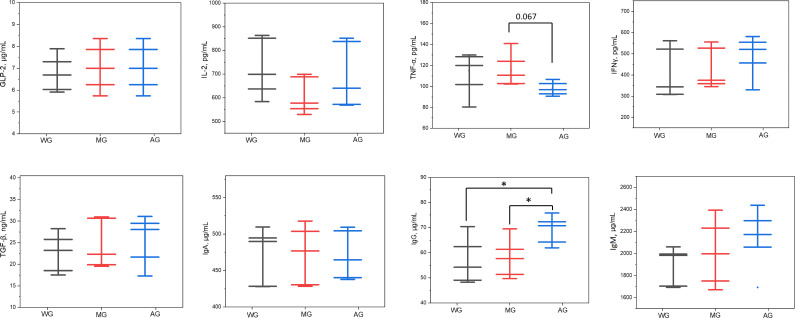
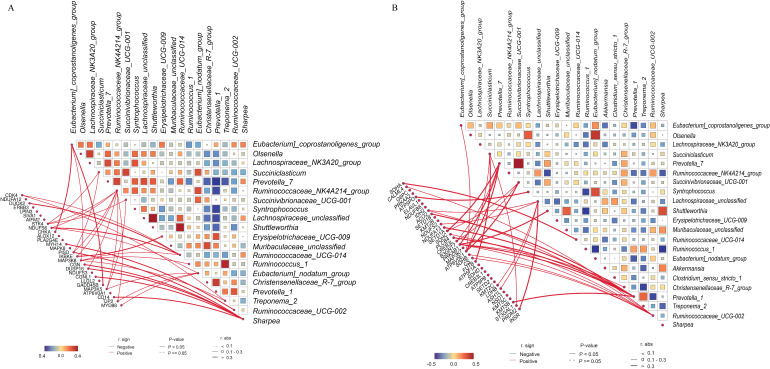
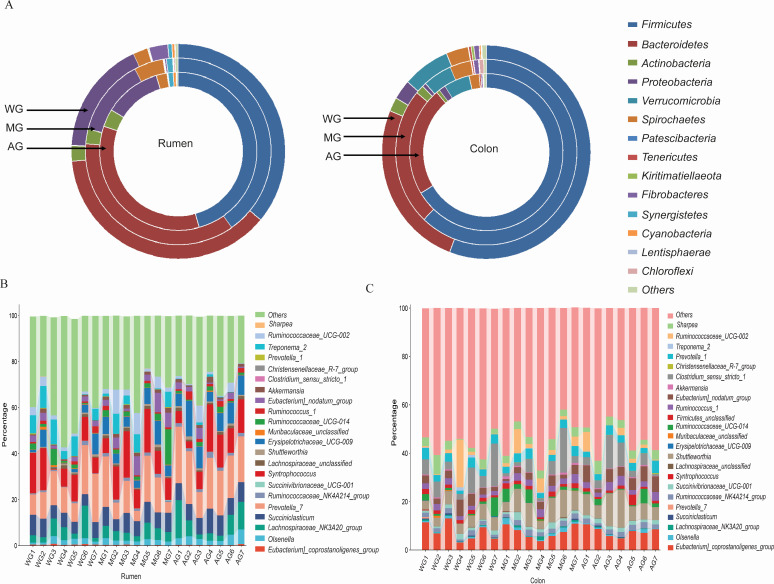
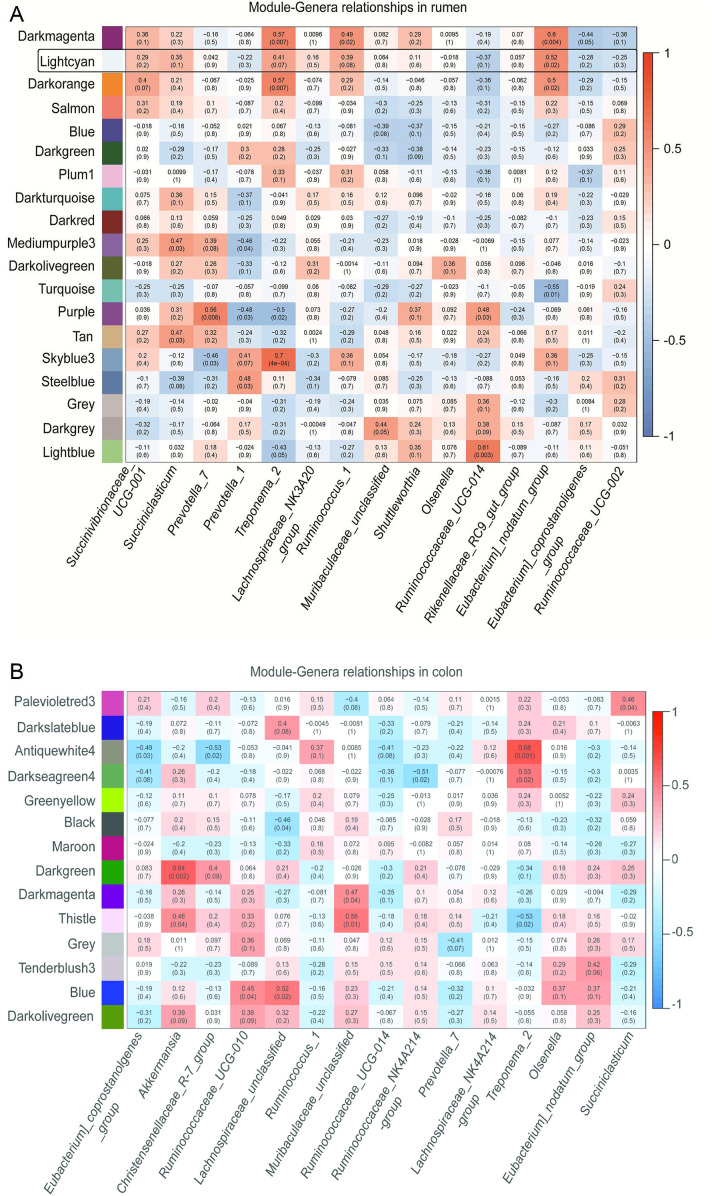
The impact of a concentrate-rich (CR) diet on the gut microbiome and epithelium homeostasis is well documented. However, it has not been systematically studied whether and how host-microbial interaction contributes to the immune homeostasis in the rumen and colon of lambs fed alfalfa hay and wheat straw, alone or combined, in a CR diet. In all, 63 lambs (initial body weight, 16.69 ± 1.50 kg) were randomly allotted to three dietary groups, each consisting of three pens with seven lambs per pen. Over 14 weeks, the lambs were fed diets as follows: 60% concentrate supplemented with either 40% wheat straw (WG), 20% alfalfa hay combined with 20% wheat straw (MG), or 40% alfalfa hay (AG). The present findings showed that lambs in the AG group had greater ( < 0.05) IgG and lower ( = 0.067) tumor necrosis factor-alpha concentrations relative to those in the MG and WG groups. The 16S rRNA analysis highlighted that various bacterial phyla and genera in the rumen and colon preferentially degrade fiber and starch derived from alfalfa hay and wheat straw. The weighted gene co-expression network analysis revealed that the bacterial genera from the are broadly associated with genes involved in various signaling pathways, underscoring the potential role of as key drivers of host-microbial interactions under the present feeding conditions. These findings shed light on the fact that the rumen and colon immune homeostasis is distinctively influenced by diets of alfalfa hay, wheat straw, or their combination in a CR diet. Further studies should examine the prolonged effects of replacing wheat straw with alfalfa hay in a concentrate-rich diet formulated to provide equivalent neutral detergent fiber levels. This could reveal how various forage fibers influence host-microbial interactions and gut health.IMPORTANCEIn contemporary feedlots, a growing trend is to feed animals a concentrate-rich (CR) diet that could disrupt the synchronized interplay between microbes and host metabolism, leading to altered metabolic functions. Wheat straw and alfalfa hay have different levels of protein and neutral detergent fiber, each with varying rates of digestion. It is unclear how including alfalfa hay and wheat straw, alone or combined in a CR diet, influences the host-microbial consortia and immune homeostasis. Herein, we showed that rumen and colon showed differential immune responses to the alfalfa hay, wheat straw, or both. Bacterial genera preferentially degrade fiber and starch derived from alfalfa hay, wheat straw, or both. Bacterial genera from phylum play a pivotal role in driving the host-microbial interactions, as indicated by their extensive association with genes across various signaling pathways.
富含浓缩物(CR)的饮食对肠道微生物组和上皮细胞稳态的影响已有充分的记录。然而,尚未系统研究宿主-微生物相互作用是否以及如何有助于羔羊在 CR 饮食中单独或组合食用苜蓿干草和小麦秸秆时的瘤胃和结肠中的免疫稳态。总共 63 只羔羊(初始体重,16.69±1.50kg)被随机分配到三个饮食组,每个组由三个围栏组成,每个围栏有 7 只羔羊。在 14 周的时间里,羔羊分别喂食以下饮食:60%浓缩物补充 40%小麦秸秆(WG)、20%苜蓿干草与 20%小麦秸秆混合(MG)或 40%苜蓿干草(AG)。本研究结果表明,AG 组的 IgG 浓度较高(<0.05),肿瘤坏死因子-α浓度较低(=0.067),而 MG 和 WG 组则较低。16S rRNA 分析突出显示,瘤胃和结肠中的各种细菌门和属优先降解来自苜蓿干草和小麦秸秆的纤维和淀粉。加权基因共表达网络分析显示,来自 的细菌属与参与各种信号通路的基因广泛相关,这突显了在目前的饲养条件下,作为宿主-微生物相互作用关键驱动因素的潜力。这些发现表明,在 CR 饮食中,苜蓿干草、小麦秸秆或其组合对瘤胃和结肠的免疫稳态具有明显的影响。进一步的研究应该检查用苜蓿干草替代小麦秸秆在富含浓缩物的饮食中的长期效果,以提供相当于中性洗涤剂纤维的水平。这可以揭示各种饲料纤维如何影响宿主-微生物相互作用和肠道健康。
重要性
在当代饲养场,一种日益增长的趋势是给动物喂食富含浓缩物(CR)的饮食,这可能会破坏微生物和宿主代谢之间的同步相互作用,导致代谢功能改变。小麦秸秆和苜蓿干草的蛋白质和中性洗涤剂纤维含量不同,消化速度也不同。目前尚不清楚在 CR 饮食中单独或组合使用苜蓿干草和小麦秸秆会如何影响宿主-微生物联合体和免疫稳态。在这里,我们表明,瘤胃和结肠对苜蓿干草、小麦秸秆或两者的免疫反应不同。细菌属优先降解来自苜蓿干草、小麦秸秆或两者的纤维和淀粉。门的细菌属在驱动宿主-微生物相互作用方面起着关键作用,这表明它们与各种信号通路中的基因广泛相关。