Zadegan Sobhan Bahrami, Kim Wonseok, Abbas Hafiz Muhammad Khalid, Kim Sunhyung, Krishnan Hari B, Hewezi Tarek
Department of Plant Sciences, University of Tennessee, Knoxville, TN, United States.
Graduate School of Genome Science and Technology, University of Tennessee, Knoxville, TN, United States.
Front Plant Sci. 2024 Sep 3;15:1435632. doi: 10.3389/fpls.2024.1435632. eCollection 2024.
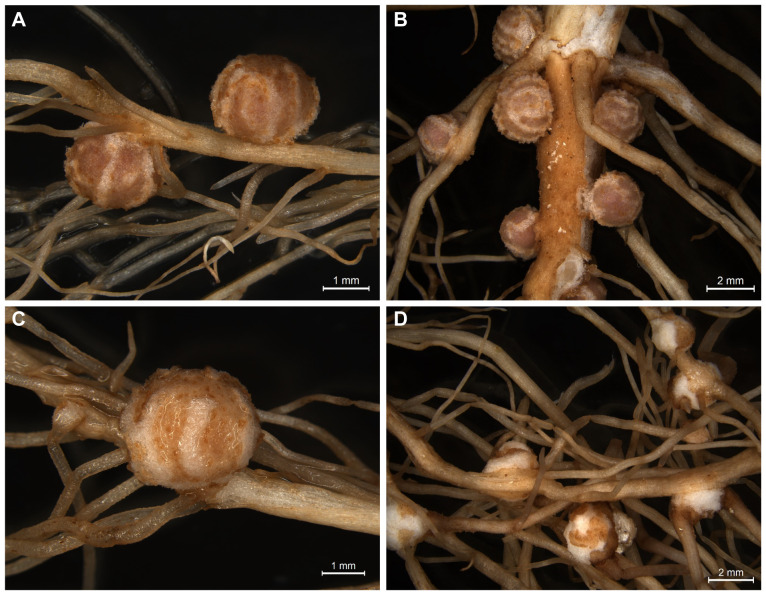
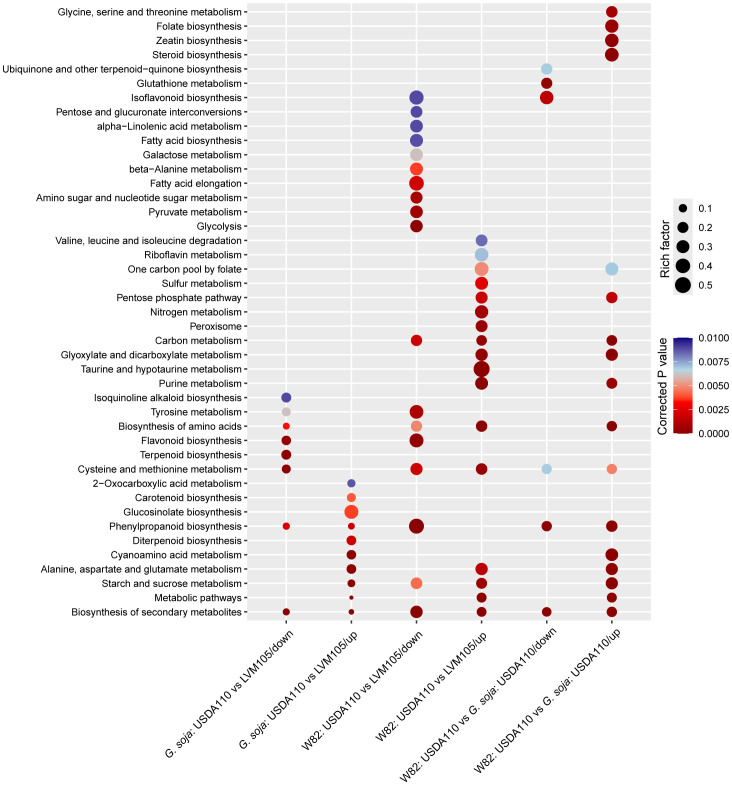
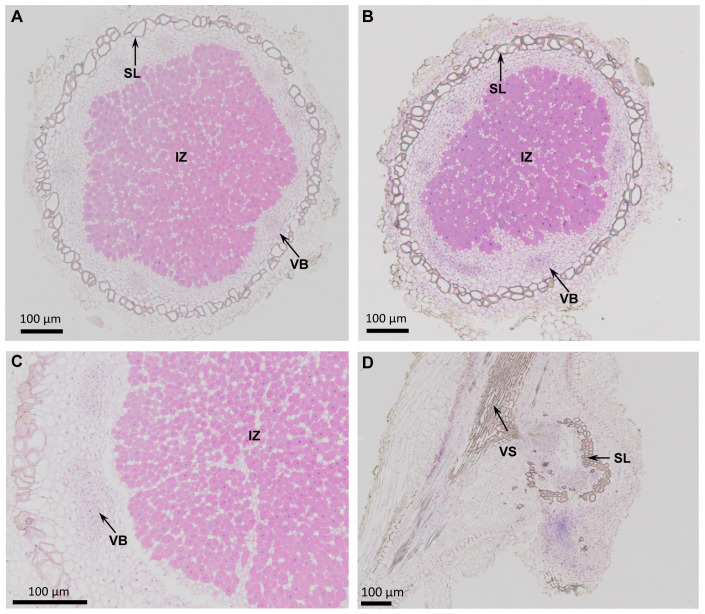
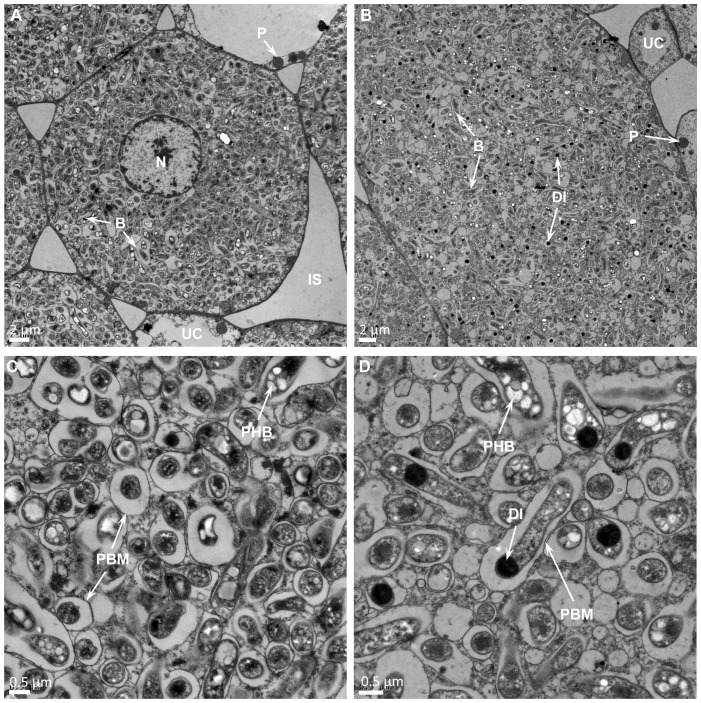
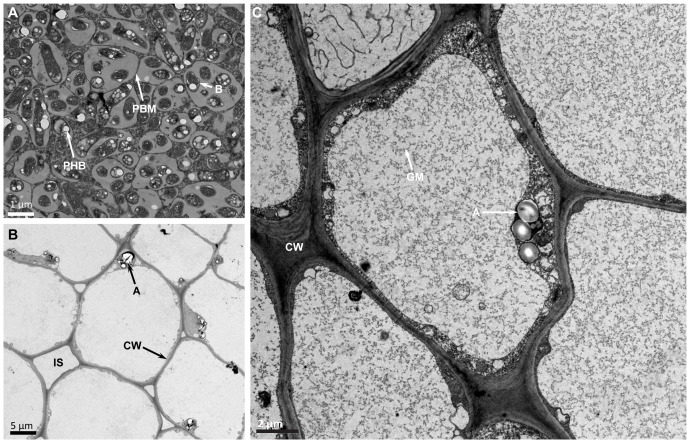
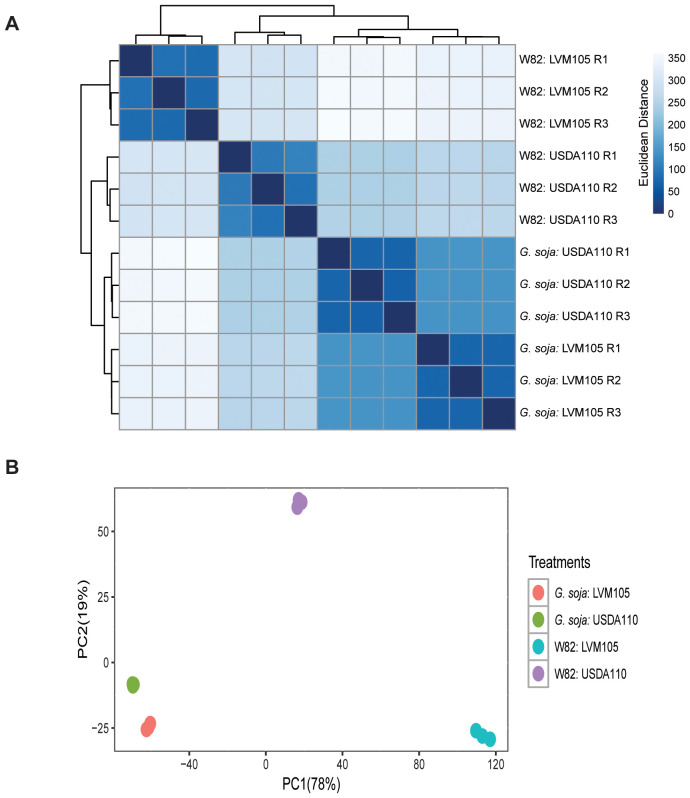
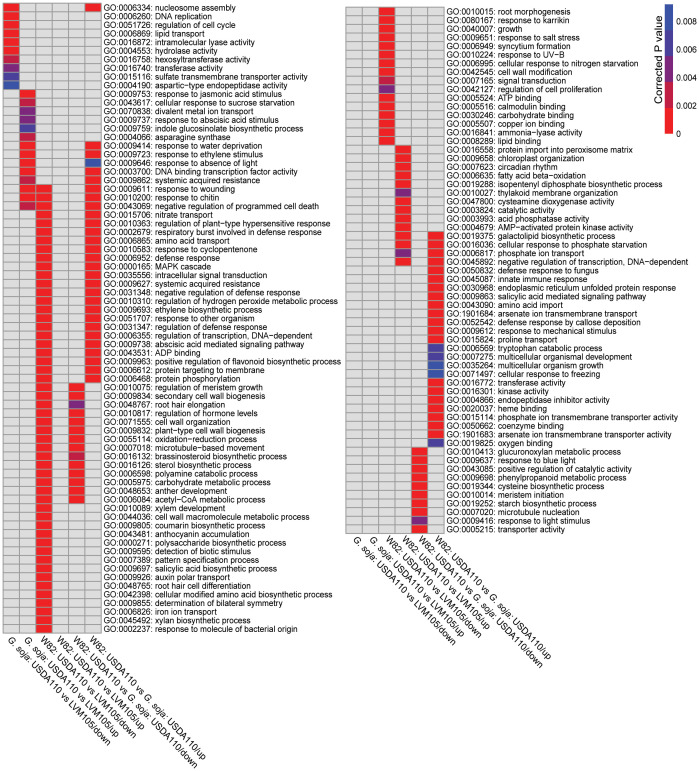
Various species of establish compatible symbiotic relationships with soybean () leading to the formation of nitrogen-fixing nodules in roots. The formation of functional nodules is mediated through complex developmental and transcriptional reprogramming that involves the activity of thousands of plant genes. However, host transcriptome that differentiate between functional or non-functional nodules remain largely unexplored. In this study, we investigated differential compatibilities between rhizobium strains ( USDA110 sp. strain LVM105) and cultivated and wild soybeans. The nodulation assays revealed that both USDA110 and LVM105 strains effectively nodulate but only USDA110 can form symbiotic relationships with Williams 82. LVM105 formed pseudonodules on Williams 82 that consist of a central nodule-like mass that are devoid of any rhizobia. RNA-seq data revealed that USDA110 and LVM105 induce distinct transcriptome programing in functional mature nodules formed on roots, where genes involved in nucleosome assembly, DNA replication, regulation of cell cycle, and defense responses play key roles. Transcriptome comparison also suggested that activation of genes associated with cell wall biogenesis and organization and defense responses together with downregulation of genes involved in the biosynthesis of isoprenoids and antioxidant stress are associated with the formation of non-functional nodules on Williams 82 roots. Moreover, our analysis implies that increased activity of genes involved in oxygen binding, amino acid transport, and nitrate transport differentiates between fully-developed nodules in cultivated versus wild soybeans.
多种根瘤菌与大豆()建立了相容的共生关系,导致根部形成固氮根瘤。功能性根瘤的形成是通过复杂的发育和转录重编程介导的,这涉及数千个植物基因的活性。然而,区分功能性或非功能性根瘤的宿主转录组在很大程度上仍未被探索。在本研究中,我们调查了根瘤菌菌株(美国农业部110号 种菌株LVM105)与栽培大豆和野生大豆之间的差异相容性。结瘤试验表明,美国农业部110号和LVM105菌株都能有效地使结瘤,但只有美国农业部110号能与威廉姆斯82号形成共生关系。LVM105在威廉姆斯82号上形成了假根瘤,其由中央根瘤样团块组成,不含任何根瘤菌。RNA测序数据显示,美国农业部110号和LVM105在根上形成的功能性成熟根瘤中诱导了不同的转录组编程,其中参与核小体组装、DNA复制、细胞周期调控和防御反应的基因发挥着关键作用。转录组比较还表明,与细胞壁生物合成和组织以及防御反应相关的基因的激活,以及与类异戊二烯生物合成和抗氧化应激相关的基因的下调,与威廉姆斯82号根上非功能性根瘤的形成有关。此外,我们的分析表明,参与氧结合、氨基酸转运和硝酸盐转运的基因活性增加,区分了栽培大豆和野生大豆中完全发育的根瘤。