CAS Key Laboratory of Urban Pollutant Conversion, Department of Environmental Science and Engineering, University of Science and Technology of China, Hefei 230026, China.
Sci Adv. 2024 Sep 20;10(38):eadp2179. doi: 10.1126/sciadv.adp2179. Epub 2024 Sep 18.
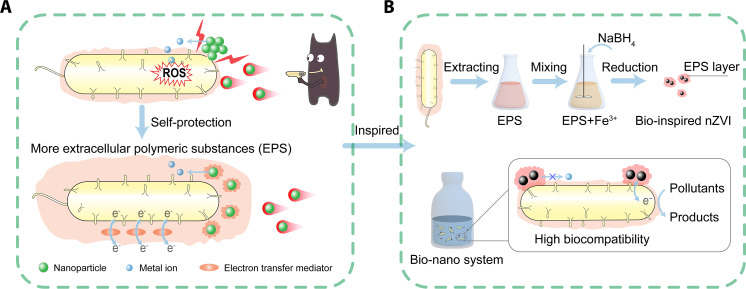
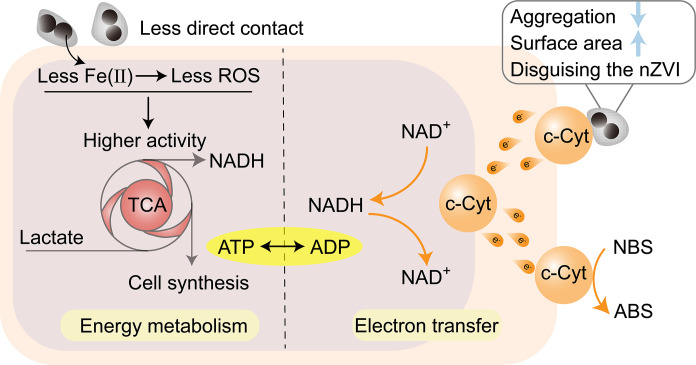
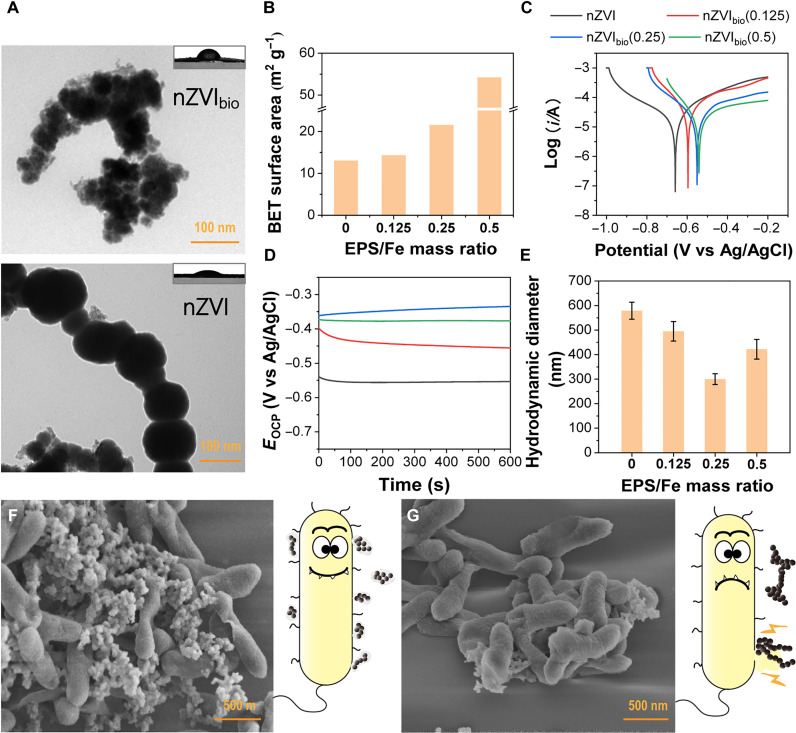
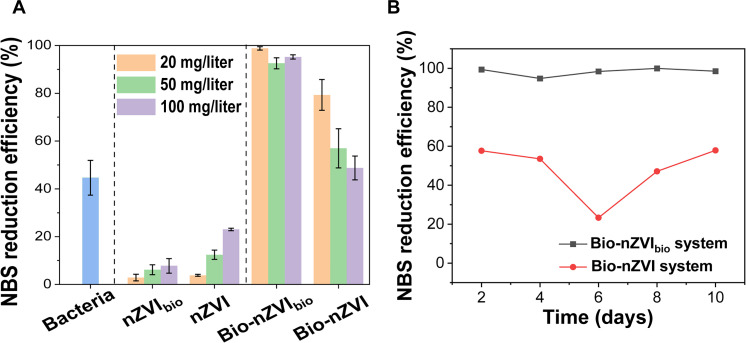
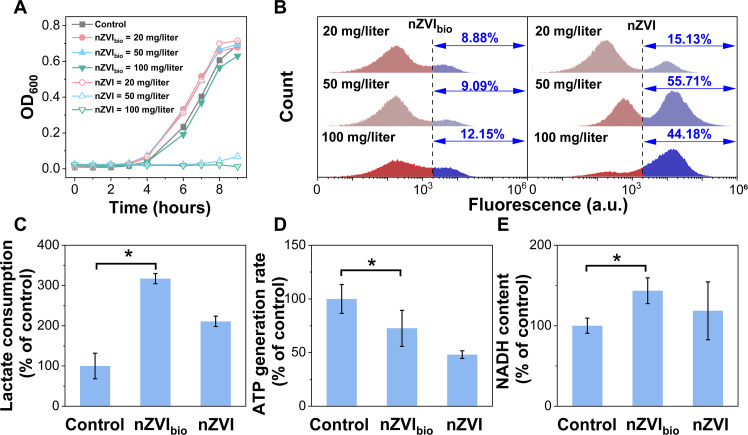
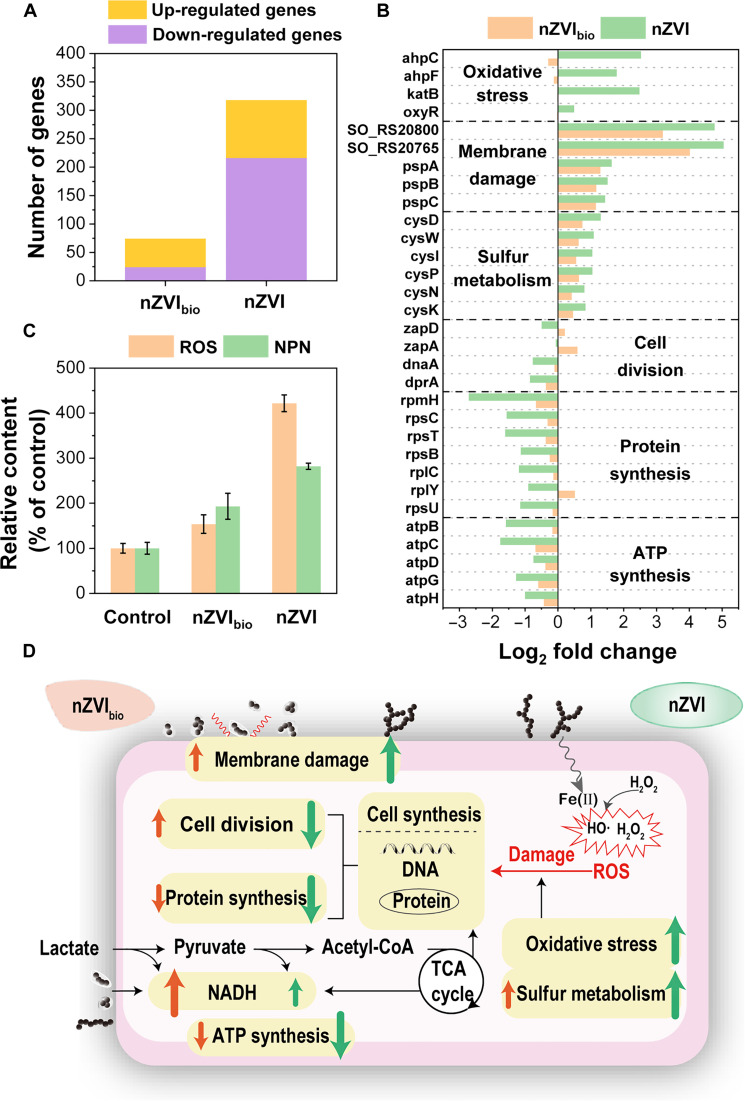
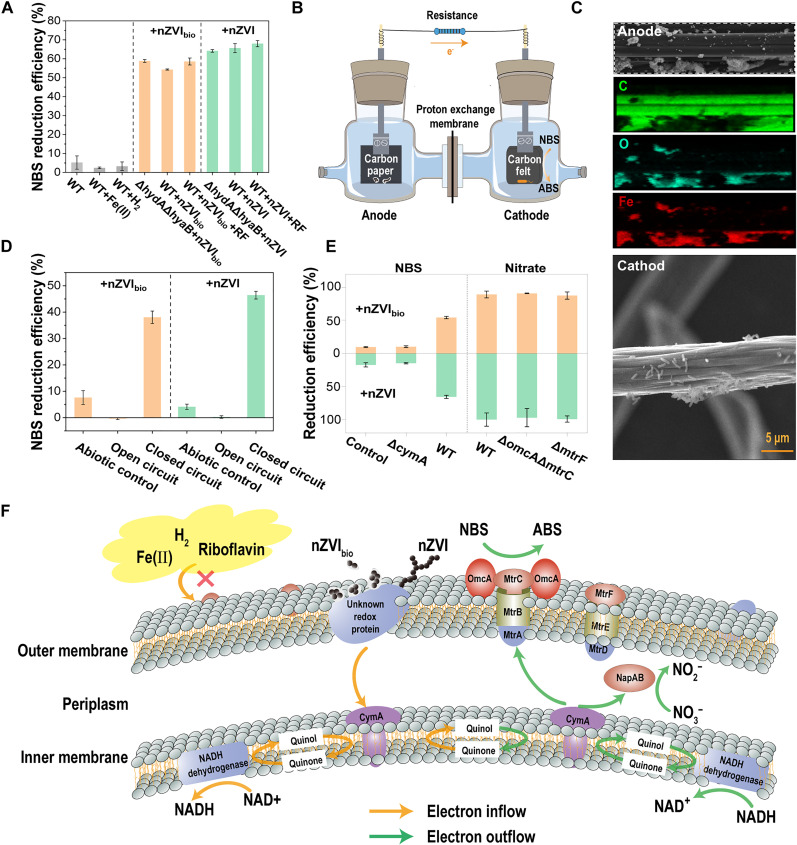
Nanomaterials can empower microbial-based chemical production or pollutant removal, e.g., nano zero-valent iron (nZVI) as an electron source to enhance microbial reducing pollutants. Constructing bio-nano interfaces is critical for bio-nano system operation, but low interfacial compatibility due to nanotoxicity challenges the system performance. Inspired by microorganisms' resistance to nanotoxicity by secreting extracellular polymeric substances (EPS), which can act as electron shuttling media, we design a highly compatible bio-nano interface by modifying nZVI with EPS, markedly improving the performance of a bio-nano system consisting of nZVI and bacteria. EPS modification reduced membrane damage and oxidative stress induced by nZVI. Moreover, EPS alleviated nZVI agglomeration and probably reduced bacterial rejection of nZVI by wrapping camouflage, contributing to the bio-nano interface formation, thereby facilitating nZVI to provide electrons for bacterial reducing pollutant via membrane-anchoring cytochrome c. This work provides a strategy for designing a highly biocompatible interface to construct robust and efficient bio-nano systems for environmental implication.
纳米材料可以为基于微生物的化学物质生产或污染物去除提供助力,例如,纳米零价铁(nZVI)作为电子源,可增强微生物对污染物的还原能力。构建生物-纳米界面对于生物-纳米系统的运行至关重要,但由于纳米毒性导致的低界面兼容性挑战了系统的性能。受微生物通过分泌胞外聚合物(EPS)来抵抗纳米毒性的启发,EPS 可以作为电子穿梭介质,我们通过用 EPS 修饰 nZVI 设计了一种高度兼容的生物-纳米界面,显著提高了由 nZVI 和细菌组成的生物-纳米系统的性能。EPS 修饰减少了 nZVI 引起的膜损伤和氧化应激。此外,EPS 缓解了 nZVI 的团聚,并可能通过包裹伪装减轻了细菌对 nZVI 的排斥,有助于生物-纳米界面的形成,从而促进 nZVI 通过膜锚定细胞色素 c 为细菌还原污染物提供电子。这项工作为设计高度生物兼容的界面提供了一种策略,以构建用于环境影响的稳健且高效的生物-纳米系统。