Public Health Research Centre, Comprehensive Health Research Center, NOVA National School of Public Health, CHRC, REAL, CCAL, NOVA University Lisbon, Lisbon, Portugal.
National Institute of Health Doutor Ricardo Jorge, Lisbon, Portugal.
BMC Infect Dis. 2024 Sep 19;24(1):1001. doi: 10.1186/s12879-024-09896-8.
Identifying symptom clusters in Long COVID is necessary for developing effective therapies for this diverse condition and improving the quality of life of those affected by this heterogeneous condition. In this study, we aimed to identify and compare symptom clusters at 9 and 12 months after a SARS-CoV-2 positive test and describe each cluster regarding factors at infection.
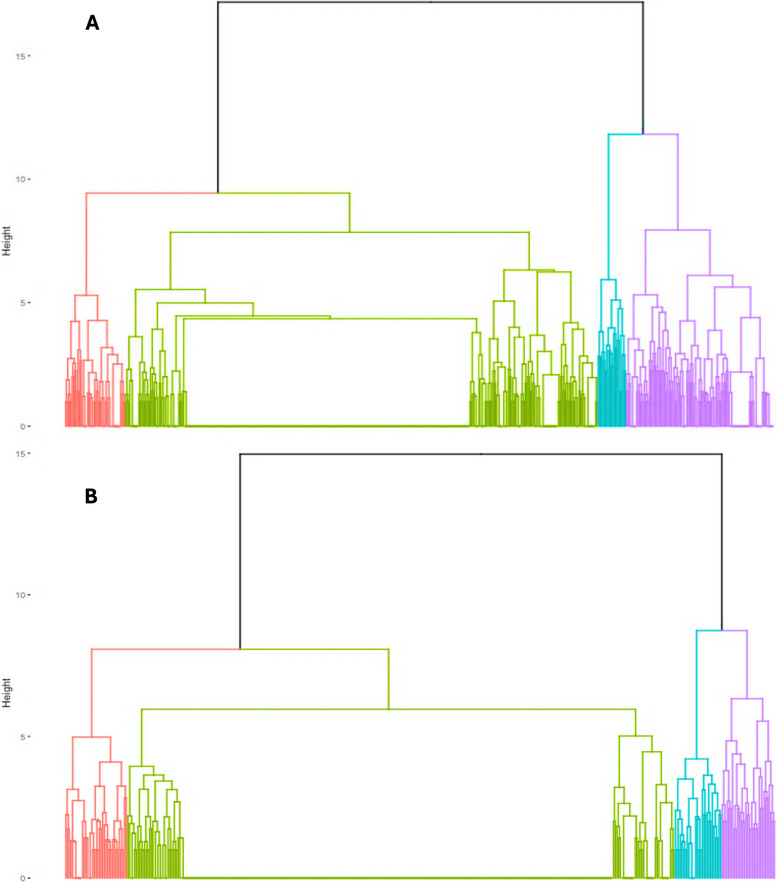
This is a cross-sectional study with individuals randomly selected from the Portuguese National System of Epidemiological Surveillance (SINAVE) database. Individuals who had a positive RT-PCR SARS-CoV-2 test in August 2022 were contacted to participate in a telephonic interview approximately 9 and 12 months after the test. A hierarchical clustering analysis was performed, using Euclidean distance and Ward's linkage. Clustering was performed in the 35 symptoms reported 9 and 12 months after the SARS-CoV-2 positive test and characterised considering age, sex, pre-existing health conditions and symptoms at time of SARS-CoV-2 infection.
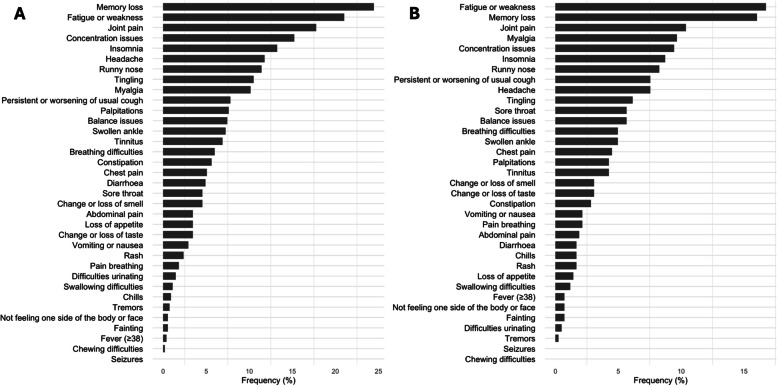
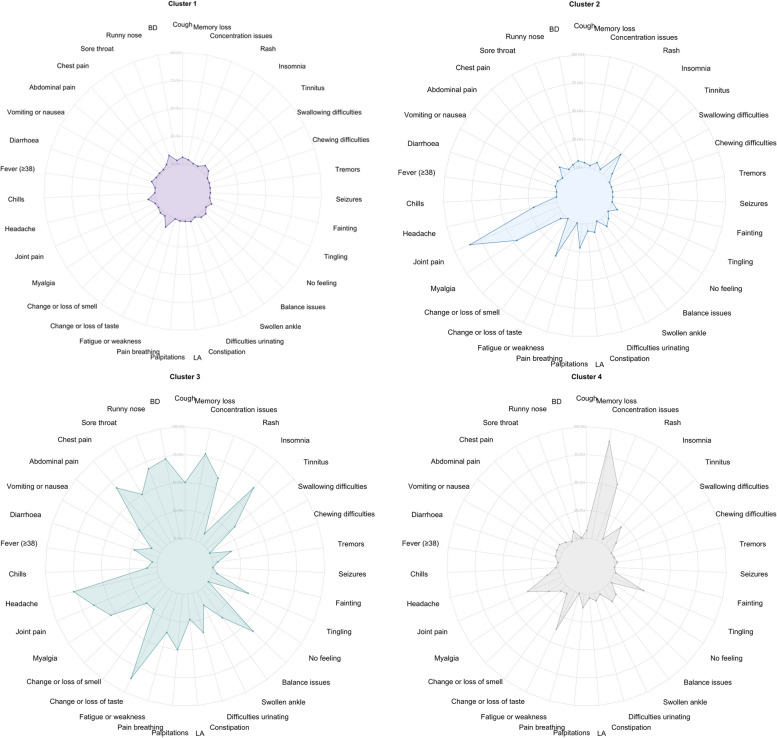
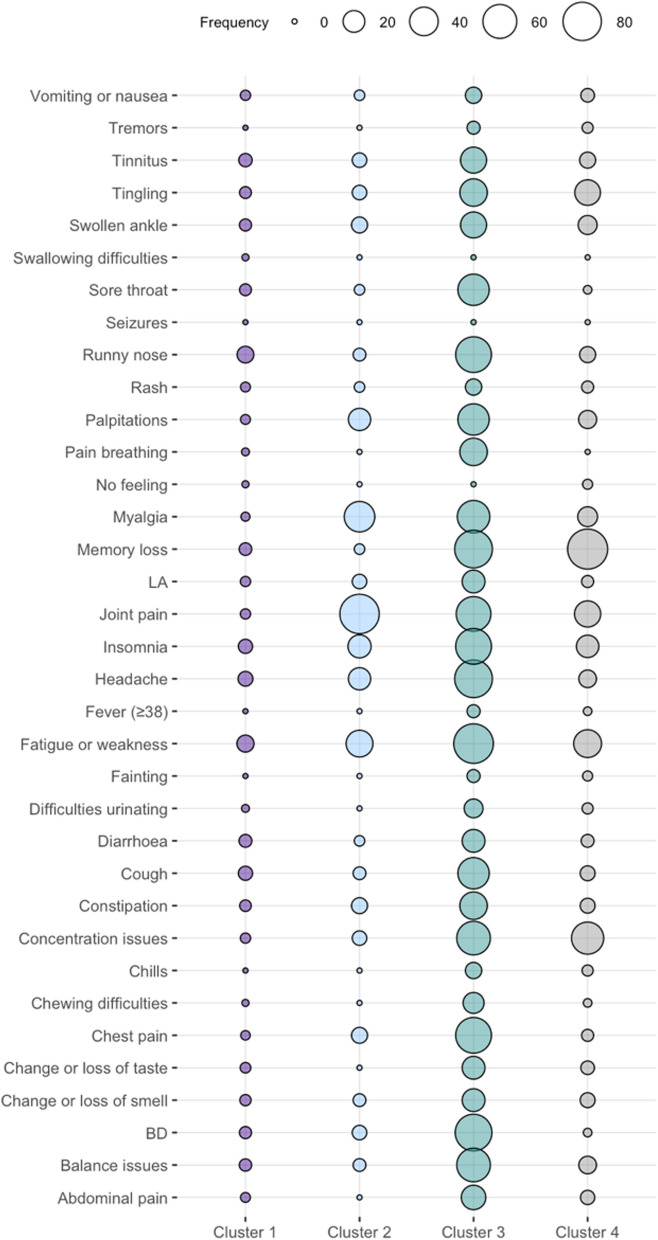
552 individuals were included at 9 months and 458 at 12 months. The median age was 52 years (IQR: 40-64 years) and 59% were female. Hypertension and high cholesterol were the most frequently reported pre-existing health conditions. Memory loss, fatigue or weakness and joint pain were the most frequent symptoms reported 9 and 12 months after the positive test. Four clusters were identified at both times: no or minor symptoms; multi-symptoms; joint pain; and neurocognitive-related symptoms. Clusters remained similar in both times, but, within the neurocognitive cluster, memory loss and concentration issues increased in frequency at 12 months. Multi-symptoms cluster had older people, more females and more pre-existing health conditions at 9 months. However, at 12 months, older people and those with more pre-existing health conditions were in joint pain cluster.
Our results suggest that Long COVID is not the same for everyone. In our study, clusters remained similar at 9 and 12 months, except for a slight variation in the frequency of symptoms that composed each cluster. Understanding Long COVID clusters might help identify treatments for this condition. However, further validation of the observed clusters and analysis of its risk factors is needed.
确定长新冠症状群对于开发针对这种多样化疾病的有效疗法以及改善受这种异质疾病影响的人的生活质量是必要的。在这项研究中,我们的目的是确定并比较 SARS-CoV-2 阳性检测后 9 个月和 12 个月的症状群,并描述每个症状群与感染时的因素有关。
这是一项横断面研究,研究对象随机选自葡萄牙国家流行病学监测系统(SINAVE)数据库。于 2022 年 8 月进行 SARS-CoV-2 阳性 RT-PCR 检测的个体被联系参加大约在检测后 9 个月和 12 个月的电话访谈。使用欧几里得距离和 Ward 链接进行层次聚类分析。在 SARS-CoV-2 阳性检测后 9 个月和 12 个月报告的 35 个症状中进行聚类,并考虑年龄、性别、既往健康状况和 SARS-CoV-2 感染时的症状进行特征描述。
552 名个体在 9 个月时纳入,458 名个体在 12 个月时纳入。中位年龄为 52 岁(IQR:40-64 岁),59%为女性。高血压和高胆固醇是最常报告的既往健康状况。记忆丧失、疲劳或虚弱以及关节疼痛是阳性检测后 9 个月和 12 个月报告最频繁的症状。在两个时间点均发现了 4 个聚类:无症状或症状轻微;多种症状;关节疼痛;和神经认知相关症状。聚类在两个时间点都相似,但在神经认知聚类中,记忆丧失和注意力问题在 12 个月时的频率增加。多症状聚类在 9 个月时,患者年龄较大,女性较多,既往健康状况较多。然而,在 12 个月时,年龄较大和既往健康状况较多的患者在关节疼痛聚类中。
我们的结果表明,长新冠对每个人来说都不一样。在我们的研究中,聚类在 9 个月和 12 个月时保持相似,除了组成每个聚类的症状频率略有变化。了解长新冠聚类可能有助于确定针对这种疾病的治疗方法。然而,需要进一步验证所观察到的聚类并分析其危险因素。