Department of Laboratory Medicine, First Hospital of Jilin University, Changchun, China.
Bethune Institute of Epigenetic Medicine, First Hospital of Jilin University, Changchun, Jilin, China.
Respir Res. 2024 Sep 19;25(1):343. doi: 10.1186/s12931-024-02974-0.
The COVID-19 pandemic has escalated into a severe global public health crisis, with persistent sequelae observed in some patients post-discharge. However, metabolomic characterization of the reconvalescent remains unclear.
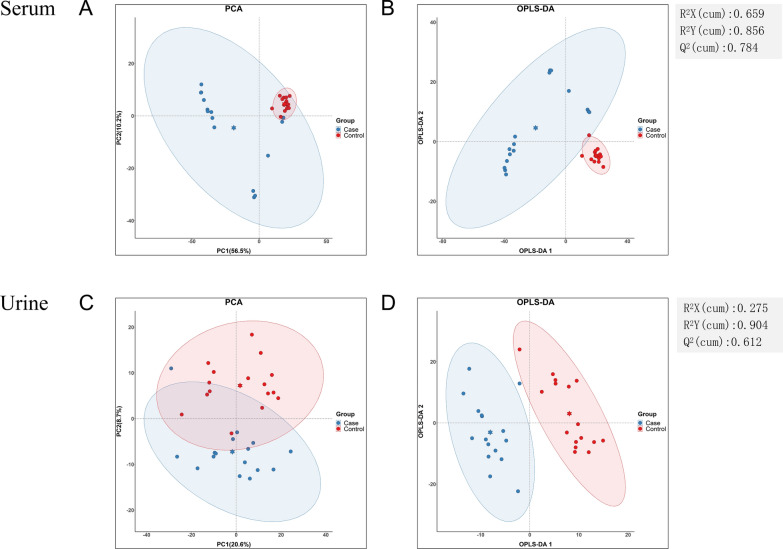
In this study, serum and urine samples from COVID-19 survivors (n = 16) and healthy subjects (n = 16) underwent testing via the non-targeted metabolomics approach using UPLC-MS/MS. Univariate and multivariate statistical analyses were conducted to delineate the separation between the two sample groups and identify differentially expressed metabolites. By integrating random forest and cluster analysis, potential biomarkers were screened, and the differential metabolites were subsequently subjected to KEGG pathway enrichment analysis.
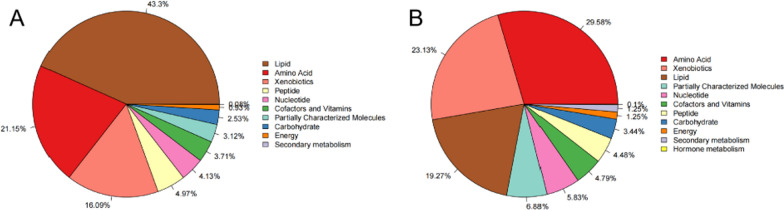
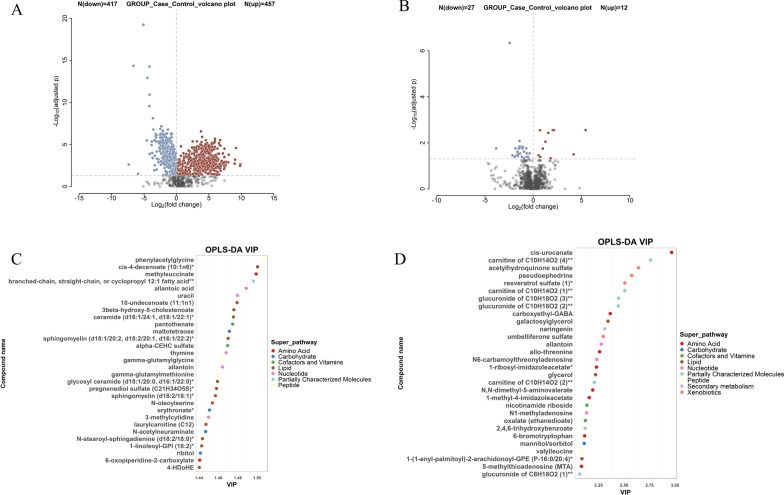
Significant differences were observed in the serum and urine metabolic profiles between the two groups. In serum samples, 1187 metabolites were detected, with 874 identified as significant (457 up-regulated, 417 down-regulated); in urine samples, 960 metabolites were detected, with 39 deemed significant (12 up-regulated, 27 down-regulated). Eight potential biomarkers were identified, with KEGG analysis revealing significant enrichment in several metabolic pathways, including arginine biosynthesis.
This study offers an overview of the metabolic profiles in serum and urine of COVID-19 survivors, providing a reference for post-discharge monitoring and the prognosis of COVID-19 patients.
COVID-19 大流行已演变为一场严重的全球公共卫生危机,一些出院后的患者仍存在持续的后遗症。然而,对康复患者的代谢组学特征仍不清楚。
本研究采用 UPLC-MS/MS 非靶向代谢组学方法,对 16 名 COVID-19 幸存者和 16 名健康对照者的血清和尿液样本进行检测。采用单变量和多变量统计分析方法来描绘两组样本之间的分离,并确定差异表达的代谢物。通过随机森林和聚类分析整合,筛选潜在的生物标志物,随后对差异代谢物进行 KEGG 通路富集分析。
两组间血清和尿液代谢谱存在显著差异。血清样本中检测到 1187 种代谢物,其中 874 种被鉴定为显著差异(457 种上调,417 种下调);尿液样本中检测到 960 种代谢物,其中 39 种被认为有显著差异(12 种上调,27 种下调)。鉴定出 8 个潜在的生物标志物,KEGG 分析显示这些生物标志物显著富集在精氨酸生物合成等多种代谢途径中。
本研究概述了 COVID-19 幸存者血清和尿液中的代谢谱,为 COVID-19 患者出院后的监测和预后提供了参考。