Zhang Ziyun, Shi Peng, Zhang Kai, Li Chenyang, Feng Xiaosu
School of Life and Health, Huzhou College, Huzhou, China.
School of Physical Education, Shanghai University of Sport, Shanghai, China.
Front Hum Neurosci. 2024 Sep 5;18:1418803. doi: 10.3389/fnhum.2024.1418803. eCollection 2024.
Explore the plasticity of the frontal associative areas in children and adolescents induced by exercise and potential moderating variables.
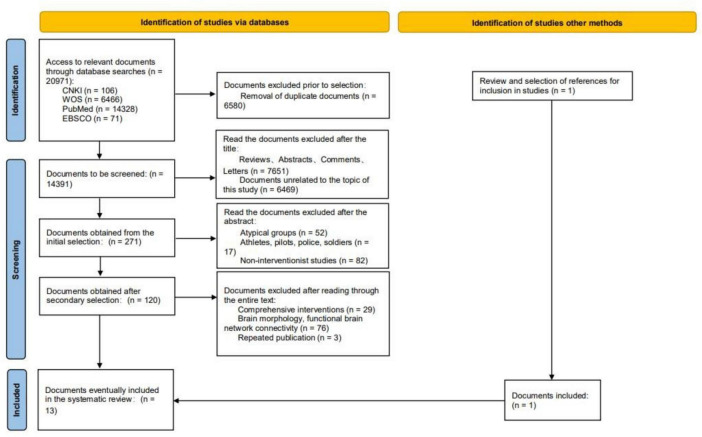
Computer searches of CNKI, WOS, PubMed and EBSCO databases were conducted, and statistical analyses were performed based on SPSS 25.0, Stata 12.0 and Ginger ALE 2.3 software after literature screening, data extraction and quality assessment were performed independently by two researchers.
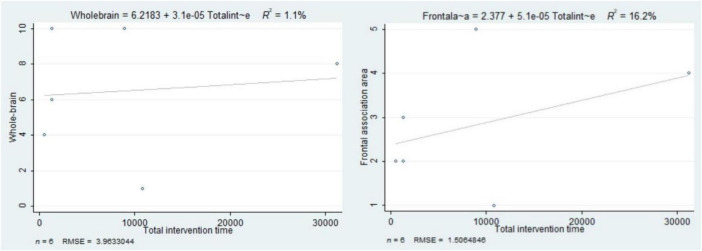
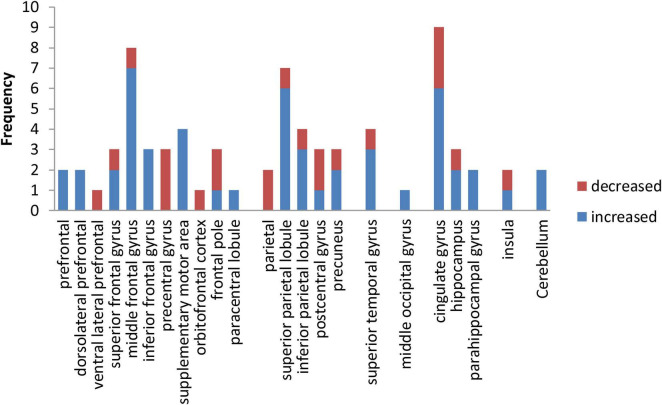
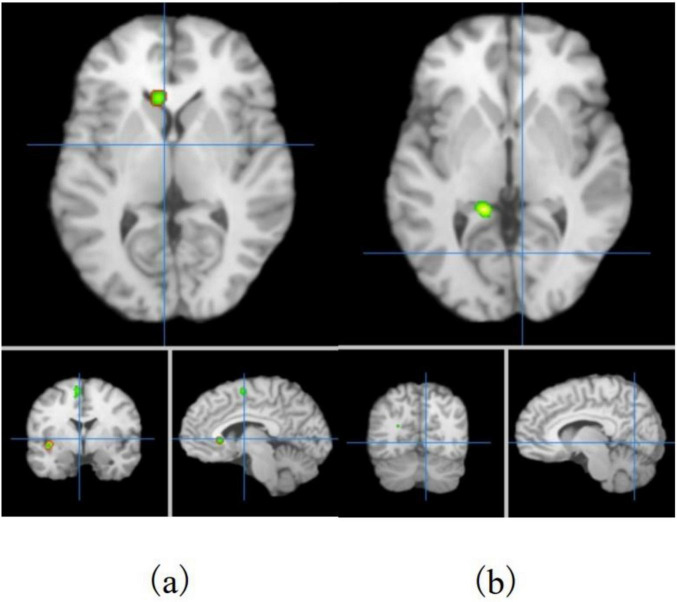
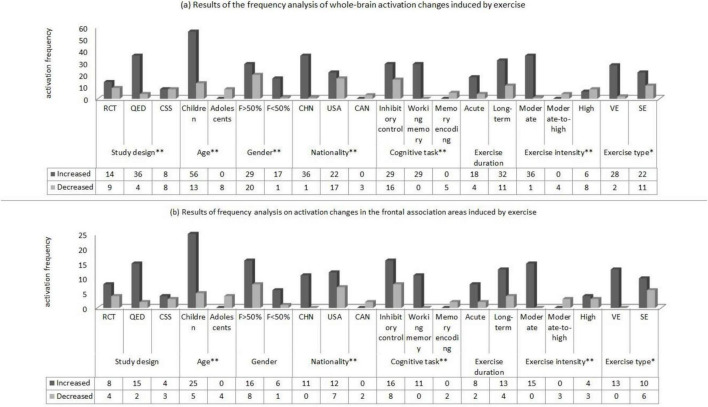
A total of 13 articles, including 425 participants aged 8.9∼16.8 years, were included. Frequency analysis revealed that exercise induced enhanced activation in frontal, parietal, occipital, limbic system and cerebellum ( < 0.01). Activation Likelihood Estimation (ALE) meta-analysis revealed that exercise altered the activation status of the frontal association (medial frontal gyrus, middle frontal gyrus, inferior frontal gyrus and precentral gyrus), cuneus, lingual gyrus, cingulate gyrus, parahippocampal gyrus, caudate nucleus and cerebellar apex, with the volume of activation in the frontal association accounting for 61.81% of the total activation cluster volume and an enhanced activation effect. Additionally, the study design, age, gender, nationality, cognitive tasks, as well as exercise intensity, intervention time, and type of exercise may be potential moderating variables. Particularly, sustained exercise induced a decrease in activation in the left parahippocampal gyrus, culmen, and lingual gyrus, while variable exercise induced an increase in activation in the left middle frontal gyrus.
Exercise-induced activation increase in the frontal associative areas of children and adolescents is dominant, especially longer periods of moderate-intensity variable exercise can induce more brain region activation. However, some of the included studies are cross-sectional, and the accuracy of the results still requires further verification.
https://www.crd.york.ac.uk/prospero/, identifier PROSPERO, CRD42022348781.
探讨运动对儿童和青少年额叶联合区可塑性的影响以及潜在的调节变量。
通过计算机检索中国知网、Web of Science(WOS)、PubMed和EBSCO数据库,由两名研究人员独立进行文献筛选、数据提取和质量评估后,基于SPSS 25.0、Stata 12.0和Ginger ALE 2.3软件进行统计分析。
共纳入13篇文章,包括425名年龄在8.9至16.8岁之间的参与者。频率分析显示,运动可诱导额叶、顶叶、枕叶、边缘系统和小脑的激活增强(P<0.01)。激活可能性估计(ALE)元分析显示,运动改变了额叶联合区(额内侧回、额中回、额下回和中央前回)、楔叶、舌回、扣带回、海马旁回、尾状核和小脑蚓部的激活状态,额叶联合区的激活体积占总激活簇体积的61.81%,激活效应增强。此外,研究设计、年龄、性别、国籍、认知任务以及运动强度、干预时间和运动类型可能是潜在的调节变量。特别是,持续运动可导致左侧海马旁回、小脑蚓部和舌回的激活减少,而可变运动可导致左侧额中回的激活增加。
运动诱导儿童和青少年额叶联合区激活增加是主要趋势,尤其是较长时间的中等强度可变运动可诱导更多脑区激活。然而,部分纳入研究为横断面研究,结果的准确性仍需进一步验证。
https://www.crd.york.ac.uk/prospero/,标识符PROSPERO,CRD42022348781。