College of Mechanical and Electrical Engineering, Henan Agricultural University, Zhengzhou, Henan Province, China.
School of Management Engineering, Henan University of Engineering, Zhengzhou, Henan Province, China.
PLoS One. 2024 Sep 20;19(9):e0310539. doi: 10.1371/journal.pone.0310539. eCollection 2024.
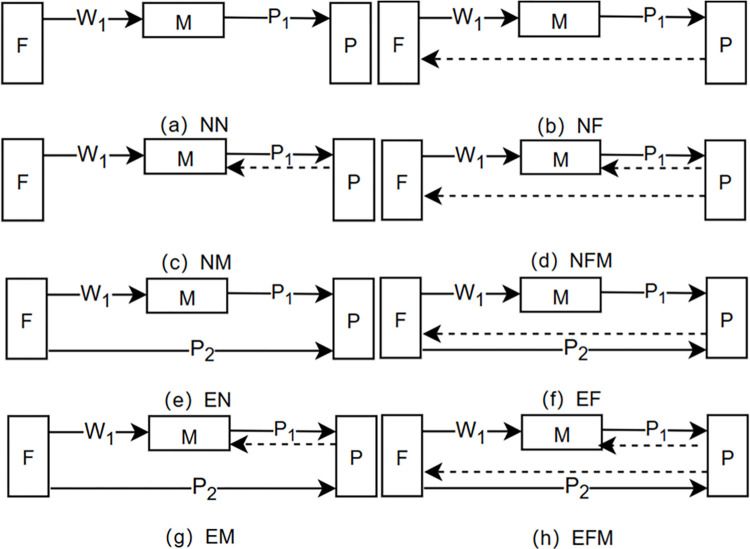
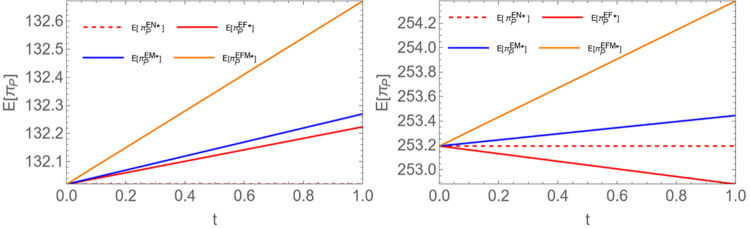
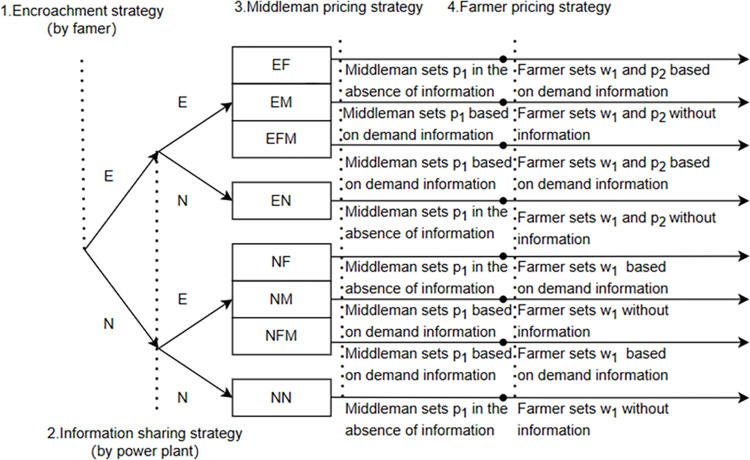
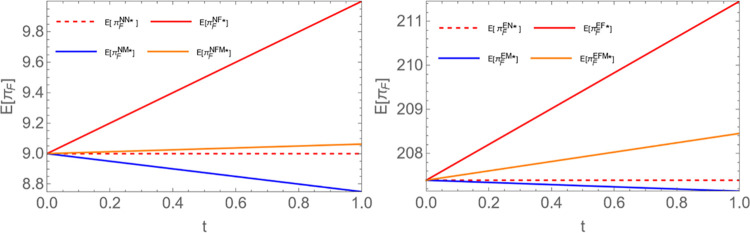
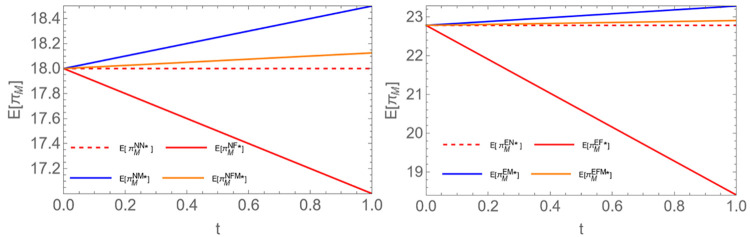
To guarantee the sustainable development of the biomass raw material supply chain, researchers are increasingly focusing on the issue of information asymmetry between biomass power plants and upstream supply chain members. This paper investigates the optimal information sharing strategy for a biomass power plant where farmers choose whether to encroach on the biomass feedstock supply. Using a game theory model, we analyze eight different information sharing scenarios, and the results show that when the encroachment occurs in supply chain channels, information sharing can significantly increase the profits of the entire supply chain. In this case, the power plant should share its demand information with all upstream players to promote the overall benefit of the supply chain. In contrast, when the power plant shares its information only with the middleman, it can maximize its profits, which, however, may not be conducive to the long-term stability of the supply chain. Furthermore, surprisingly, in the absence of channel encroachment, the power plant sharing information with upstream members may harm their profits. This suggests that power plants may need to consider the scope of information sharing more carefully when the farmers choose not to encroach. Finally, we also examine the impact of channel competition intensity on information sharing strategies, and find that when channel competition intensity is low, transparent demand information helps the power plant maximize expected returns. However, in a highly competitive market environment, the power plant should carefully handle information sharing with farmers to avoid damaging their profits.
为了保证生物质原料供应链的可持续发展,研究人员越来越关注生物质发电厂和上游供应链成员之间的信息不对称问题。本文研究了生物质发电厂的最优信息共享策略,其中农民选择是否侵占生物质原料供应。利用博弈论模型,我们分析了八种不同的信息共享情景,结果表明,在供应链渠道发生侵占时,信息共享可以显著提高整个供应链的利润。在这种情况下,发电厂应该与所有上游参与者共享其需求信息,以促进供应链的整体利益。相比之下,当发电厂仅与中间商共享信息时,它可以最大化自身利润,但这可能不利于供应链的长期稳定。此外,令人惊讶的是,在没有渠道侵占的情况下,发电厂与上游成员共享信息可能会损害他们的利润。这表明,当农民选择不侵占时,发电厂在考虑信息共享范围时可能需要更加谨慎。最后,我们还研究了渠道竞争强度对信息共享策略的影响,发现当渠道竞争强度较低时,透明的需求信息有助于发电厂最大化预期收益。然而,在竞争激烈的市场环境下,发电厂应谨慎处理与农民的信息共享,以免损害他们的利润。