Research Unit NeuroBiology of Diabetes, Helmholtz Munich, Neuherberg, Germany; Institute for Diabetes and Obesity, Helmholtz Munich, Neuherberg, Germany; German Center for Diabetes Research (DZD), Neuherberg, Germany; Neurobiology of Diabetes, TUM School of Medicine & Health, Technische Universität München, München, Germany.
Institute for Diabetes and Obesity, Helmholtz Munich, Neuherberg, Germany; German Center for Diabetes Research (DZD), Neuherberg, Germany; Van Andel Institute, Grand Rapids, MI, USA.
Mol Metab. 2024 Dec;90:102033. doi: 10.1016/j.molmet.2024.102033. Epub 2024 Sep 19.
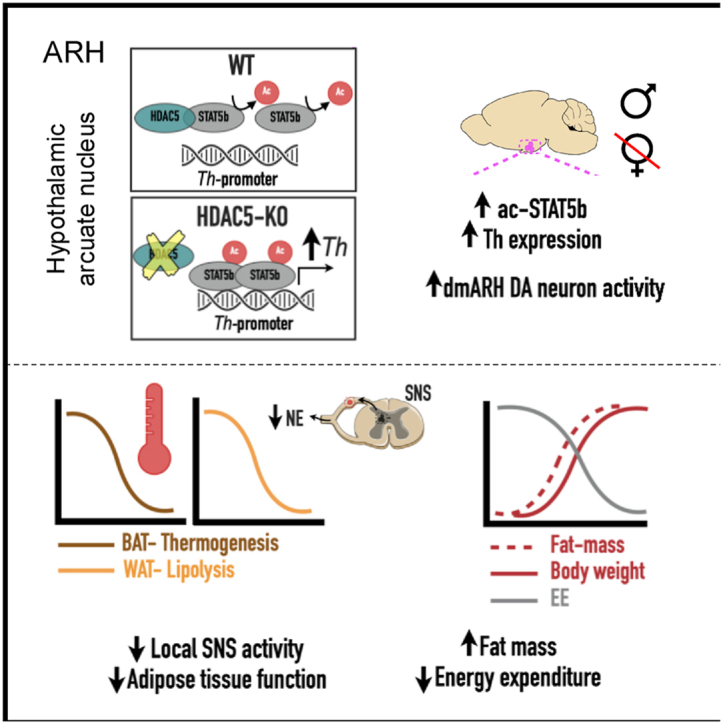
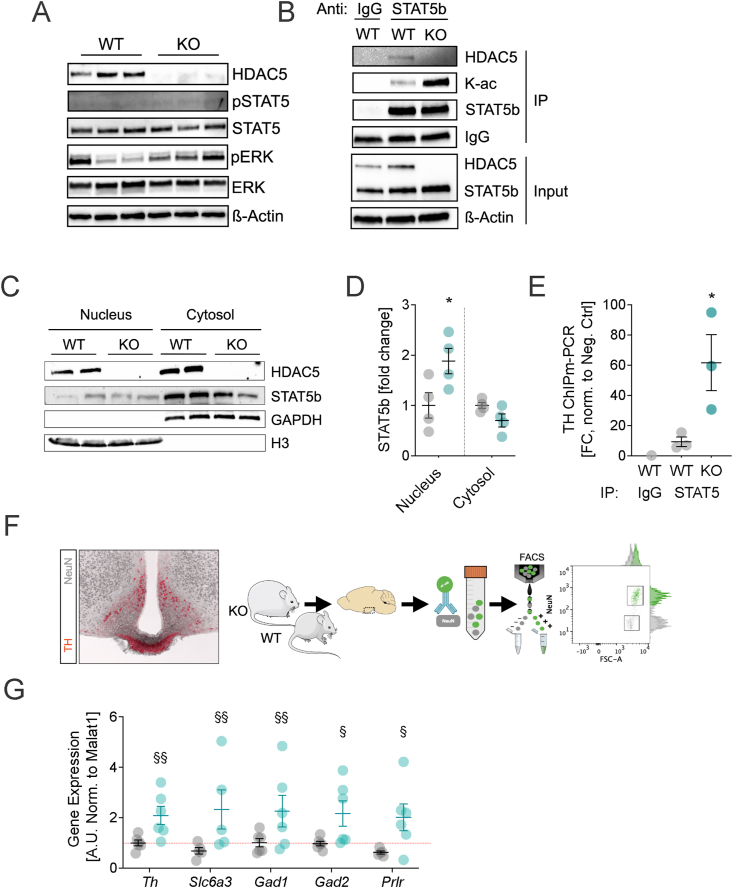
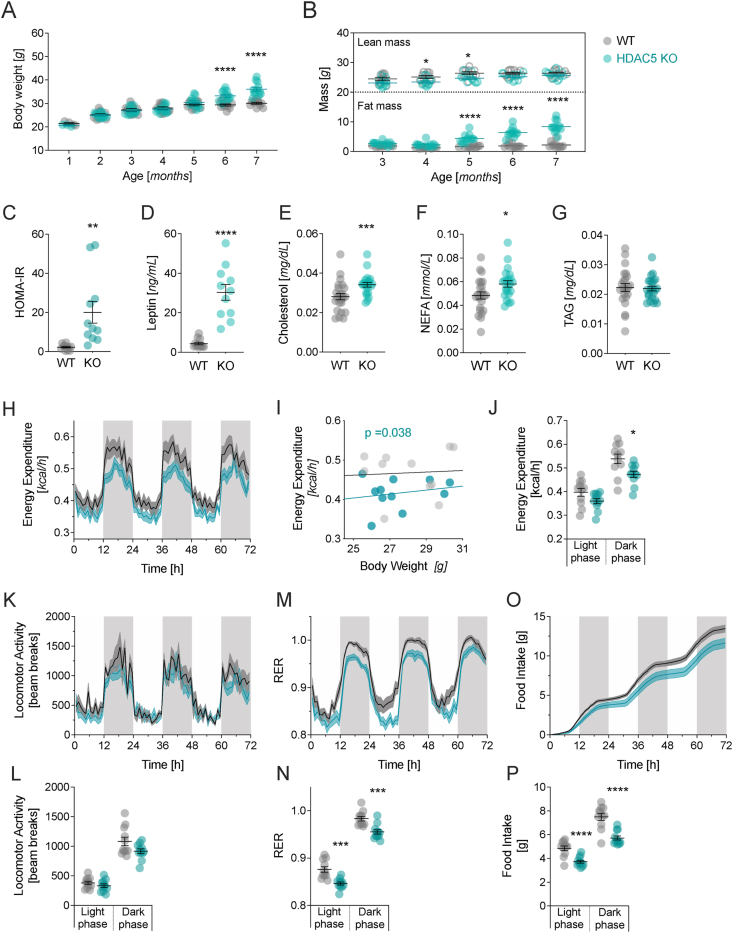
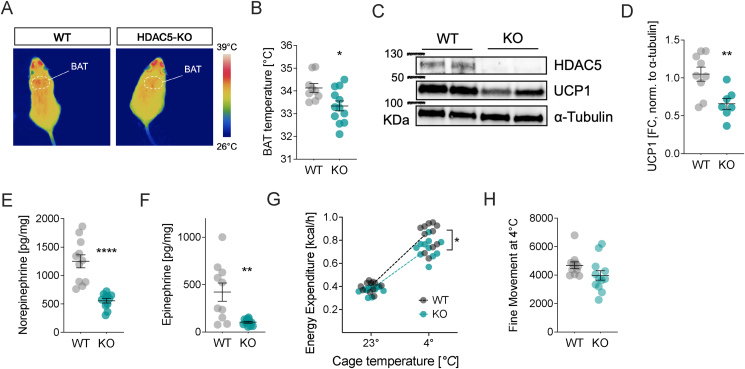
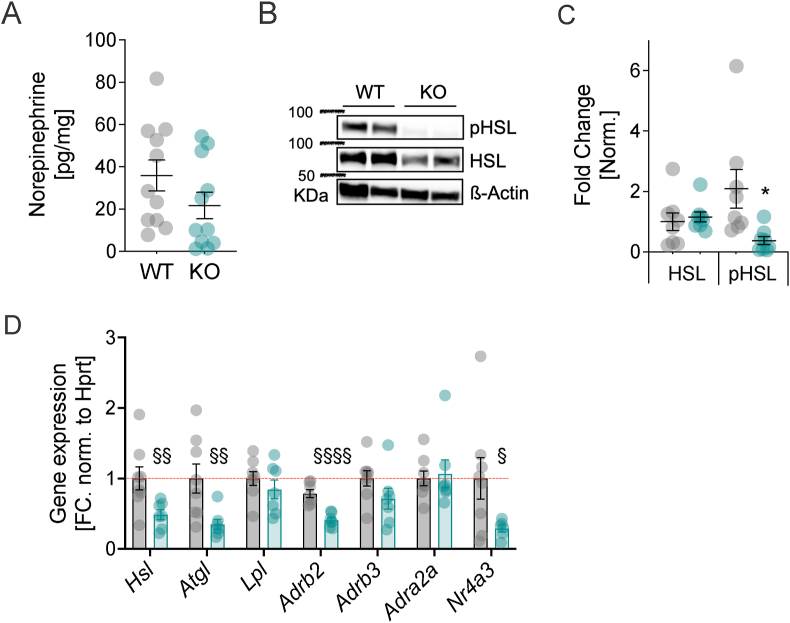
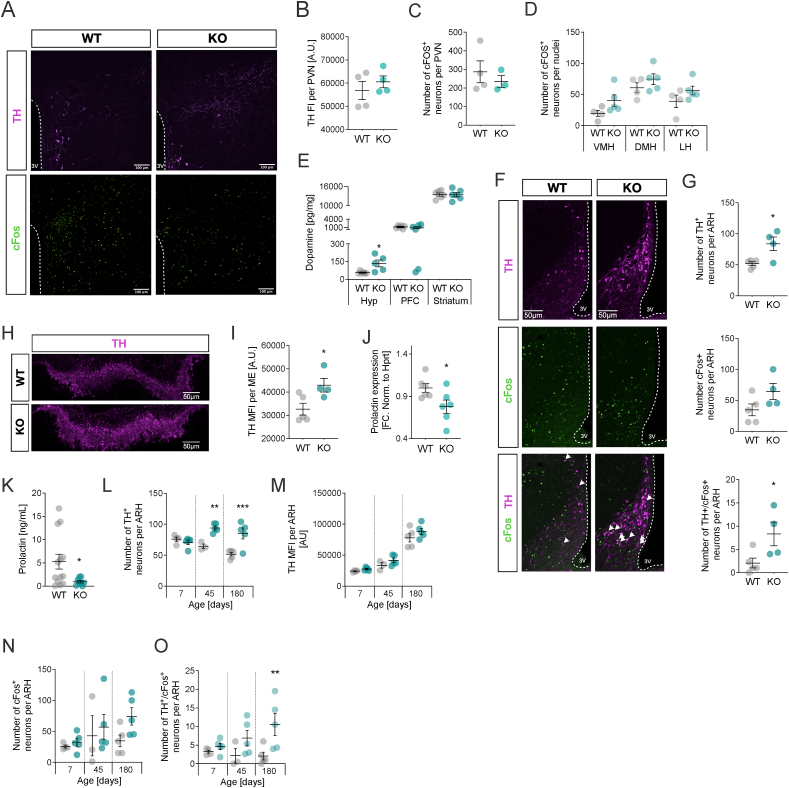
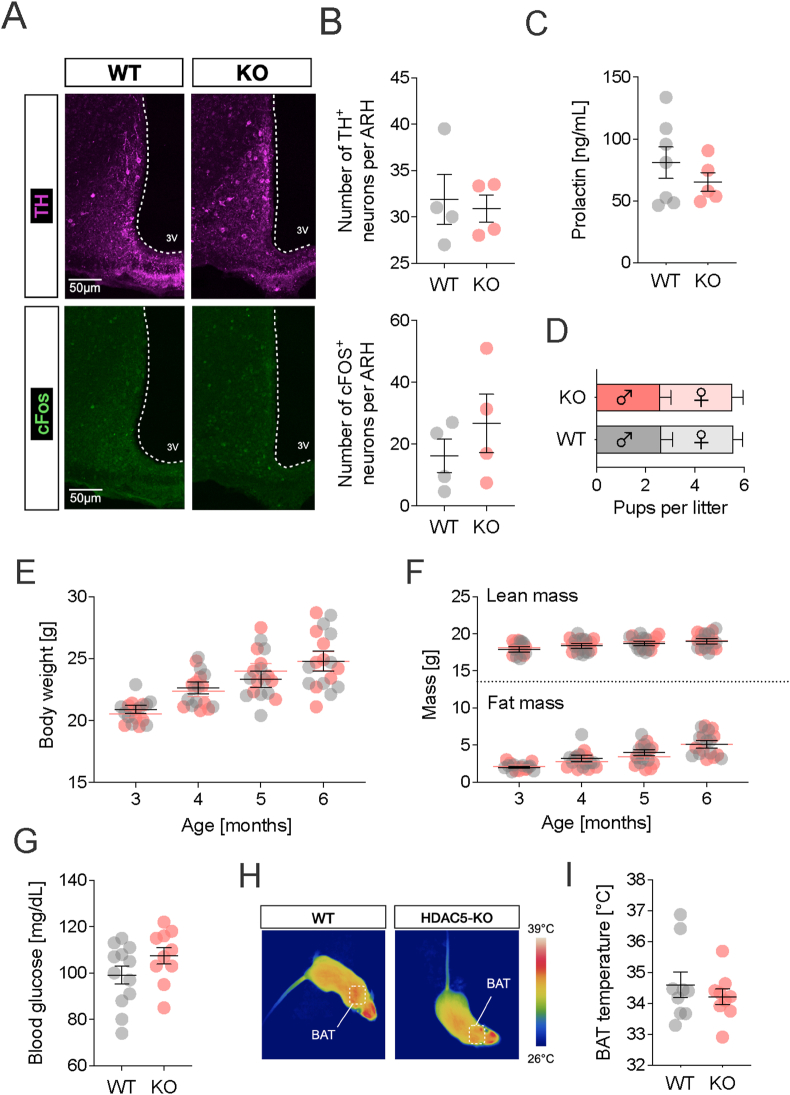
With age, metabolic perturbations accumulate to elevate our obesity burden. While age-onset obesity is mostly driven by a sedentary lifestyle and high calorie intake, genetic and epigenetic factors also play a role. Among these, members of the large histone deacetylase (HDAC) family are of particular importance as key metabolic determinants for healthy ageing, or metabolic dysfunction. Here, we aimed to interrogate the role of class 2 family member HDAC5 in controlling systemic metabolism and age-related obesity under non-obesogenic conditions. Starting at 6 months of age, we observed adult-onset obesity in chow-fed male global HDAC5-KO mice, that was accompanied by marked reductions in adrenergic-stimulated ATP-consuming futile cycles, including BAT activity and UCP1 levels, WAT-lipolysis, skeletal muscle, WAT and liver futile creatine and calcium cycles, and ultimately energy expenditure. Female mice did not differ between genotypes. The lower peripheral sympathetic nervous system (SNS) activity in mature male KO mice was linked to higher dopaminergic neuronal activity within the dorsomedial arcuate nucleus (dmARC) and elevated hypothalamic dopamine levels. Mechanistically, we reveal that hypothalamic HDAC5 acts as co-repressor of STAT5b over the control of Tyrosine hydroxylase (TH) gene transactivation, which ultimately orchestrates the activity of dmARH dopaminergic neurons and energy metabolism in male mice under non-obesogenic conditions.
随着年龄的增长,代谢紊乱会逐渐积累,导致肥胖负担加重。虽然年龄相关性肥胖主要是由久坐不动的生活方式和高热量摄入引起的,但遗传和表观遗传因素也起作用。在这些因素中,组蛋白去乙酰化酶(HDAC)大家族的成员尤为重要,它们是健康衰老或代谢功能障碍的关键代谢决定因素。在这里,我们旨在探讨 2 类家族成员 HDAC5 在控制非肥胖条件下的全身代谢和与年龄相关的肥胖中的作用。从 6 个月大开始,我们观察到在喂食标准饮食的雄性全球 HDAC5-KO 小鼠中出现成年肥胖,这伴随着肾上腺素能刺激的消耗 ATP 的无效循环显著减少,包括 BAT 活性和 UCP1 水平、WAT 脂肪分解、骨骼肌、WAT 和肝脏无效的肌酸和钙循环,最终导致能量消耗减少。雌性小鼠在基因型之间没有差异。成熟雄性 KO 小鼠外周交感神经系统(SNS)活性较低与背内侧弓状核(dmARC)内多巴胺能神经元活性升高和下丘脑多巴胺水平升高有关。从机制上讲,我们揭示了下丘脑 HDAC5 作为 STAT5b 的共阻遏物,控制酪氨酸羟化酶(TH)基因的转录激活,最终协调雄性小鼠 dmARH 多巴胺能神经元的活性和非肥胖条件下的能量代谢。