Zaki Muthanna K, Abed Mohammed N, Alassaf Fawaz A
Department of Pharmacology and Toxicology, College of Pharmacy, University of Mosul, Mosul, Iraq.
Department of Pharmaceutical Chemistry, College of Pharmacy, University of Mosul, Mosul, Iraq.
J Bone Metab. 2024 Aug;31(3):169-181. doi: 10.11005/jbm.2024.31.3.169. Epub 2024 Aug 31.
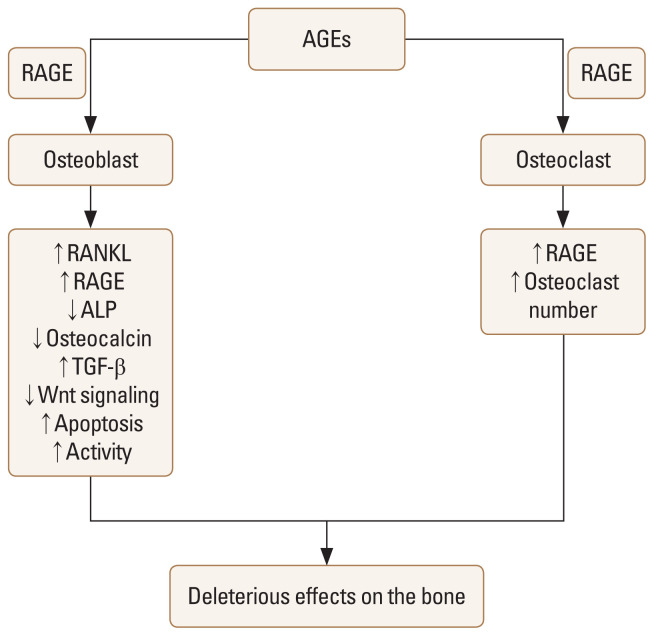
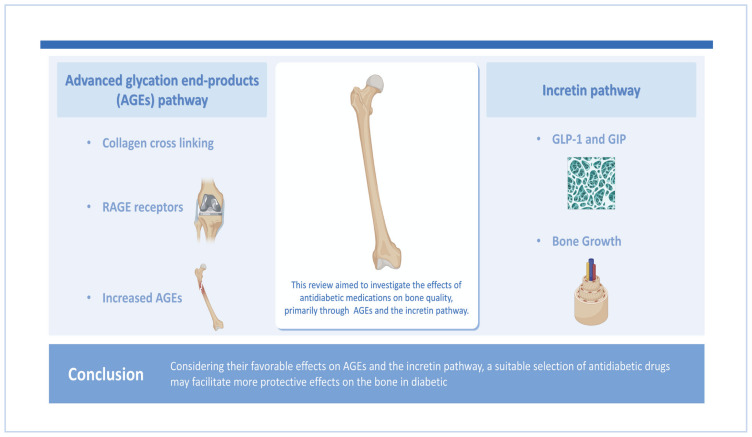
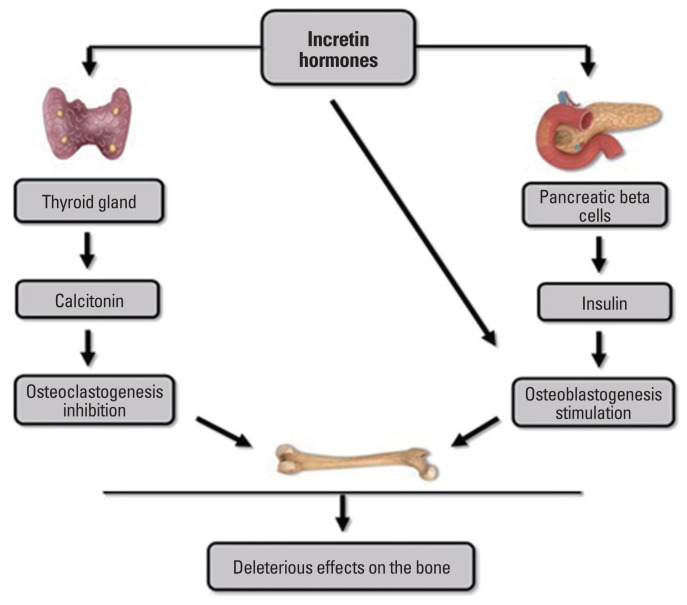
Diabetes mellitus is associated with inadequate bone health and quality and heightened susceptibility to fractures, even in patients with normal or elevated bone mineral density. Elevated advanced glycation end-products (AGEs) and a suppressed incretin pathway are among the mechanisms through which diabetes affects the bone. Accordingly, the present review aimed to investigate the effects of antidiabetic medications on bone quality, primarily through AGEs and the incretin pathway. Google Scholar, Cochrane Library, and PubMed were used to examine related studies until February 2024. Antidiabetic medications influence AGEs and the incretin pathway directly or indirectly. Certain antidiabetic drugs including metformin, glucagon-like peptide-1 receptor agonists (GLP-1RA), dipeptidyl-peptidase-4 (DDP-4) inhibitors, α-glucosidase inhibitors (AGIs), sodium-glucose co-transporter-2 inhibitors, and thiazolidinediones (TZDs), directly affect AGEs through multiple mechanisms. These mechanisms include decreasing the formation of AGEs and the expression of AGEs receptor (RAGE) in tissue and increasing serum soluble RAGE levels, resulting in the reduced action of AGEs. Similarly, metformin, GLP-1RA, DDP-4 inhibitors, AGIs, and TZDs may enhance incretin hormones directly by increasing their production or suppressing their metabolism. Additionally, these medications could influence AGEs and the incretin pathway indirectly by enhancing glycemic control. In contrast, sulfonylureas have not demonstrated any obvious effects on AGEs or the incretin pathway. Considering their favorable effects on AGEs and the incretin pathway, a suitable selection of antidiabetic drugs may facilitate more protective effects on the bone in diabetic patients.
糖尿病与骨骼健康和质量不足以及骨折易感性增加有关,即使在骨矿物质密度正常或升高的患者中也是如此。晚期糖基化终产物(AGEs)升高和肠促胰岛素途径受抑制是糖尿病影响骨骼的机制之一。因此,本综述旨在研究抗糖尿病药物对骨骼质量的影响,主要通过AGEs和肠促胰岛素途径。截至2024年2月,使用谷歌学术、考克兰图书馆和PubMed来检索相关研究。抗糖尿病药物直接或间接影响AGEs和肠促胰岛素途径。某些抗糖尿病药物,包括二甲双胍、胰高血糖素样肽-1受体激动剂(GLP-1RA)、二肽基肽酶-4(DDP-4)抑制剂、α-葡萄糖苷酶抑制剂(AGIs)、钠-葡萄糖协同转运蛋白-2抑制剂和噻唑烷二酮类(TZDs),通过多种机制直接影响AGEs。这些机制包括减少组织中AGEs的形成和AGEs受体(RAGE)的表达,以及增加血清可溶性RAGE水平,从而降低AGEs的作用。同样,二甲双胍、GLP-1RA、DDP-4抑制剂、AGIs和TZDs可通过增加肠促胰岛素激素的产生或抑制其代谢来直接增强这些激素。此外,这些药物可通过改善血糖控制间接影响AGEs和肠促胰岛素途径。相比之下,磺脲类药物对AGEs或肠促胰岛素途径未显示出任何明显影响。考虑到它们对AGEs和肠促胰岛素途径的有利影响,适当选择抗糖尿病药物可能有助于对糖尿病患者的骨骼产生更多保护作用。