Department of Neurology, Faculty of Medicine, Universitas Airlangga-Dr. Soetomo General Academic Hospital, Surabaya, Indonesia.
Department of Veterinary Medicine, Faculty of Veterinary Medicine, Universitas Airlangga, Surabaya, Indonesia.
Open Vet J. 2024 Aug;14(8):2049-2056. doi: 10.5455/OVJ.2024.v14.i8.34. Epub 2024 Aug 31.
Lead (Plumbum/Pb) has been identified as a potential cause of Parkinson's disease as well as possibly contributing to disease progression. extract has been widely used to prevent and treat stroke which prevents brain cell apoptosis and neuroinflammation. This has been shown to be beneficial in cognitive recovery in stroke incidents.
This study aimed to determine the effect of on the expression of superoxide dismutase (SOD), malondialdehyde (MDA), and apoptosis-inducing factor (AIF) in the brain cells of rats () exposed to Plumbum.
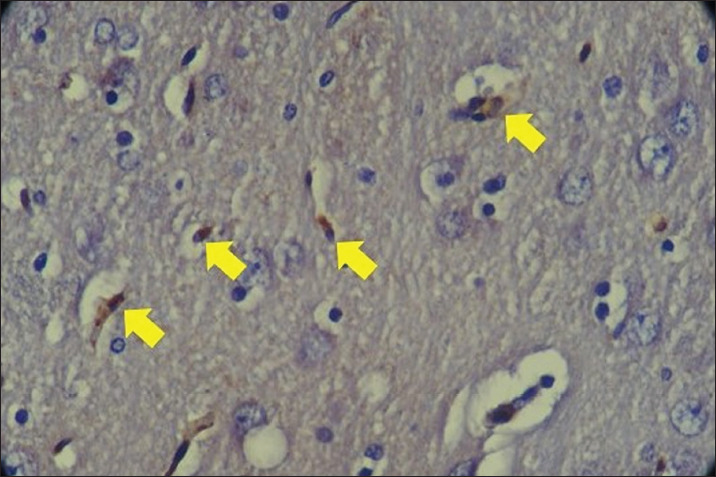
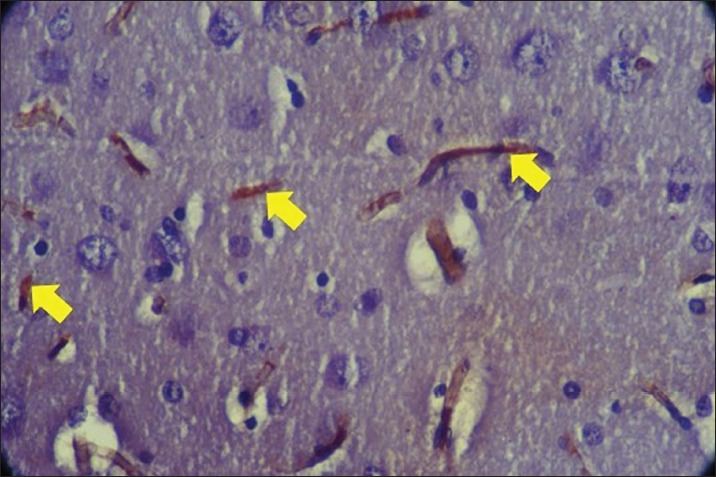
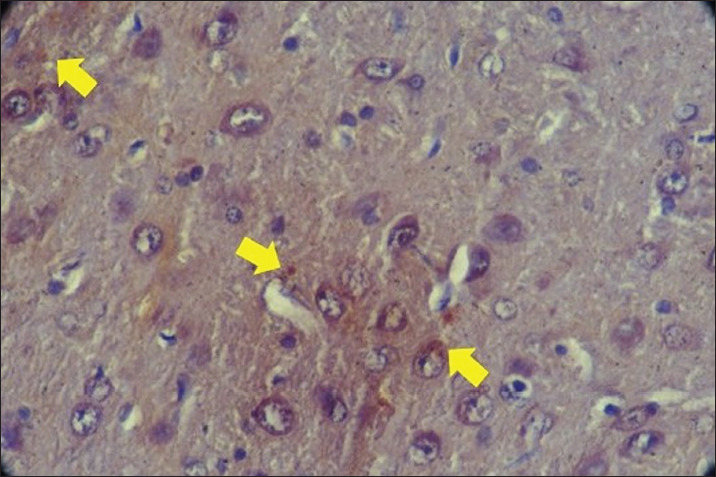
The experimental animals used were 36 male white rats divided into 4 groups with different treatments of Plumbum and at varying doses for 42 days, after which the brains were collected for examination of SOD, MDA, and AIF expressions using immunohistochemical methods and analyzed using analysis of variance and Duncan's test.
Plumbum administration caused a significant decrease in SOD expression and an increase in MDA and AIF expressions ( < 0.05). administration significantly increased SOD expression and decreased MDA and AIF expressions ( < 0.05), with optimal increases in SOD, decreases in MDA, and modulation of AIF observed in the group exposed to 50 mg/kg BW Pb and 300 mg/kg BW .
Preventive administration of increased SOD expression, and reduced MDA and AIF expressions in Pb-exposed rats, with an optimal dose of 300 mg/kg BW, suggesting its potential as an affordable drug to prevent brain cell death-related diseases.
铅(Plumbum/Pb)已被确定为帕金森病的潜在病因,并可能导致疾病进展。大蒜素已被广泛用于预防和治疗中风,可防止脑细胞凋亡和神经炎症。这已被证明对中风事件中的认知恢复有益。
本研究旨在确定大蒜素对暴露于铅的大鼠脑细胞中超氧化物歧化酶(SOD)、丙二醛(MDA)和凋亡诱导因子(AIF)表达的影响。
实验动物为 36 只雄性大白鼠,分为 4 组,分别给予不同剂量的铅和大蒜素处理 42 天,然后收集大脑,采用免疫组织化学方法检测 SOD、MDA 和 AIF 的表达,并采用方差分析和 Duncan 检验进行分析。
铅处理导致 SOD 表达显著降低,MDA 和 AIF 表达增加(<0.05)。大蒜素处理显著增加 SOD 表达,降低 MDA 和 AIF 表达(<0.05),在暴露于 50mg/kg BW Pb 和 300mg/kg BW 大蒜素的组中观察到 SOD 表达增加最明显,MDA 降低最明显,AIF 调节最明显。
预防性给予大蒜素可增加铅暴露大鼠 SOD 表达,降低 MDA 和 AIF 表达,最佳剂量为 300mg/kg BW,提示其具有作为一种廉价药物预防与脑细胞死亡相关疾病的潜力。