Zhuang Bin-Yu, Hu Fang-Chi, Gao Xuan, Leng Qi, Zhang Ying, You Yan
Department of Dermatology, Fourth Affiliated Hospital of Harbin Medical University, Harbin, China.
Department of Orthopaedics, Harbin First Hospital, Harbin, China.
J Cosmet Dermatol. 2025 Jan;24(1):e16573. doi: 10.1111/jocd.16573. Epub 2024 Sep 23.
The lipid-lowering simvastatin (SIM) has been shown to be an effective inhibitor of keloid proliferation. However, due to its low water solubility and short half-life, simvastatin aggregates to the liver and does not reach the skin lesions after oral administration, which restricts its widespread clinical use. The development of nanomedicine provides the possibility for us to break through this bottleneck problem clinically. The objective of this study was to investigate the feasibility of using complex nanocontrolled delivery system (CNDS), simvastatin-loaded polyethylene glycol-poly lactic-co-glycolic acid (PEG-PLGA), in the treatment of keloids.
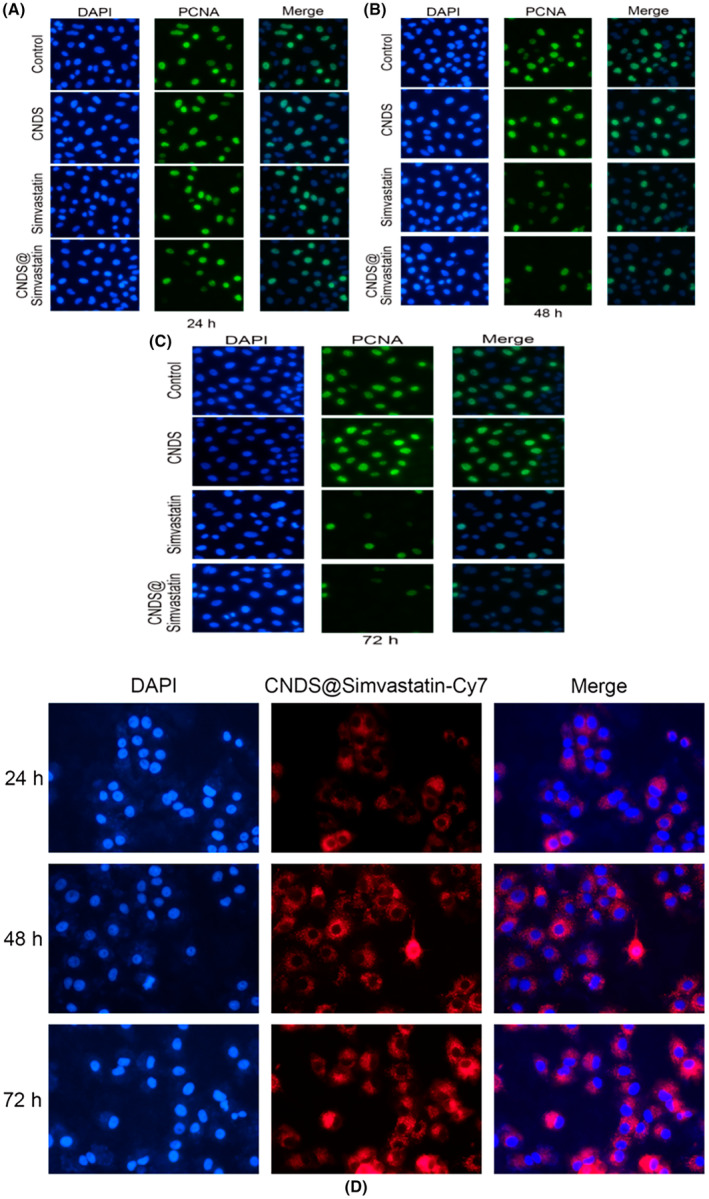
In the in vitro study, the release of simvastatin in fibroblasts by CNDS@Simvastatin and its effect on inhibition of the proliferation of fibroblasts, Col Ι, and CTGF by the slow release of simvastatin were assessed. The efficacy of CNDS@Simvastatin in improving keloids and the biocompatibility and safety of CNDS@Simvastatin were examined in vivo by establishing a murine ear keloid model.
CNDS@Simvastatin showed sustained and uniform inhibition of the proliferation of fibroblasts, Col Ι, and CTGF via the gradual release of simvastatin over 72 h. It was efficient in the treatment of the murine ear keloid with no observable toxic side effects on various organs.
Simvastatin-loaded copolymer acid-sensitive nanocarriers, CNDS@Simvastatin nanospheres, were successfully developed in this study, and these were characterized by favorable physicochemical properties and biocompatibility.
降脂药物辛伐他汀(SIM)已被证明是瘢痕疙瘩增殖的有效抑制剂。然而,由于其水溶性低、半衰期短,辛伐他汀口服给药后会在肝脏聚集,无法到达皮肤损伤部位,这限制了其在临床上的广泛应用。纳米医学的发展为我们在临床上突破这一瓶颈问题提供了可能性。本研究的目的是探讨使用复合纳米控释系统(CNDS),即载辛伐他汀的聚乙二醇-聚乳酸-羟基乙酸共聚物(PEG-PLGA)治疗瘢痕疙瘩的可行性。
在体外研究中,评估了CNDS@辛伐他汀在成纤维细胞中辛伐他汀的释放情况,以及辛伐他汀缓释对成纤维细胞、I型胶原蛋白(Col Ι)和结缔组织生长因子(CTGF)增殖的抑制作用。通过建立小鼠耳部瘢痕疙瘩模型,在体内研究了CNDS@辛伐他汀改善瘢痕疙瘩的疗效以及CNDS@辛伐他汀的生物相容性和安全性。
CNDS@辛伐他汀通过在72小时内逐渐释放辛伐他汀,对成纤维细胞、Col Ι和CTGF的增殖表现出持续且均匀的抑制作用。它在治疗小鼠耳部瘢痕疙瘩方面有效,对各个器官没有明显的毒副作用。
本研究成功开发了载辛伐他汀的共聚物酸敏感纳米载体,即CNDS@辛伐他汀纳米球,其具有良好的理化性质和生物相容性。