Pashayee-Khamene Fereshteh, Hajimohammadebrahim-Ketabforoush Melika, Heidari Zeinab, Yari Zahra, Karimi Sara, Saber-Firoozi Mahdi, Hatami Behzad, Hekmatdoost Azita
Student Research Committee, Ahvaz Jundishapur University of Medical Sciences, Ahvaz, Iran.
Department of Clinical Nutrition and Dietetics, Faculty of Nutrition Sciences and Food Technology, National Nutrition and Food Technology Research Institute, Shahid Beheshti University of Medical Sciences, Tehran, Iran.
Heliyon. 2024 Sep 12;10(18):e37733. doi: 10.1016/j.heliyon.2024.e37733. eCollection 2024 Sep 30.
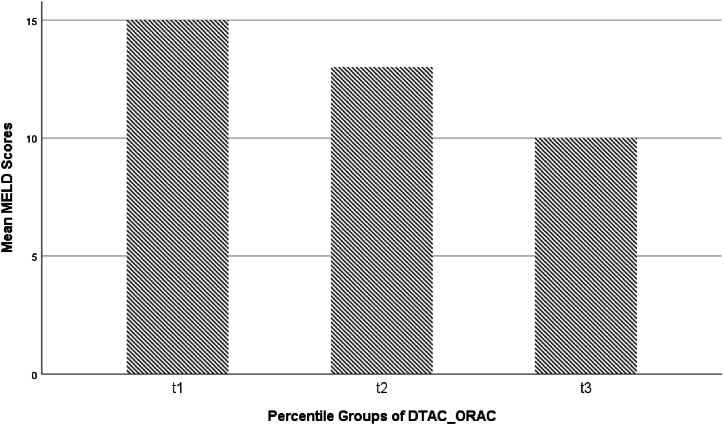
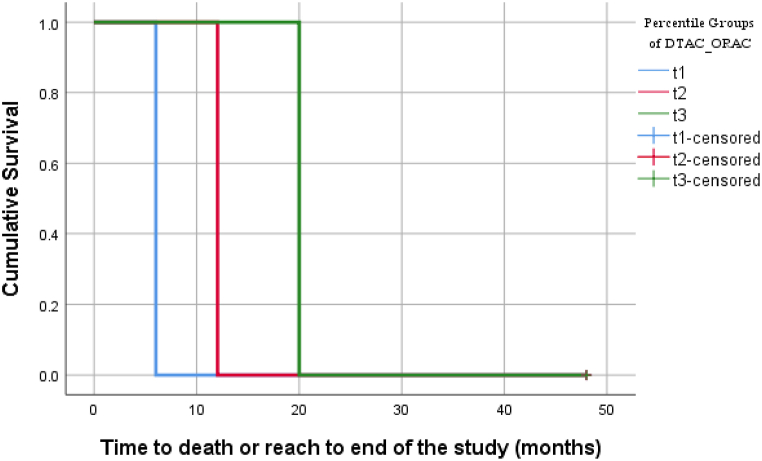
Liver Cirrhosis, defined as the final stage of chronic liver disease, may become more prevalent in the lower level of body defense against oxidation and inflammation. Therefore, we assessed the association of dietary total antioxidant capacity (DTAC) with the severity and mortality of cirrhosis in a cohort study. 120 newly diagnosed cirrhosis patients from Tehran, Iran, participated in this study. The patients' habitual diet was assessed using a 168-item validated food frequency questionnaire. Both ferric-reducing antioxidant potential (FRAP) and oxygen radical scavenging capacity (ORAC) methods were computed to achieve DTAC scores. The association between DTAC with disease severity and mortality was estimated by multivariate linear regression and cox proportional hazards regression models. Dietary total antioxidant capacity-ORAC had a significant inverse association with disease severity in both crude and adjusted models ( for trend: <0.001 and 0.016 respectively). The risk of mortality in the first and second tertiles of ORAC was 5.56 (95 % CI: 2.25-13.75; P = 0.002) and 3.20 (95 % CI: 1.25-8.19; P = 0.015) higher than those in the third category, respectively. In conclusion, a higher antioxidant capacity of diet is associated with less disease severity and mortality risk in cirrhosis.
肝硬化被定义为慢性肝病的终末期,在机体抗氧化和抗炎防御能力较低的情况下可能更为普遍。因此,我们在一项队列研究中评估了膳食总抗氧化能力(DTAC)与肝硬化严重程度及死亡率之间的关联。120名来自伊朗德黑兰的新诊断肝硬化患者参与了本研究。使用一份经过验证的包含168个条目的食物频率问卷对患者的日常饮食进行评估。通过计算铁还原抗氧化能力(FRAP)和氧自由基清除能力(ORAC)两种方法来获得DTAC分数。采用多元线性回归和Cox比例风险回归模型评估DTAC与疾病严重程度和死亡率之间的关联。在粗模型和校正模型中,膳食总抗氧化能力-ORAC与疾病严重程度均呈显著负相关(趋势检验:分别为<0.001和0.016)。ORAC第一和第二三分位数组的死亡风险分别比第三组高5.56(95%CI:2.25 - 13.75;P = 0.002)和3.20(95%CI:1.25 - 8.19;P = 0.015)。总之,饮食中较高的抗氧化能力与肝硬化患者较低的疾病严重程度和死亡风险相关。