Micron School of Materials Science & Engineering, Boise State University, Boise, Idaho 83725, USA.
Center for Bio/Molecular Science and Engineering Code 6900, U. S. Naval Research Laboratory, Washington, DC, Virginia 20375, USA.
Nanoscale Horiz. 2024 Nov 19;9(12):2334-2348. doi: 10.1039/d4nh00225c.
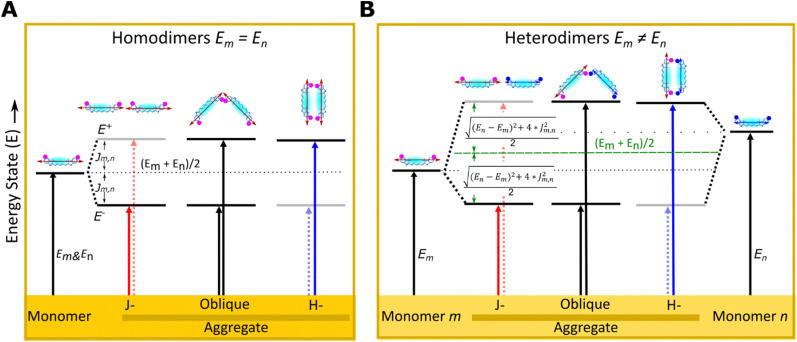
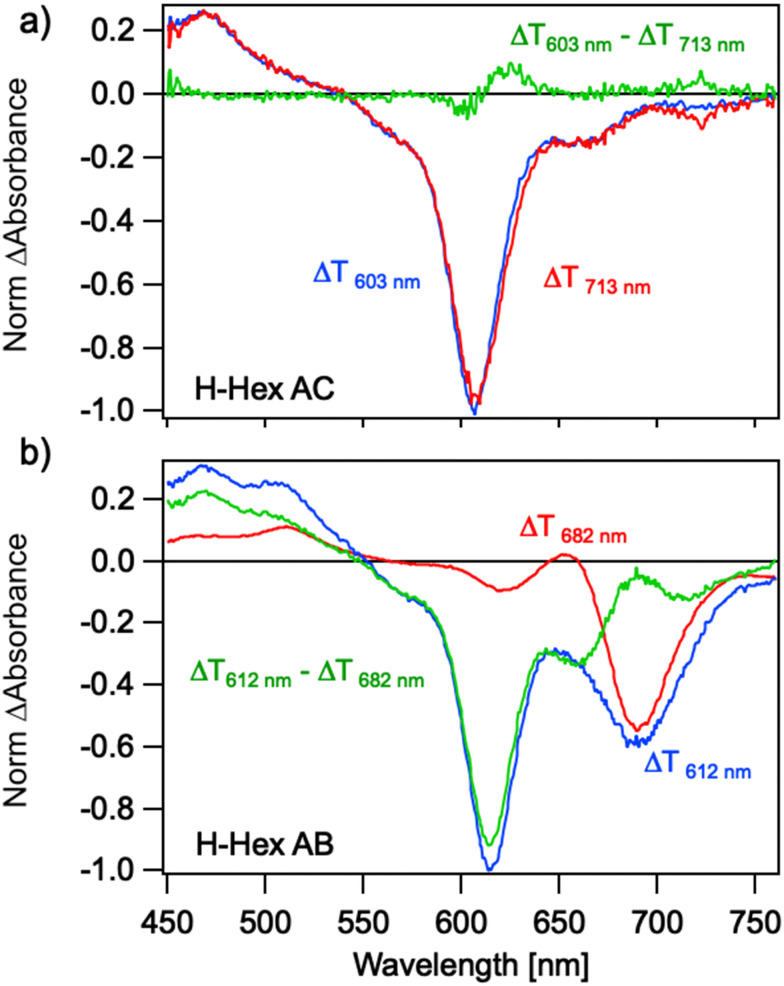
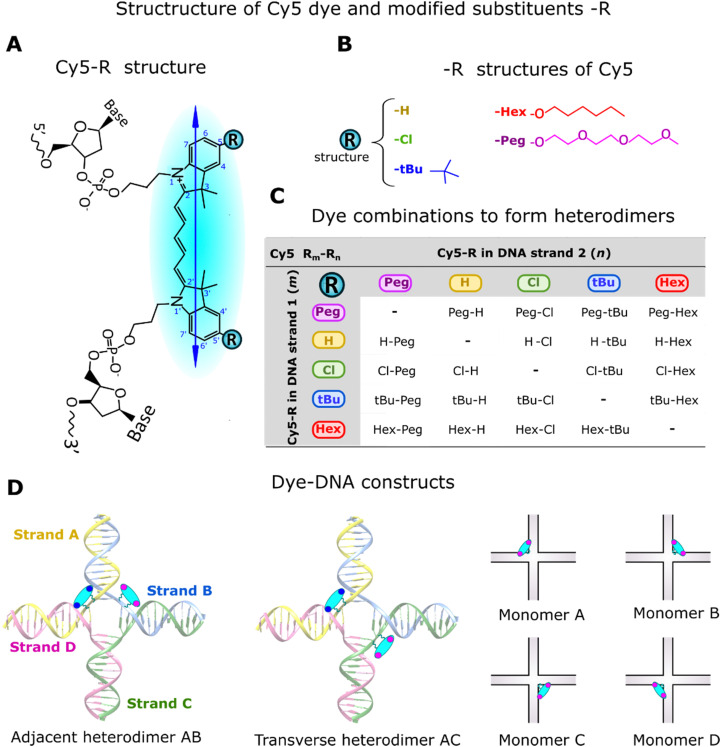
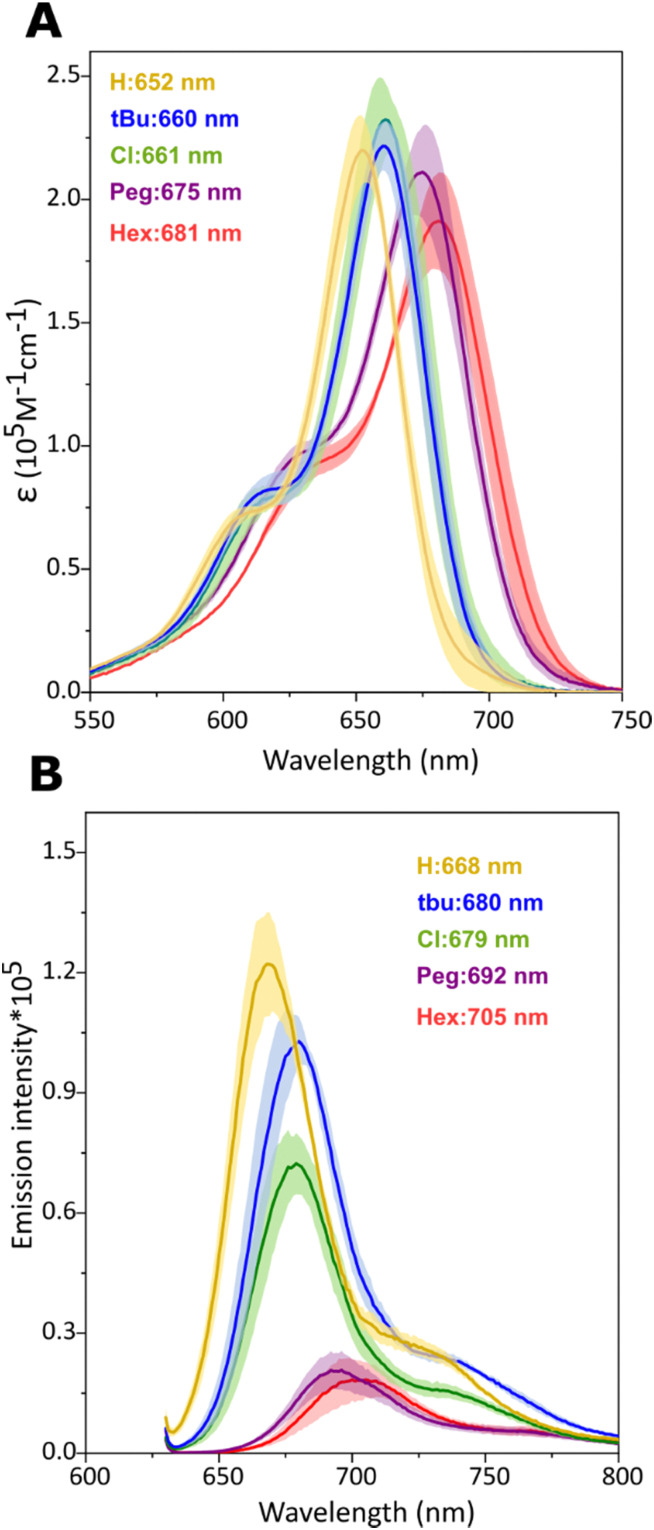
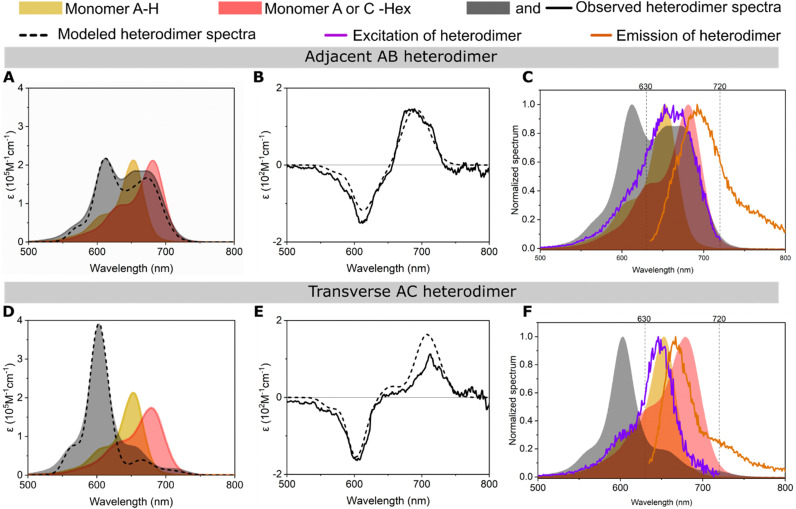
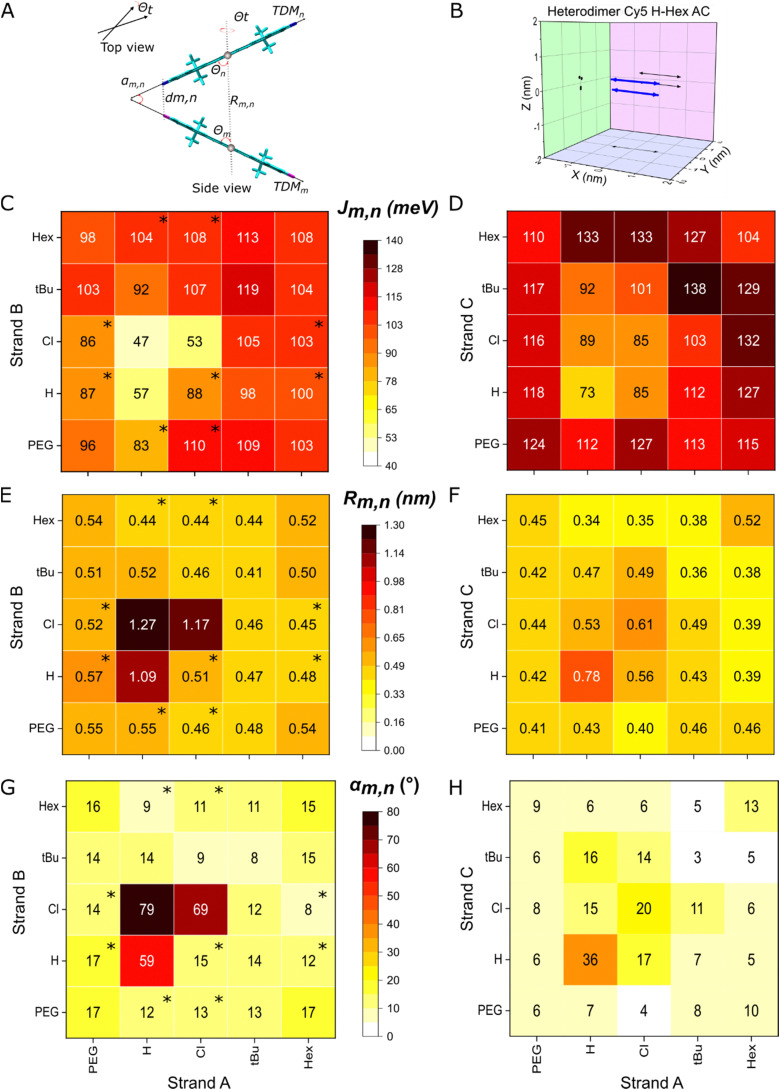
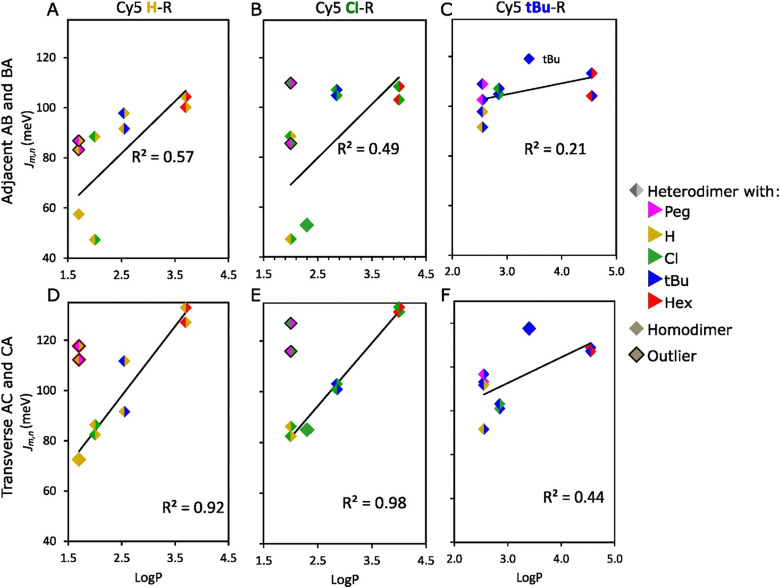
We studied the exciton delocalization of indodicarbocyanine 5 dye derivative (Cy5-R) heterodimers templated by a DNA Holliday junction (HJ), which was quantified by the exciton hopping parameter . These dyes were modified at the 5 and 5' positions of indole rings with substituent (R) H, Cl, Bu, Peg, and hexyloxy (Hex) groups that exhibit different bulkiness and electron-withdrawing/donating capacities. The substituents tune the physical properties of the dyes, such as hydrophobicity (log ) and solvent-accessible surface area (SASA). We tuned the of heterodimers by attaching two Cy5-Rs in adjacent and transverse positions along the DNA-HJ. Adjacent heterodimers exhibited smaller compared to transverse heterodimers, and some adjacent heterodimers displayed a mixture of H- and J-like aggregates. Most heterodimers exhibited values within the ranges of the corresponding homodimers, but some heterodimers displayed synergistic exciton delocalization that resulted in larger compared to their homodimers. We then investigated how chemically distinct Cy5-R conjugated to DNA can interact to create delocalized excitons. We determined that heterodimers involving Cy5-H and Cy5-Cl and a dye with larger substituents (bulky substituents and large SASA) such as Cy5-Peg, Cy5-Hex, and Cy5-Bu resulted in larger . The combination provides steric hindrance that optimizes co-facial packing (bulky Cy5-R) with a smaller footprint (small SASA) that maximizes proximity. The results of this study lay a groundwork for rationally optimizing the exciton delocalization in dye aggregates for developing next-generation technologies based on optimized exciton transfer efficiency such as quantum information systems and biomedicine.
我们研究了吲哚二碳菁染料衍生物(Cy5-R)异二聚体的激子离域,该离域由 DNA 霍利迪连接(HJ)模板化,并通过激子跳跃参数 定量。这些染料在吲哚环的 5 和 5'位用取代基(R)H、Cl、Bu、Peg 和己氧基(Hex)修饰,它们具有不同的体积和电子供体/受体能力。取代基可以调节染料的物理性质,如疏水性(log )和溶剂可及表面积(SASA)。我们通过将两个 Cy5-R 附着在 DNA-HJ 上的相邻和横向位置来调节异二聚体的 。与横向异二聚体相比,相邻异二聚体的 较小,并且一些相邻异二聚体显示出 H 和 J 样聚集体的混合物。大多数异二聚体的 值在相应的同二聚体的范围内,但一些异二聚体显示出协同激子离域,导致 值大于同二聚体。然后,我们研究了化学性质不同的 Cy5-R 与 DNA 的相互作用如何产生离域激子。我们确定,涉及 Cy5-H 和 Cy5-Cl 的异二聚体以及具有更大取代基(大取代基和大 SASA)的染料,如 Cy5-Peg、Cy5-Hex 和 Cy5-Bu,会导致更大的 。这种组合提供了空间位阻,从而优化了共面堆积(大 Cy5-R)和小足迹(小 SASA),从而最大限度地接近。这项研究的结果为合理优化染料聚集体中的激子离域奠定了基础,以开发基于优化激子转移效率的下一代技术,例如量子信息系统和生物医学。