Xu Shaohua, Chen Xun, Wang Si, Chen Zhiwei, Pan Penghui, Huang Qiaoling
Research Institute for Biomimetics and Soft Matter, Fujian Provincial Key Laboratory for Soft Functional Materials Research, Department of Physics, College of Physical Science and Technology, Xiamen University, Xiamen 361005, China.
Jiujiang Research Institute of Xiamen University, Jiujiang 332000, China.
Regen Biomater. 2024 Sep 2;11:rbae109. doi: 10.1093/rb/rbae109. eCollection 2024.
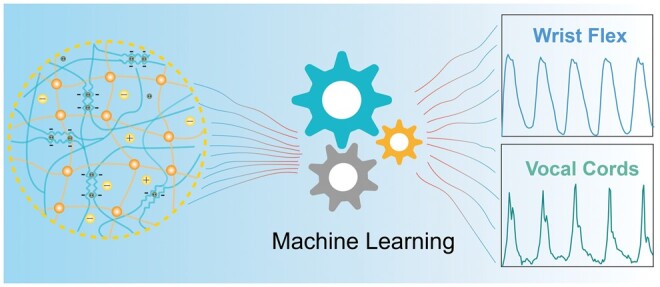
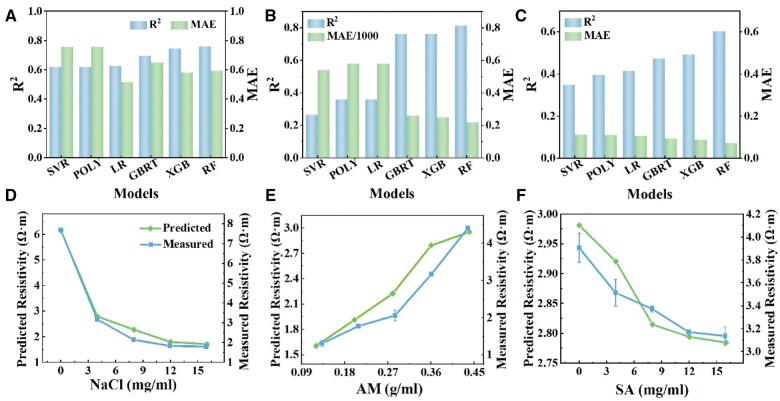
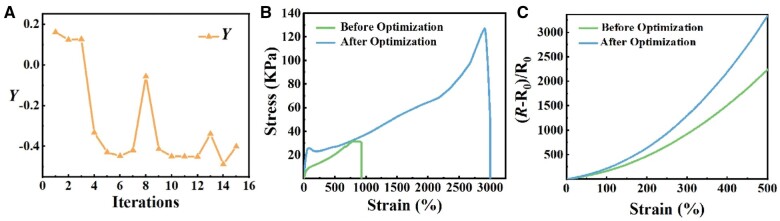
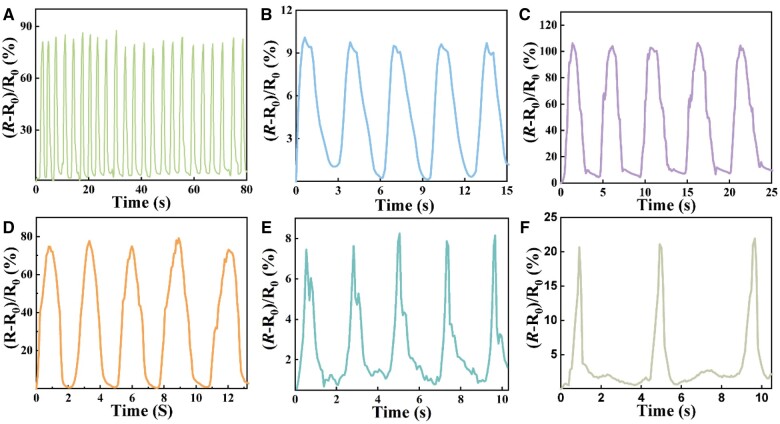
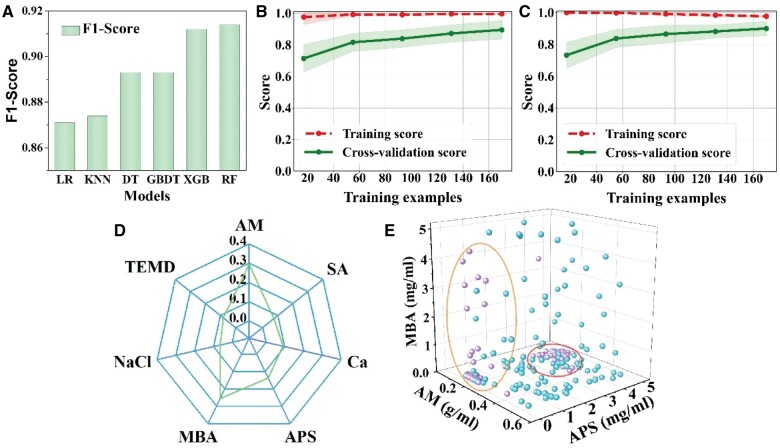
Hydrogels are highly promising due to their soft texture and excellent biocompatibility. However, the designation and optimization of hydrogels involve numerous experimental parameters, posing challenges in achieving rapid optimization through conventional experimental methods. In this study, we leverage machine learning algorithms to optimize a dual-network hydrogel based on a blend of acrylamide (AM) and alginate, targeting applications in flexible electronics. By treating the concentrations of components as experimental parameters and utilizing five material properties as evaluation criteria, we conduct a comprehensive property assessment of the material using a linear weighting method. Subsequently, we design a series of experimental plans using the Bayesian optimization algorithm and validate them experimentally. Through iterative refinement, we optimize the experimental parameters, resulting in a hydrogel with superior overall properties, including heightened strain sensitivity and flexibility. Leveraging the available experimental data, we employ a classification algorithm to separate the cutoff data. The feature importance identified by the classification model highlights the pronounced impact of AM, ammonium persulfate, and ,-methylene on the classification outcomes. Additionally, we develop a regression model and demonstrate its utility in predicting and analyzing the relationship between experimental parameters and hydrogel properties through experimental validation.
水凝胶因其柔软的质地和出色的生物相容性而极具前景。然而,水凝胶的设计和优化涉及众多实验参数,通过传统实验方法实现快速优化面临挑战。在本研究中,我们利用机器学习算法优化基于丙烯酰胺(AM)和藻酸盐混合物的双网络水凝胶,目标是用于柔性电子领域。通过将组分浓度作为实验参数,并以五种材料性能作为评估标准,我们使用线性加权方法对材料进行全面的性能评估。随后,我们使用贝叶斯优化算法设计一系列实验方案并进行实验验证。通过迭代优化,我们优化了实验参数,得到了具有优异综合性能的水凝胶,包括更高的应变敏感性和柔韧性。利用现有的实验数据,我们采用分类算法分离临界数据。分类模型确定的特征重要性突出了AM、过硫酸铵和N,N'-亚甲基双丙烯酰胺对分类结果的显著影响。此外,我们开发了一个回归模型,并通过实验验证证明了其在预测和分析实验参数与水凝胶性能之间关系方面的实用性。