Department of Molecular and Cellular Biology, Harvard University, Cambridge, MA 02138, USA.
Department of Developmental Biology, Stanford University School of Medicine, Stanford, CA 94305, USA.
Curr Biol. 2024 Oct 7;34(19):4349-4356.e7. doi: 10.1016/j.cub.2024.08.014. Epub 2024 Sep 26.
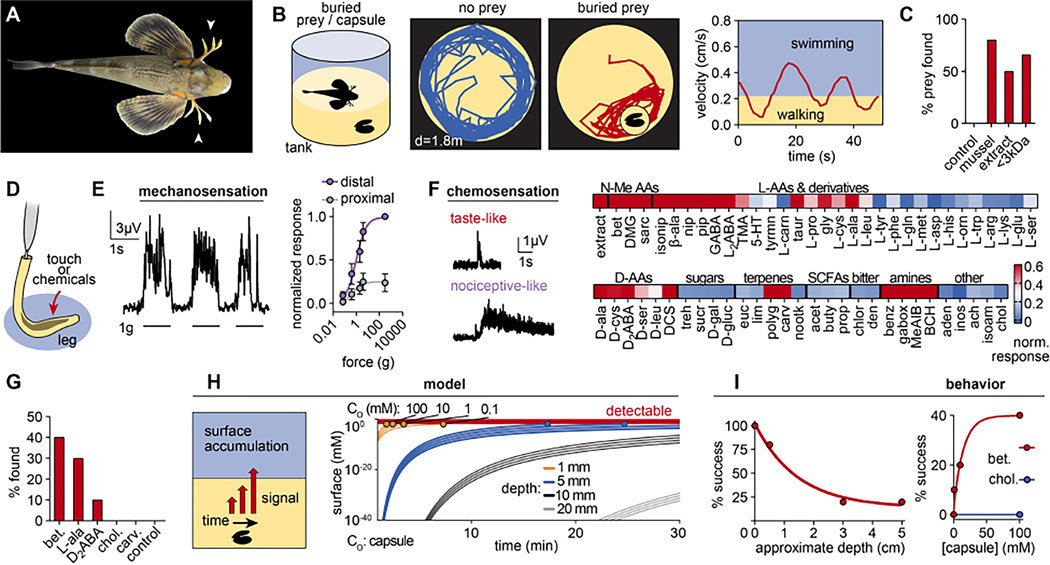
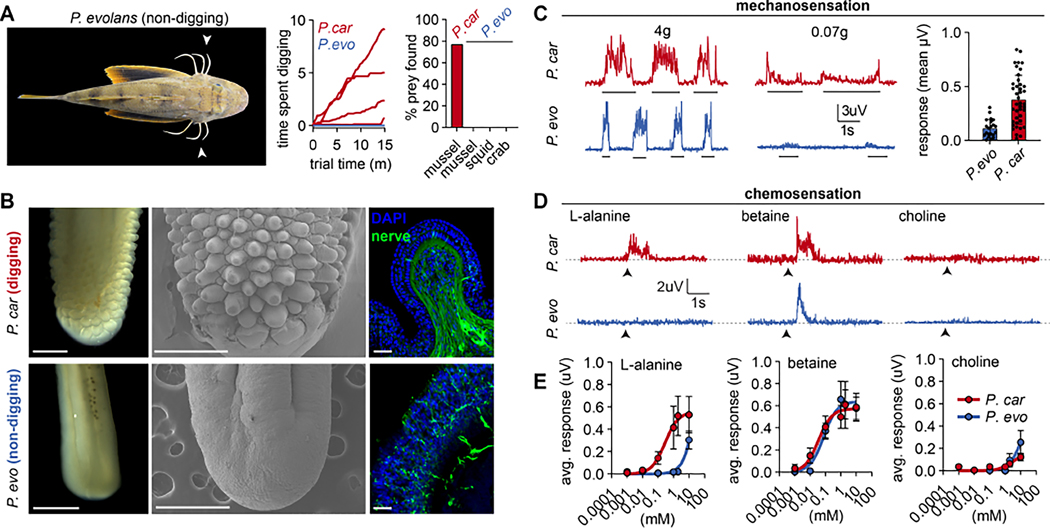
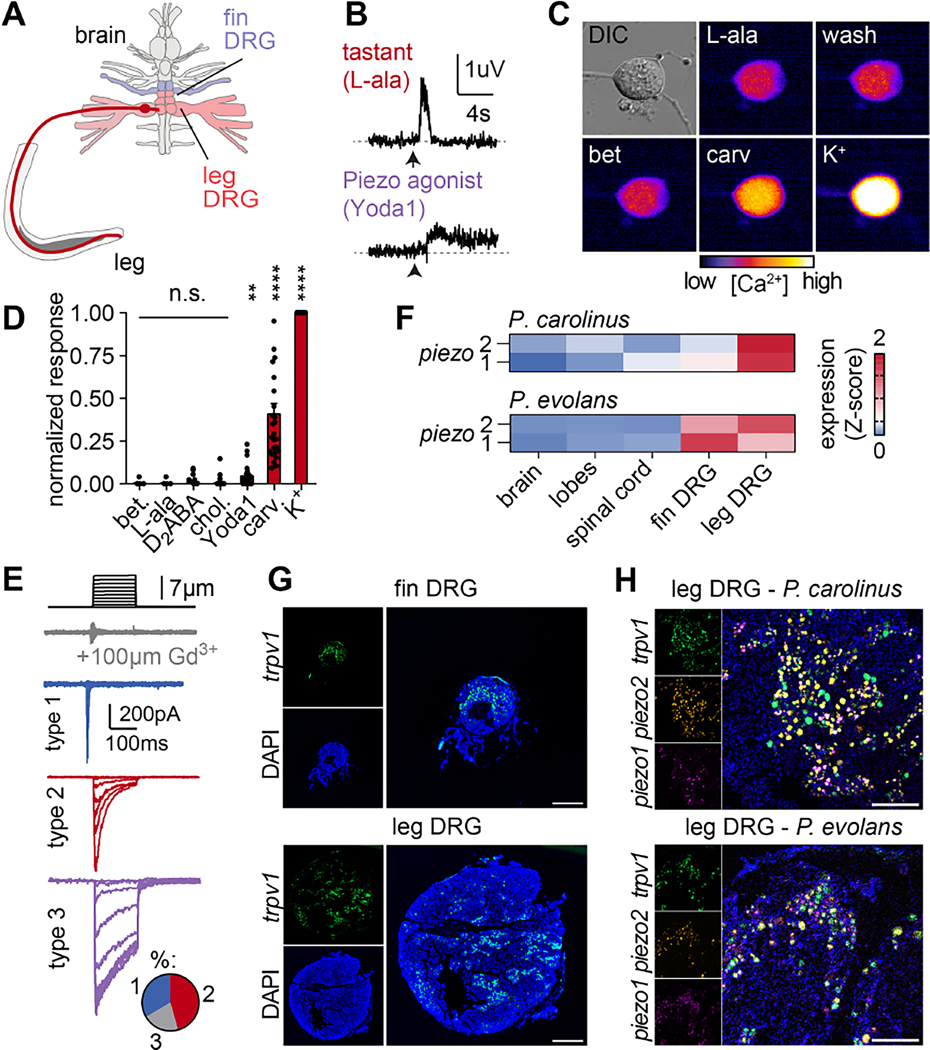
How do animals evolve new traits? Sea robins are fish that possess specialized leg-like appendages used to "walk" along the sea floor. Here, we show that legs are bona fide sense organs that localize buried prey. Legs are covered in sensory papillae that receive dense innervation from touch-sensitive neurons, express non-canonical epithelial taste receptors, and mediate chemical sensitivity that drives predatory digging behavior. A combination of developmental analyses, crosses between species with and without papillae, and interspecies comparisons of sea robins from around the world demonstrate that papillae represent a key evolutionary innovation associated with behavioral niche expansion on the sea floor. These discoveries provide unique insight into how molecular-, cellular-, and tissue-scale adaptations integrate to produce novel organismic traits and behavior.
动物如何进化出新的特征?海鲂是一种拥有专门的腿状附肢的鱼类,用于“行走”在海底。在这里,我们表明腿是真正的感觉器官,可以定位埋藏的猎物。腿上覆盖着感觉乳头,这些乳头接受来自触觉敏感神经元的密集神经支配,表达非典型的上皮味觉受体,并介导驱动捕食性挖掘行为的化学敏感性。通过对具有和不具有乳头的物种进行发育分析、杂交,以及对来自世界各地的海鲂进行种间比较,证明了乳头是与海底行为生态位扩展相关的关键进化创新。这些发现为我们提供了独特的视角,了解分子、细胞和组织尺度的适应性如何整合,从而产生新的机体特征和行为。