Jiang Feng, Seager Richard, Cane Mark A
Lamont-Doherty Earth Observatory, Columbia University, Palisades, NY, USA.
Nat Commun. 2024 Sep 27;15(1):8291. doi: 10.1038/s41467-024-52731-6.
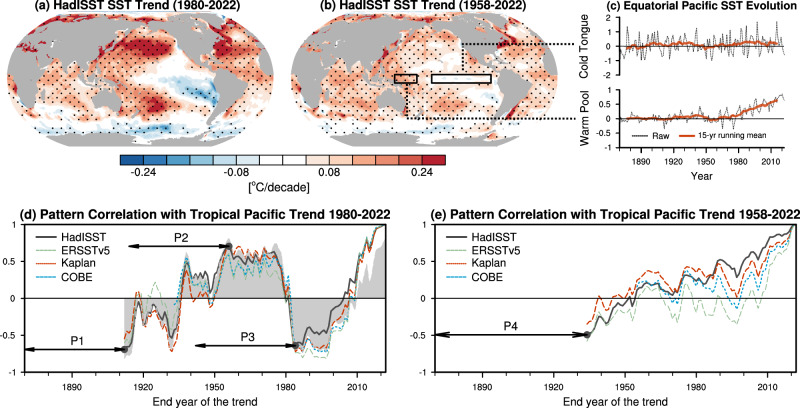
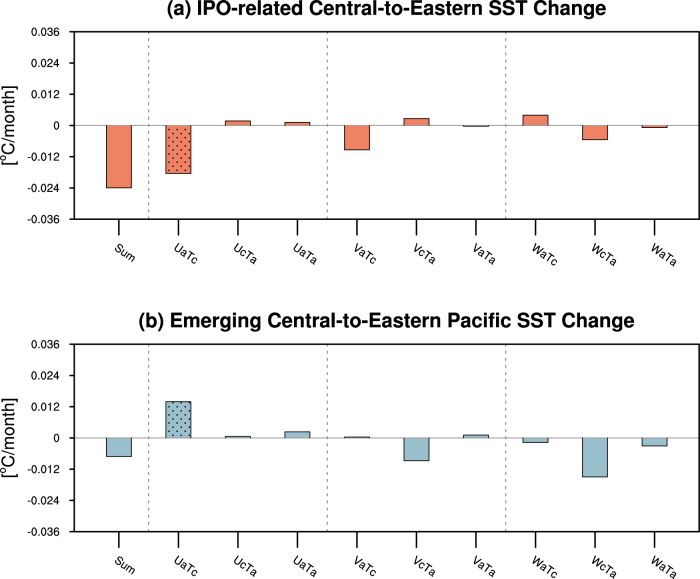
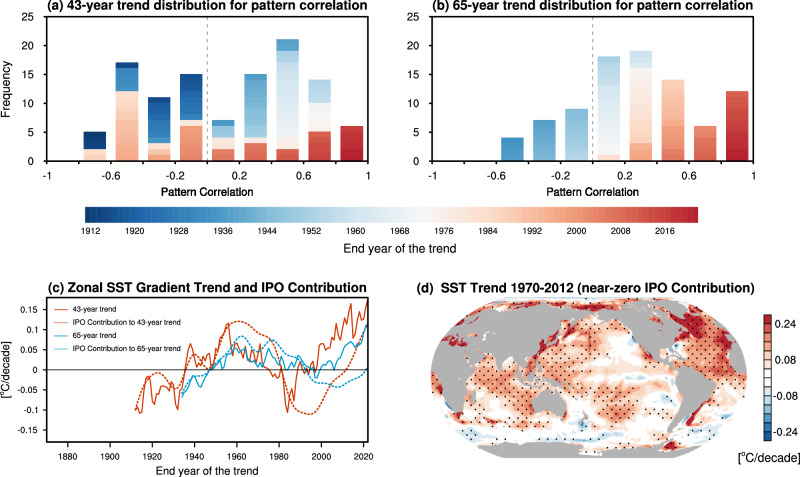
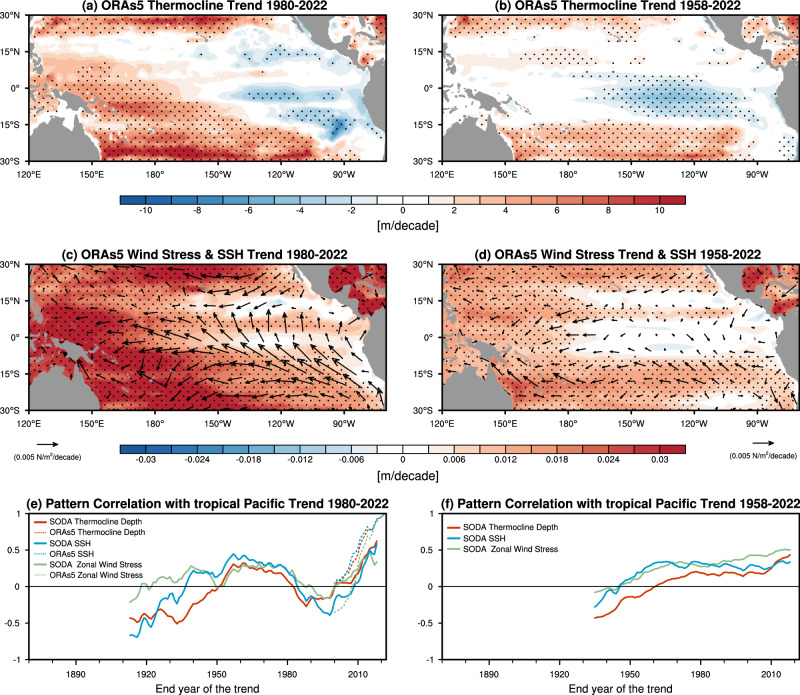
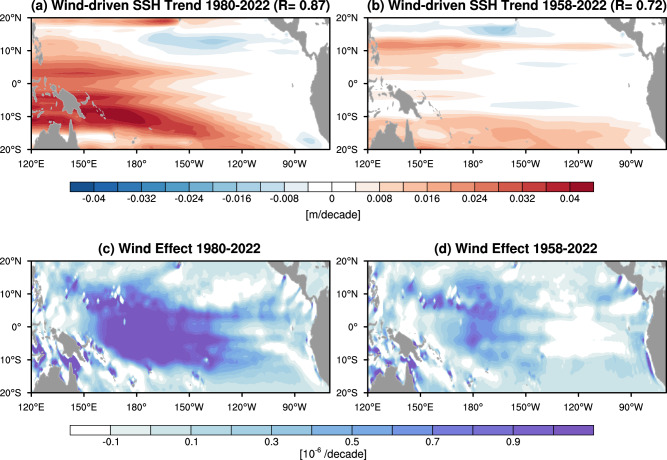
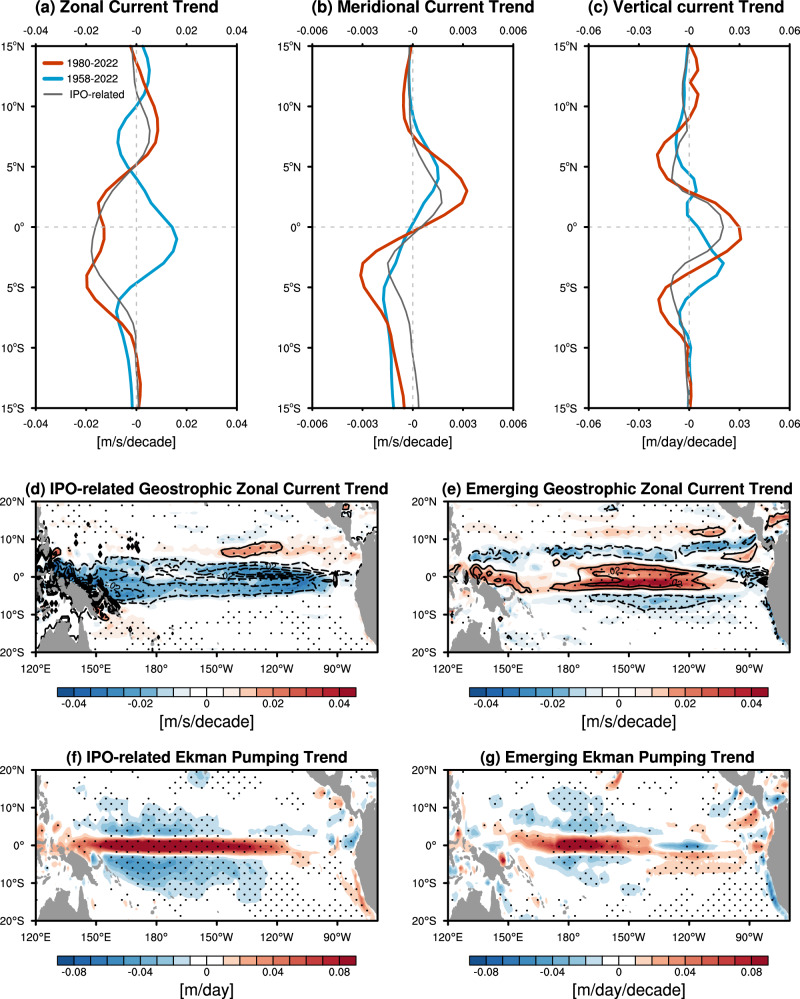
The eastern tropical Pacific has defied the global warming trend. There has been a debate about whether this observed trend is forced or natural (i.e., the Interdecadal Pacific Oscillation; IPO) and this study shows that there are two patterns, one that oscillates along with the IPO, and one that is emerging since the mid-1950s, herein called the Pacific Climate Change (PCC) pattern. Here we show these have distinctive and distinguishable atmosphere-ocean signatures. While the IPO features a meridionally broad wedge-shaped SST pattern, the PCC pattern is marked by a narrow equatorial cooling band. These different SST patterns are related to distinct wind-driven ocean dynamical processes. We further show that the recent trends during the satellite era are a combination of IPO and PCC. Our findings set a path to distinguish climate change signals from internal variability through the underlying dynamics of each.
东热带太平洋地区违背了全球变暖趋势。关于这一观测到的趋势是受强迫作用还是自然现象(即年代际太平洋振荡;IPO)一直存在争论,而这项研究表明存在两种模式,一种随IPO振荡,另一种自20世纪50年代中期以来出现,在此称为太平洋气候变化(PCC)模式。我们在此表明,它们具有独特且可区分的海气特征。IPO的特征是经向较宽的楔形海温模式,而PCC模式的特点是赤道附近有一条狭窄的降温带。这些不同的海温模式与不同的风驱动海洋动力过程有关。我们进一步表明,卫星时代的近期趋势是IPO和PCC的组合。我们的研究结果为通过每种现象的潜在动力学来区分气候变化信号与内部变率指明了道路。