Department of Medical Genetics, Medical University of Warsaw, Warsaw, Poland.
Department of Animal Physiology, Faculty of Biology, University of Warsaw, Warsaw, Poland.
EMBO Mol Med. 2024 Nov;16(11):2976-3004. doi: 10.1038/s44321-024-00147-6. Epub 2024 Sep 27.
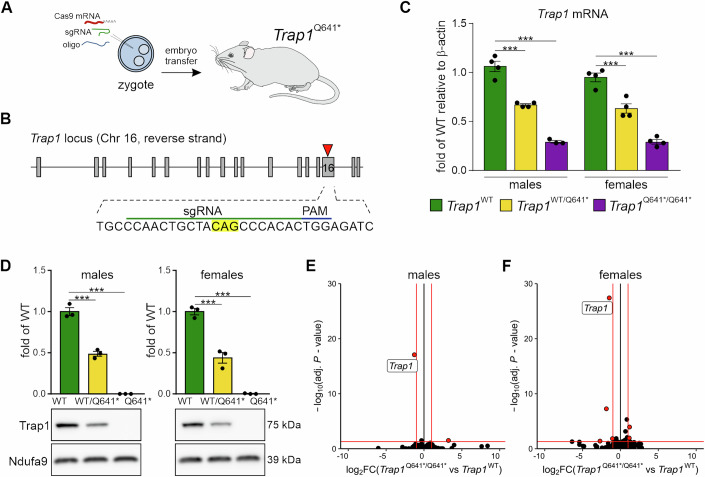
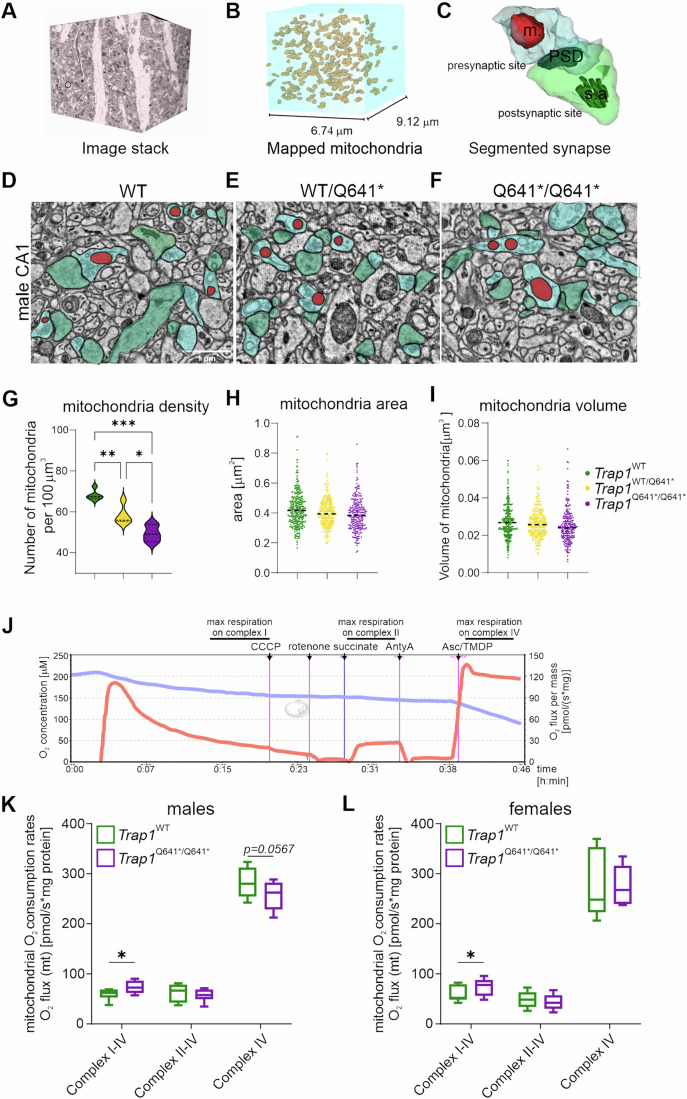
There is increasing evidence of mitochondrial dysfunction in autism spectrum disorders (ASD), but the causal relationships are unclear. In an ASD patient whose identical twin was unaffected, we identified a postzygotic mosaic mutation p.Q639* in the TRAP1 gene, which encodes a mitochondrial chaperone of the HSP90 family. Additional screening of 176 unrelated ASD probands revealed an identical TRAP1 variant in a male patient who had inherited it from a healthy mother. Notably, newly generated knock-in Trap1 p.Q641* mice display ASD-related behavioral abnormalities that are more pronounced in males than in females. Accordingly, Trap1 p.Q641* mutation also resulted in sex-specific changes in synaptic plasticity, the number of presynaptic mitochondria, and mitochondrial respiration. Thus, the TRAP1 p.Q639* mutation is the first example of a monogenic ASD caused by impaired mitochondrial protein homeostasis.
越来越多的证据表明,自闭症谱系障碍(ASD)存在线粒体功能障碍,但因果关系尚不清楚。在一名其同卵双胞胎未受影响的 ASD 患者中,我们发现了 TRAP1 基因中的一个合子后镶嵌突变 p.Q639*,该基因编码 HSP90 家族的线粒体伴侣。对 176 名无关 ASD 先证者的进一步筛查发现,一名男性患者从健康母亲那里遗传了一个相同的 TRAP1 变体。值得注意的是,新生成的 Trap1 p.Q641* 敲入小鼠表现出与 ASD 相关的行为异常,这种异常在雄性小鼠中比在雌性小鼠中更为明显。因此,Trap1 p.Q641* 突变也导致了突触可塑性、突触前线粒体数量和线粒体呼吸的性别特异性变化。因此,TRAP1 p.Q639* 突变是第一个由线粒体蛋白稳态受损引起的单基因 ASD 病例。