Uganda Public Health Fellowship Program, Uganda National Institute of Public Health, Kampala, Uganda.
Namutumba District Local Government, Namutumba, Uganda.
Malar J. 2024 Sep 27;23(1):288. doi: 10.1186/s12936-024-05111-w.
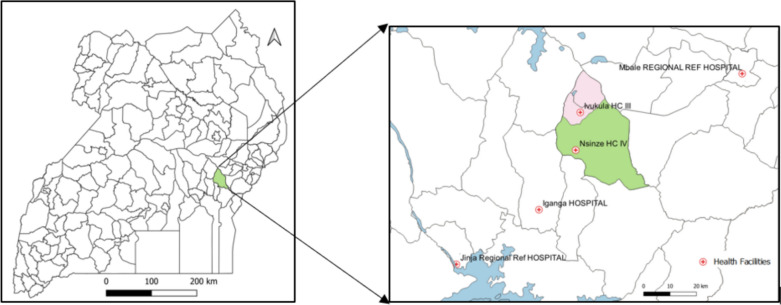
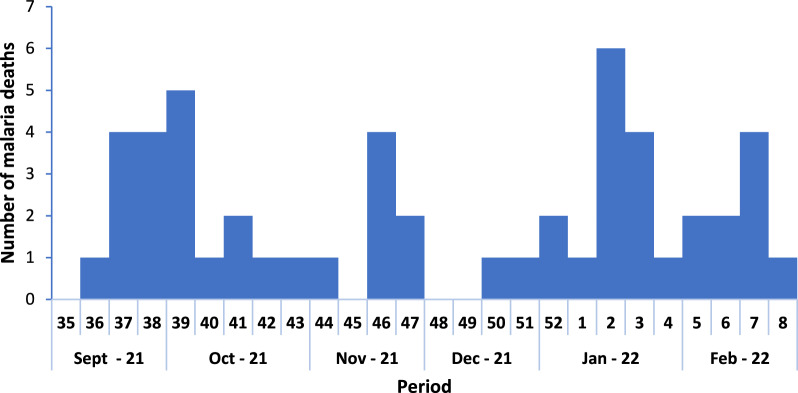
In February 2022, the Ministry of Health received reports of more than 100 child deaths from a 'strange disease' in Namutumba District over a period of 6 months from politicians through the media. Preliminary investigations by the district rapid response team confirmed the strange disease to be severe malaria. The scope of severe malaria deaths was investigated, associated factors identified, and recommendations made for control measures to inform early malaria treatment strategies in Namutumba District.
A retrospective study was conducted in March 2022 in the most affected subcounty (Ivukula Subcounty) involving cases and controls. A case was defined as a death with a positive malaria test, fever and any of the following: convulsions, difficulty breathing, yellowing of eyes or palms, tea-coloured urine, anaemia (evidenced by pale eyes or palms, or clinically-identified in medical records), loss of consciousness, or reduced urine output (very little or no urine in a day) in a child ≤ 12 years from September 2021 to February 2022 in Ivukula Subcounty, Namutumba District. Controls were survivors with the same signs and symptoms, recruited in a 2:1 ratio with cases. Cases and controls were actively searched using a door-to-door approach with the help of community health workers. Caretakers were interviewed to obtain data on signs and symptoms, socio-demographic information, health-seeking behaviours and health system risk factors. Drugs and bloodstock status information was obtained from health workers using an interview guide. Factors associated with death were identified using multivariate logistic regression and thematic analysis for qualitative data.
Among 46 cases, 29 (63%) were < 5 years, and 23 (50%) were female. Death among children with severe malaria was significantly associated with treatment non-completion (aOR = 9.7, 95%CI 1.8-53) and inability to receive blood transfusion for anaemic patients (aOR = 7.1, (95%CI 1.4-36). Healthcare workers reported that inability to reach referral sites due to transport costs, stockouts of anti-malarials and blood products at health facilities, and absence of integrated community case management of childhood illnesses (iCCM) contributed to deaths among children with severe malaria.
Lack of access to anti-malarial treatment and to blood transfusions among anaemic patients due to stockouts were associated with severe malaria deaths among children ≤ 12 years in Ivukula Subcounty. Recommendations made were: accurate quantification of anti-malarials for health facilities, offering transport support to severe patients referred to higher-level facilities, and increasing access to blood products. Activation of iCCM could facilitate public health efforts against severe malaria in the district.
2022 年 2 月,卫生部通过媒体从政客处收到了来自纳穆图姆巴区在 6 个月期间超过 100 名儿童死于“奇怪疾病”的报告。地区快速反应小组的初步调查证实,这种奇怪的疾病是严重疟疾。对严重疟疾死亡的范围进行了调查,确定了相关因素,并提出了控制措施建议,为纳穆图姆巴区早期疟疾治疗策略提供信息。
2022 年 3 月在受影响最严重的分区(Ivukula 分区)进行了回顾性研究,涉及病例和对照。病例定义为在 2021 年 9 月至 2022 年 2 月期间,在 Ivukula 分区,年龄为 12 岁以下的儿童死于疟疾检测阳性、发热且有以下任何一种症状的儿童:抽搐、呼吸困难、眼睛或手掌发黄、茶色尿、贫血(由眼睛或手掌苍白或病历中临床确定)、意识丧失或尿量减少(一天中很少或没有尿液)。对照是在同一地点和时间与病例具有相同体征和症状的幸存者,按照 2:1 的比例招募。病例和对照通过社区卫生工作者的帮助进行挨家挨户的主动搜索。护理人员接受采访以获取体征和症状、社会人口学信息、寻医行为和卫生系统风险因素的数据。使用访谈指南从卫生工作者处获取药物和血库状况信息。使用多变量逻辑回归和定性数据的主题分析确定与死亡相关的因素。
在 46 例病例中,29 例(63%)年龄<5 岁,23 例(50%)为女性。患有严重疟疾的儿童死亡与治疗不完成(比值比[OR] = 9.7,95%置信区间[CI]:1.8-53)和贫血患者无法接受输血(OR = 7.1,95%CI:1.4-36)显著相关。医疗保健工作者报告说,由于交通费用、卫生设施抗疟药物和血液制品缺货以及儿童综合疾病管理(iCCM)综合未能到位,导致无法到达转诊地点,这导致了患有严重疟疾的儿童死亡。
由于缺货,患有严重疟疾的儿童无法获得抗疟治疗和贫血患者的输血,这与 Ivukula 分区 12 岁以下儿童的严重疟疾死亡有关。建议采取以下措施:准确计算卫生设施的抗疟药物数量,为转诊到更高级别设施的严重患者提供交通支持,并增加血液制品的获取途径。激活 iCCM 可以促进该地区针对严重疟疾的公共卫生工作。