Lin Wen-Pin, Wu Lo-Yu, Li Wen-Kai, Lin Wei-Ren, Wu Richard, White Lynn, Abass Rowan, Alanazi Rami, Towler Joseph, Davies Jay, Abass Ahmed
Department of Optometry, University of Kang Ning, Taipei 11485, Taiwan.
Research and Development Centre, Brighten Optix Corporation, Taipei 111, Taiwan.
J Clin Med. 2024 Sep 12;13(18):5420. doi: 10.3390/jcm13185420.
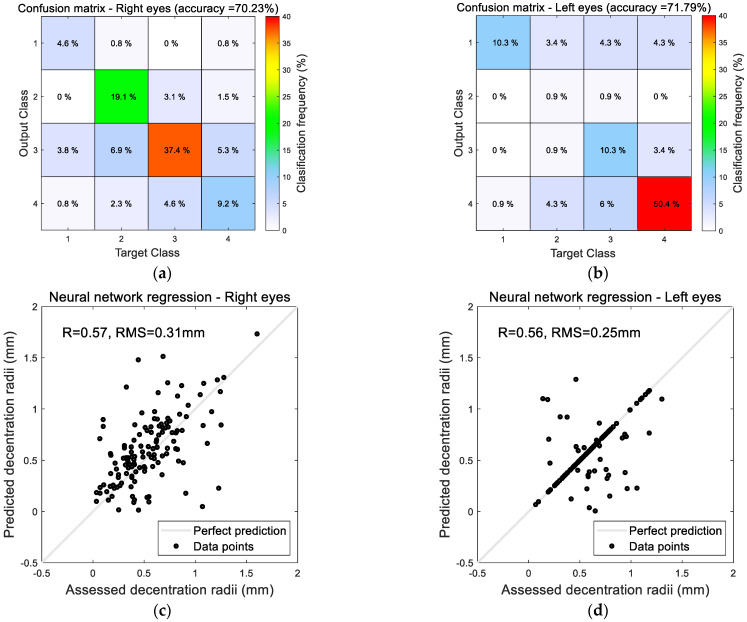
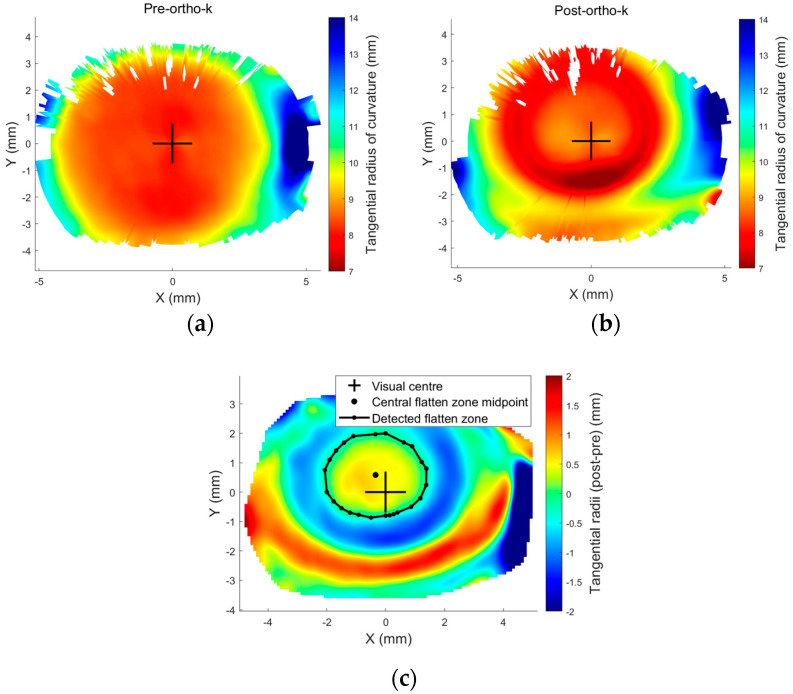
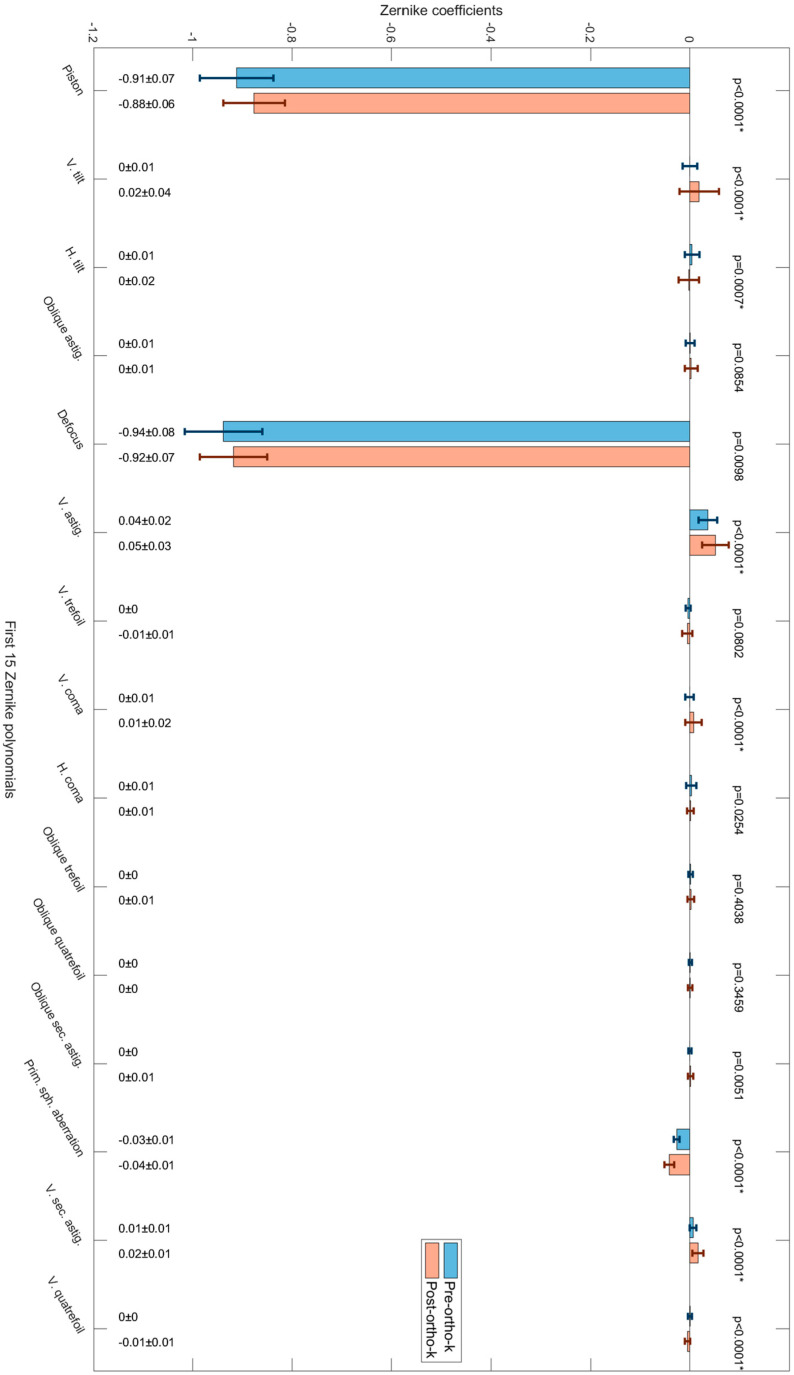
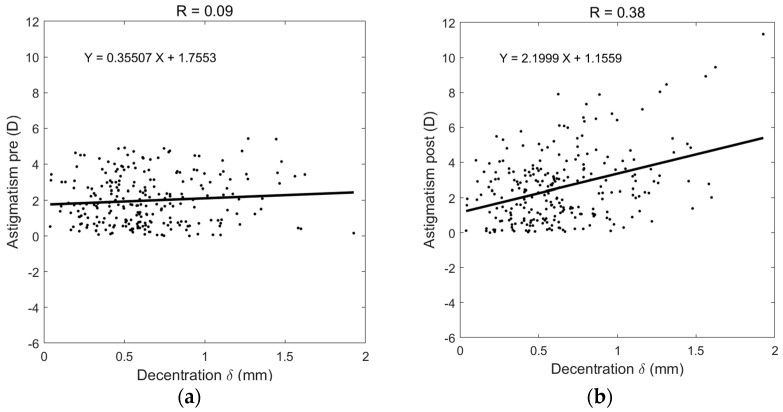
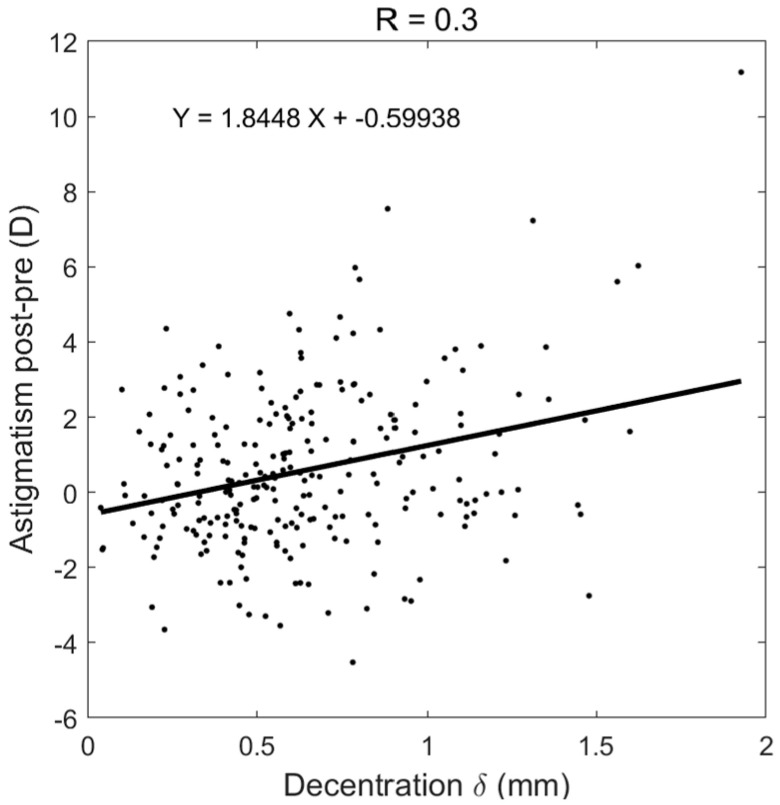
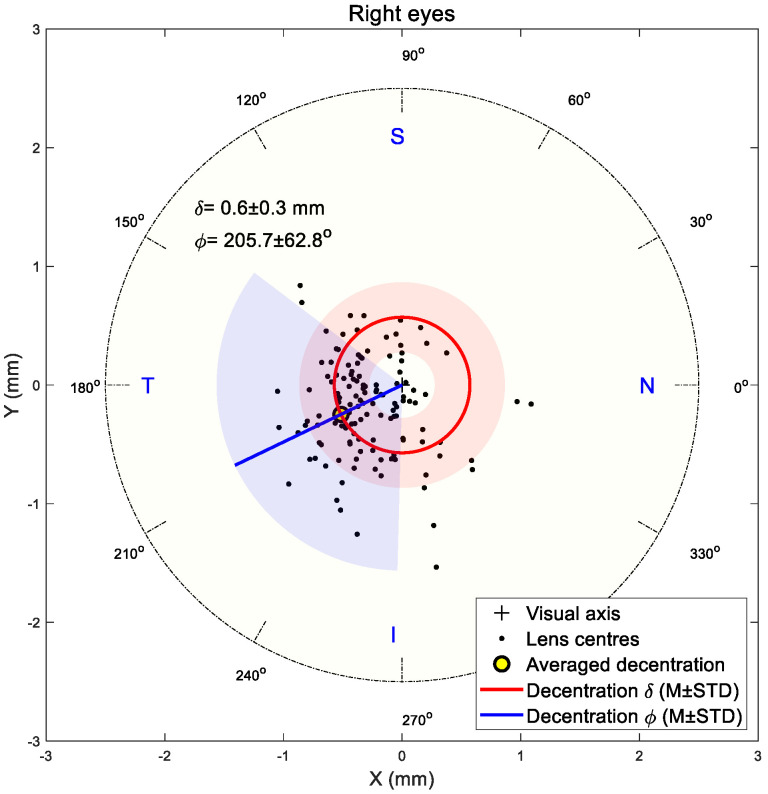
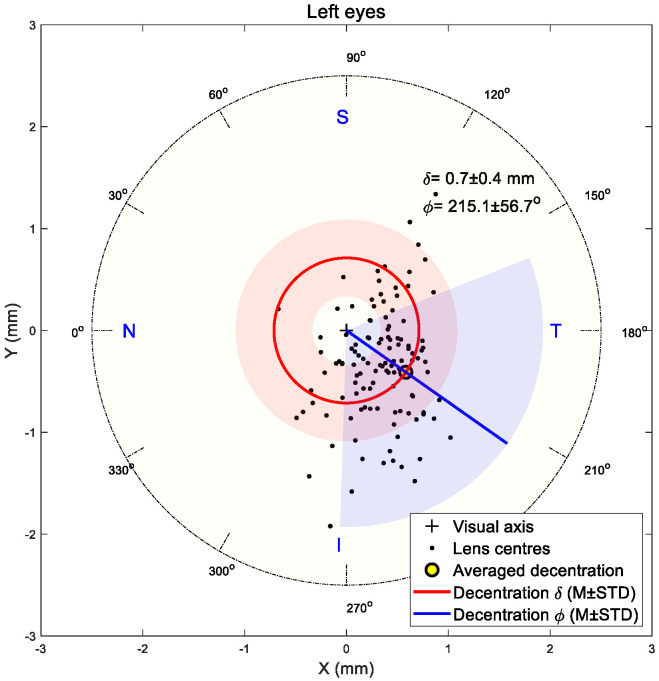
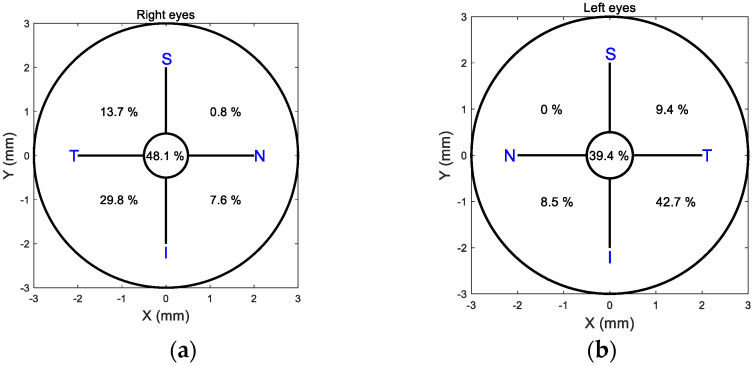
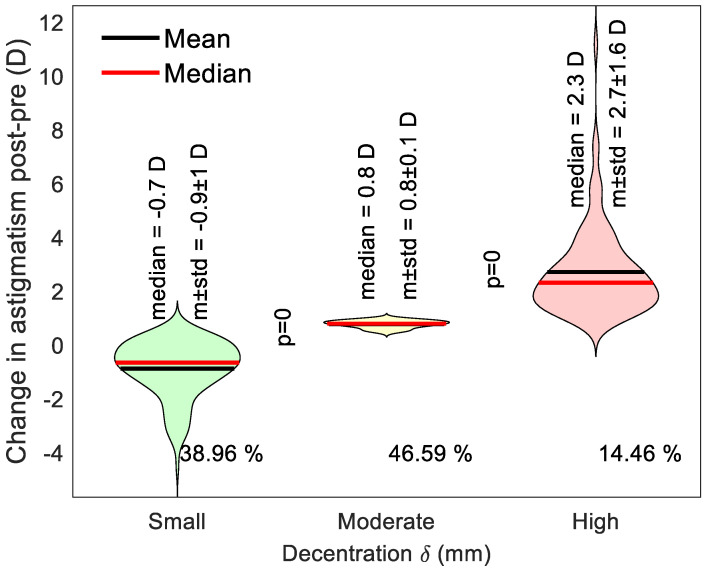
: The aim is to investigate induced higher-order aberrations (HOA)s and astigmatism as a result of non-toric ortho-k lens decentration and utilise artificial intelligence (AI) to predict its magnitude and direction. Medmont E300 Video topographer was used to scan 249 corneas before and after ortho-k wear. Custom-built MATLAB codes extracted topography data and determined lens decentration from the boundary and midpoint of the central flattened treatment zone (TZ). An evaluation was carried out by conducting Zernike polynomial fittings via a computer-coded digital signal processing procedure. Finally, an AI-based machine learning neural network algorithm was developed to predict the direction and magnitude of TZ decentration. Analysis of the first 21 Zernike polynomial coefficients indicate that the four low-order and four higher-order aberration terms were changed significantly by ortho-k wear. While baseline astigmatism was not correlated with lens decentration (R = 0.09), post-ortho-k astigmatism was moderately correlated with decentration (R = 0.38) and the difference in astigmatism (R = 0.3). Decentration was classified into three groups: ≤0.50 mm, reduced astigmatism by -0.9 ± 1 D; 0.5~1 mm, increased astigmatism by 0.8 ± 0.1 D; >1 mm, increased astigmatism by 2.7 ± 1.6 D and over 50% of lenses were decentred >0.5 mm. For lenses decentred >1 mm, 29.8% of right and 42.7% of left lenses decentred temporal-inferiorly and 13.7% of right and 9.4% of left lenses decentred temporal-superiorly. AI-based prediction successfully identified the decentration direction with accuracies of 70.2% for right and 71.8% for left lenses and predicted the magnitude of decentration with root-mean-square (RMS) of 0.31 mm and 0.25 mm for right and left eyes, respectively. Ortho-k lens decentration is common when fitting non-toric ortho-k lenses, resulting in induced HOAs and astigmatism, with the magnitude being related to the amount of decentration. AI-based algorithms can effectively predict decentration, potentially allowing for better control over ortho-k fitting and, thus, preferred clinical outcomes.
目的是研究非环曲面角膜塑形镜偏心导致的诱导性高阶像差(HOA)和散光,并利用人工智能(AI)预测其大小和方向。使用Medmont E300视频角膜地形图仪在角膜塑形镜佩戴前后扫描249只角膜。定制的MATLAB代码提取地形图数据,并根据中央平坦治疗区(TZ)的边界和中点确定镜片偏心度。通过计算机编码的数字信号处理程序进行泽尼克多项式拟合来进行评估。最后,开发了一种基于AI的机器学习神经网络算法来预测TZ偏心的方向和大小。对前21个泽尼克多项式系数的分析表明,角膜塑形镜佩戴后四个低阶和四个高阶像差项发生了显著变化。虽然基线散光与镜片偏心度无关(R = 0.09),但角膜塑形镜佩戴后的散光与偏心度呈中度相关(R = 0.38),散光差异也呈中度相关(R = 0.3)。偏心度分为三组:≤0.50 mm,散光减少-0.9±1 D;0.5~1 mm,散光增加0.8±0.1 D;>1 mm,散光增加2.7±1.6 D,超过50%的镜片偏心>0.5 mm。对于偏心>1 mm的镜片,29.8%的右眼和42.7%的左眼颞下偏心,13.7%的右眼和9.4%的左眼颞上偏心。基于AI的预测成功识别了偏心方向,右眼的准确率为70.2%,左眼为71.8%,并分别以0.31 mm和0.25 mm的均方根(RMS)预测了右眼和左眼的偏心大小。在拟合非环曲面角膜塑形镜时,镜片偏心很常见,会导致诱导性HOA和散光,其大小与偏心量有关。基于AI的算法可以有效预测偏心,可能有助于更好地控制角膜塑形镜的验配,从而获得更好的临床效果。