França Wilza W M, Filho Sérgio D Magalhães, Cavalcante Lucas A O, Gomes Mary A A S, Gonçalves Maria T V, Diniz Emily G M, Nascimento Wheverton R C, Neto Reginaldo G Lima, Albuquerque Mônica C P A, Filho Iranildo J Cruz, Araújo Hallysson D A, Aires André L, Vieira Jeymesson R C
Centro de Biociência, Programa de Pós-Graduação em Morfotecnologia, Universidade Federal de Pernambuco, Avenida Prof. Moraes Rego, 1235, Cidade Universitária, Recife 50670-501, PE, Brazil.
Centro de Ciências Médicas, Programa de Pós-Graduação em Medicina Tropical, Universidade Federal de Pernambuco, Avenida Prof. Moraes Rego, 1235, Cidade Universitária, Recife 50670-501, PE, Brazil.
Pharmaceuticals (Basel). 2024 Sep 6;17(9):1178. doi: 10.3390/ph17091178.
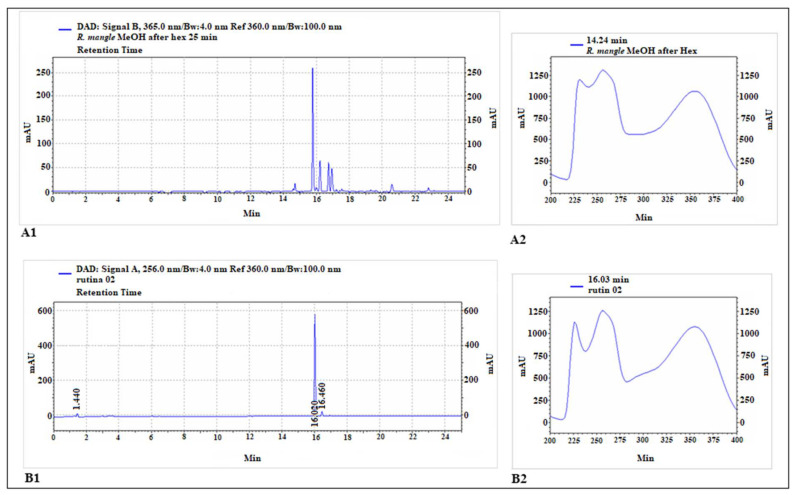
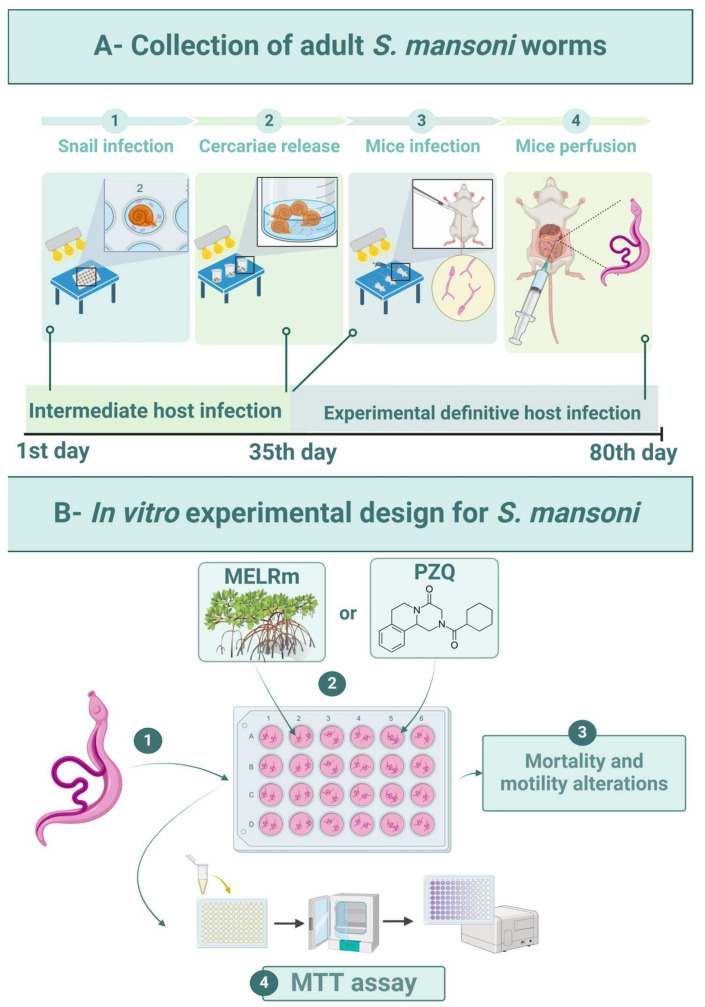
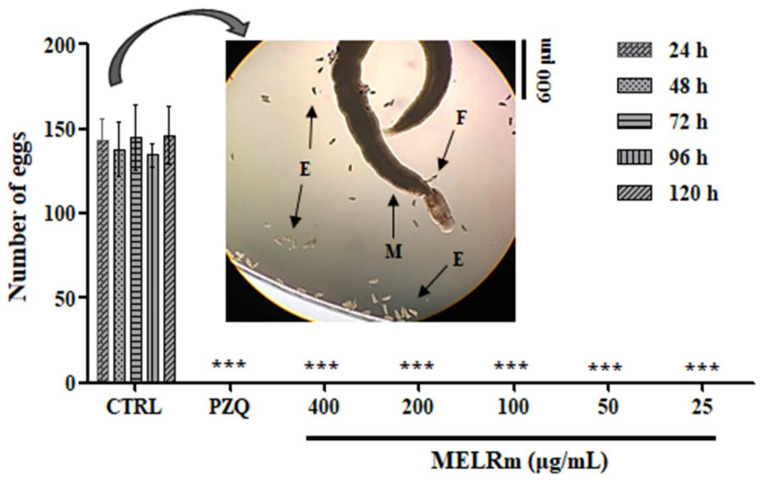
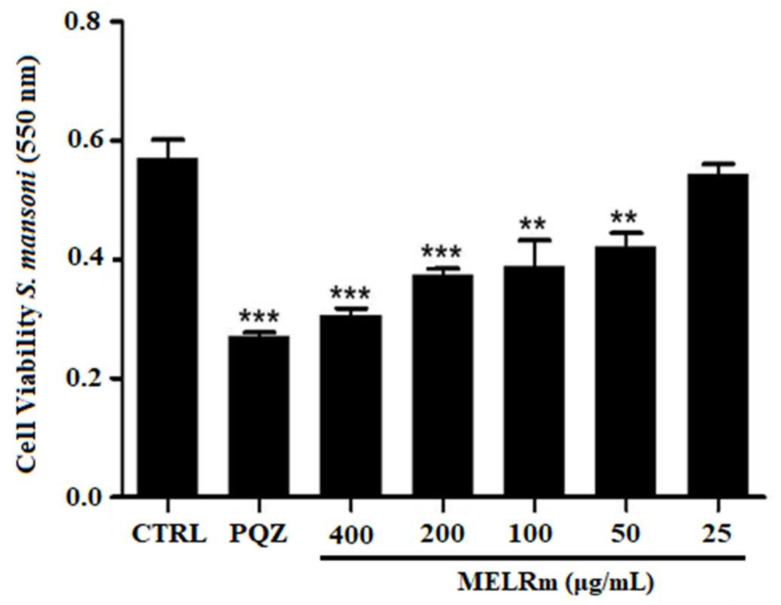
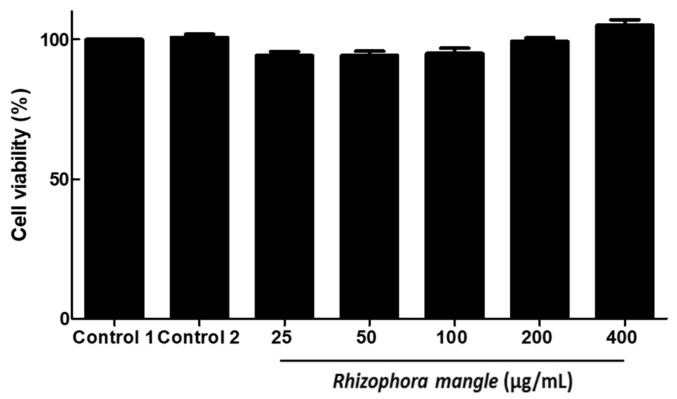
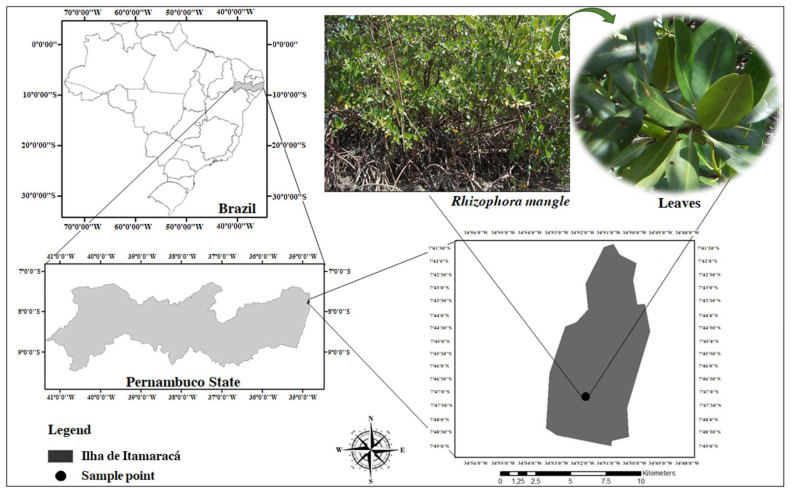
is commonly used in traditional medicine to treat infections, reduce inflammation, and promote healing. This study aimed to analyze the phytochemical profile of the methanolic extract of leaves (MELRm) and evaluate its in vitro schistosomicidal activity against as well as its cytotoxicity. Plant material was collected in Itamaracá City, Pernambuco, Brazil. The extract was analyzed using UV/Vis spectrophotometry and high-performance liquid chromatography (HPLC). The motility, mortality, and cell viability of adult worms were assessed in a schistosomicidal assay, while cytotoxicity was evaluated through a colorimetric assay with MTT on RAW 264.7 cells. The primary compounds identified in MELRm were phenolic compounds. In the schistosomicidal assay, all concentrations of MELRs induced changes in the motility of adult worms. At a concentration of 400 μg/mL, MELRs resulted in 56.25% mortality after 72 h of incubation. After 120 h, mortality rates of 75%, 62.5%, and 50% were observed at MELRm concentrations of 400, 200, and 100 μg/mL, respectively. No eggs were detected at any MELRm concentration. MELRs did not show cytotoxicity towards RAW 264.7 cells at the concentrations tested. These results indicate that MELRs demonstrate schistosomicidal activity in vitro, suggesting they are promising candidates for in vivo studies.
在传统医学中常用于治疗感染、减轻炎症和促进愈合。本研究旨在分析叶片甲醇提取物(MELRm)的植物化学特征,并评估其对[具体寄生虫名称未给出]的体外杀血吸虫活性及其细胞毒性。植物材料采集于巴西伯南布哥州伊塔马拉卡市。提取物采用紫外/可见分光光度法和高效液相色谱法(HPLC)进行分析。在杀血吸虫试验中评估成虫的活力、死亡率和细胞活力,同时通过对RAW 264.7细胞进行MTT比色法评估细胞毒性。在MELRm中鉴定出的主要化合物为酚类化合物。在杀血吸虫试验中,所有浓度的MELRs均引起成虫活力变化。在400μg/mL浓度下,孵育72小时后MELRs导致56.25%的死亡率。120小时后,在MELRm浓度为400、200和100μg/mL时,观察到的死亡率分别为75%、62.5%和50%。在任何MELRm浓度下均未检测到虫卵。在所测试的浓度下,MELRs对RAW 264.7细胞未表现出细胞毒性。这些结果表明MELRs在体外具有杀血吸虫活性,表明它们是体内研究的有前途的候选物。