Amšiejūtė-Graziani Paulina, Jurgelevičius Vaclovas, Pilevičienė Simona, Janeliūnas Žygimantas, Radzijevskaja Jana, Paulauskas Algimantas, Butrimaitė-Ambrozevičienė Česlova, Jacevičienė Ingrida
Faculty of Natural Sciences, Vytautas Magnus University, Universiteto str. 10, Akademija, Kaunas District, LT-44248 Kaunas, Lithuania.
National Food and Veterinary Risk Assessment Institute, J. Kairiukscio str. 10, LT-08409 Vilnius, Lithuania.
Microorganisms. 2024 Sep 13;12(9):1884. doi: 10.3390/microorganisms12091884.
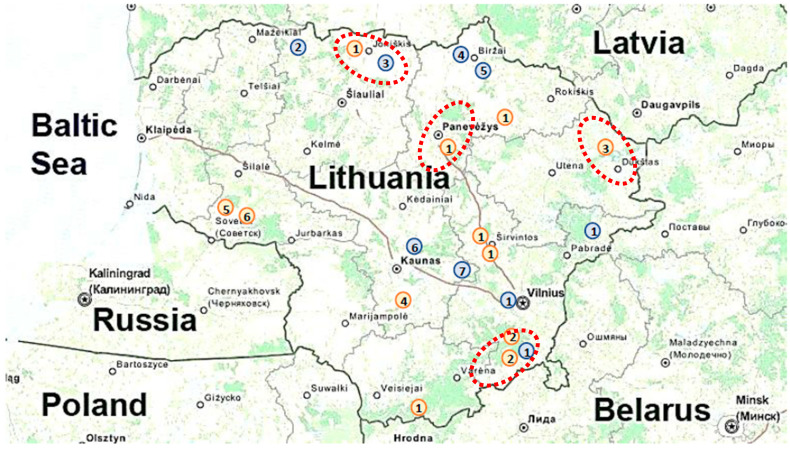
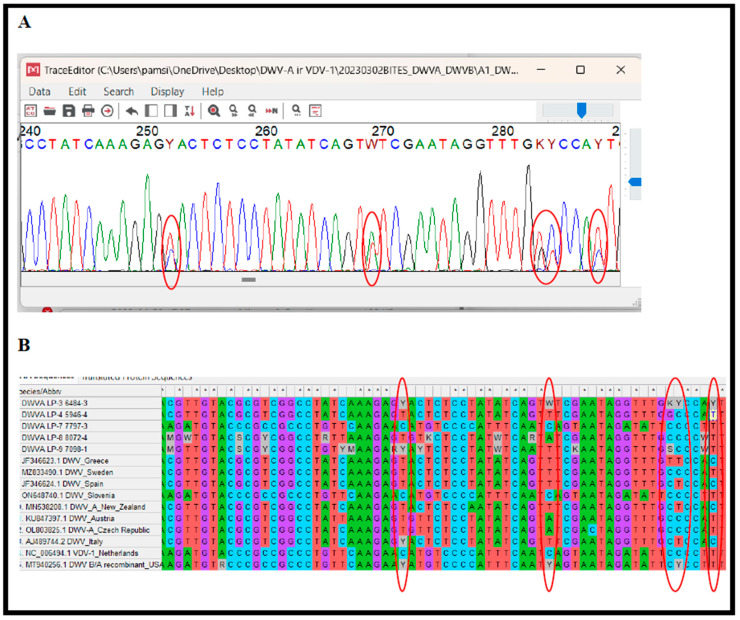
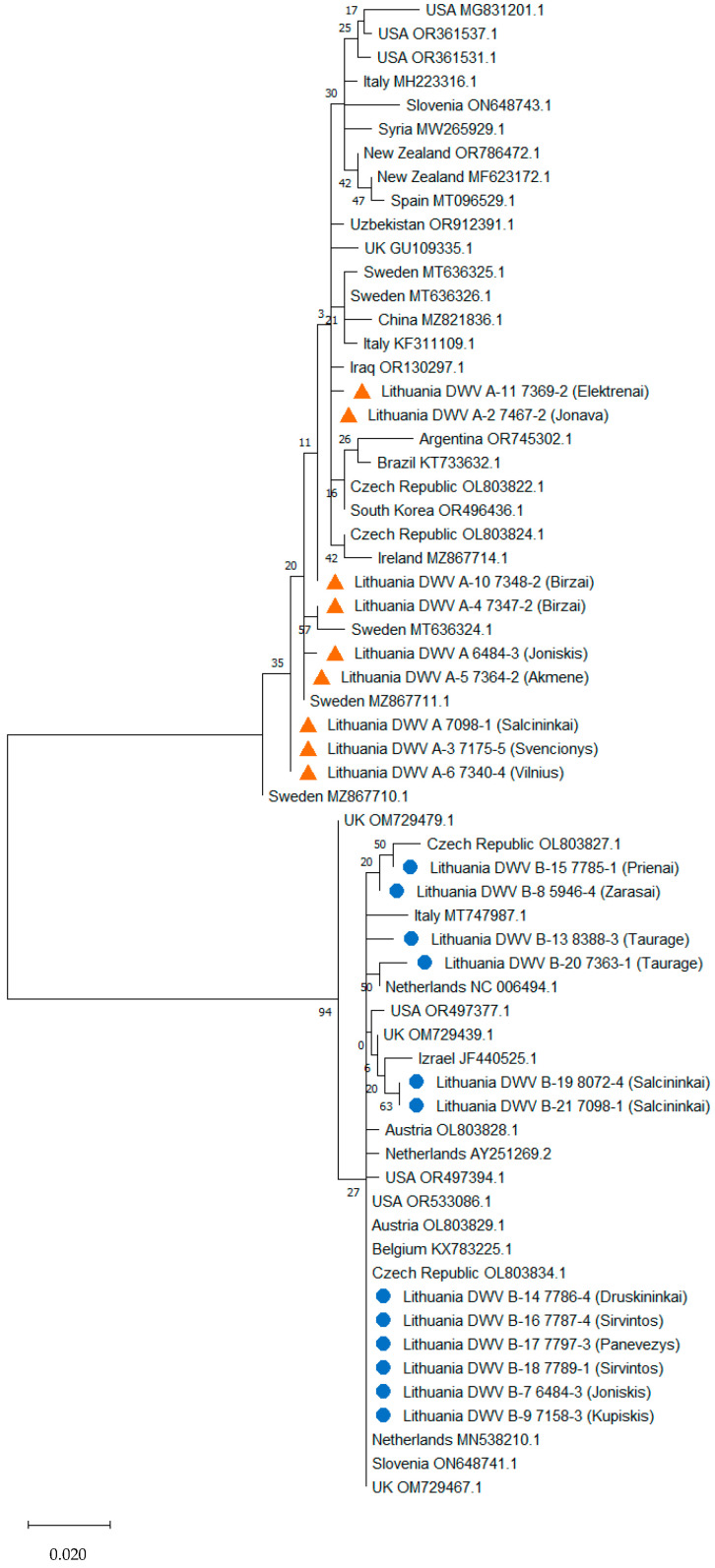
Deformed wing virus (DWV) is known as one of the main viruses that affect honeybees' health all around the world. The virus has two widespread genotypes, DWV-A and DWV-B (VDV-1), transmitted mainly by mites. In this study, we collected honeycombs with covered broods from 73 apiaries in eight Lithuanian regions and initially investigated the prevalence of mites. Mites were collected from May to the end of July in 2021 from 124 hives. The prevalence of infestations in beehives reached 30% and 63% in investigated apiaries. The presence of DWV-A and DWV-B pathogens in mites and broods was examined by RT-qPCR targeting the region. The molecular characterization of the virus in mite samples was based on sequence analysis of the RNA-dependent RNA polymerase () region. In addition, leader polypeptide (, structural protein (, , and genes were used for phylogenetic characterization of dual infection. The prevalences of DWV-B in mites and broods were 56.5% and 31.5%, respectively, while DWV-A was detected in 12.9% of mite samples and 24.7% of brood samples. Some of the examined mite samples harboured dual virus infections. Our findings showed that bee colonies from the same apiary were not always infected by the same viruses. Some bee colonies were virus-free, while others were highly infected. Phylogenetic analysis of 21 sequences demonstrated the presence of highly variable DWV-B and DWV-A genotypes in Lithuania and possible recombinant variants of the virus. This study represents the first molecular characterization of mite-borne pathogens hosted by honeybees () in Lithuania.
变形翅病毒(DWV)是已知影响全球蜜蜂健康的主要病毒之一。该病毒有两种广泛传播的基因型,DWV - A和DWV - B(VDV - 1),主要通过螨虫传播。在本研究中,我们从立陶宛八个地区的73个养蜂场收集了有封盖子的蜂巢,并初步调查了螨虫的患病率。2021年5月至7月底,从124个蜂箱中收集了螨虫。在所调查的养蜂场中,蜂箱中螨虫感染率分别达到30%和63%。通过针对该区域的RT - qPCR检测螨虫和幼虫中DWV - A和DWV - B病原体的存在。螨虫样本中病毒的分子特征基于RNA依赖性RNA聚合酶()区域的序列分析。此外,前导多肽()、结构蛋白()、()和()基因用于双重感染的系统发育特征分析。螨虫和幼虫中DWV - B的患病率分别为56.5%和31.5%,而在12.9%的螨虫样本和24.7%的幼虫样本中检测到DWV - A。一些检测的螨虫样本存在双重病毒感染。我们的研究结果表明,来自同一养蜂场的蜂群并不总是感染相同的病毒。一些蜂群没有病毒感染,而其他蜂群则感染严重。对21个序列的系统发育分析表明,立陶宛存在高度可变的DWV - B和DWV - A基因型以及可能的病毒重组变体。本研究代表了立陶宛蜜蜂()携带的螨虫传播病原体的首次分子特征分析。