Elsayed Walaa M, Alsabaan Maazen, Ibrahem Mohamed I, El-Shafeiy Engy
Department of Information Technology, Faculty of Computers and Informatics, Damanhour University, Damanhour 22511, Egypt.
Department of Computer Engineering, College of Computer and Information Sciences, King Saud University, Riyadh 11543, Saudi Arabia.
Sensors (Basel). 2024 Sep 20;24(18):6102. doi: 10.3390/s24186102.
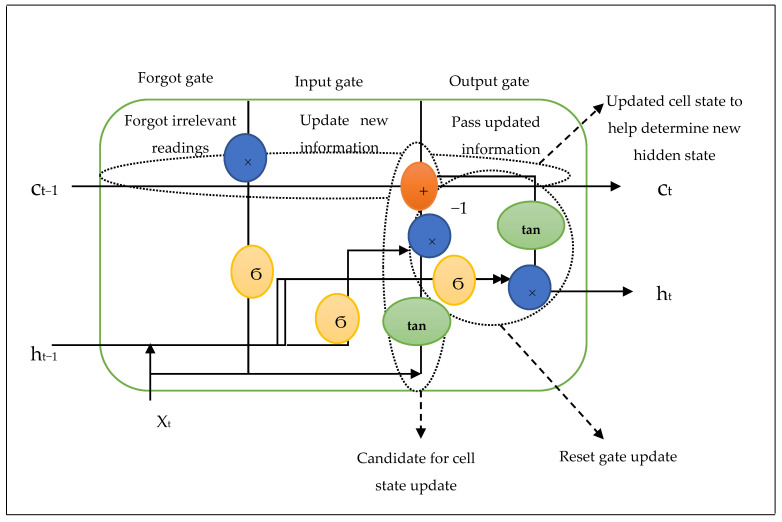
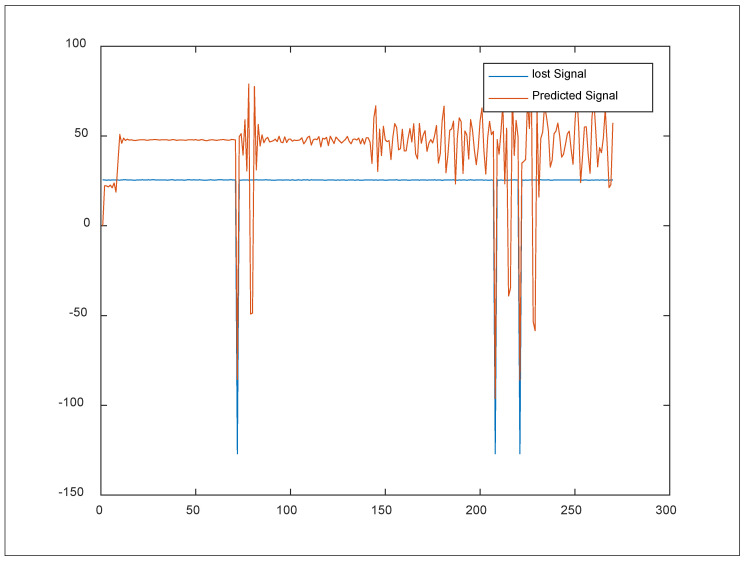
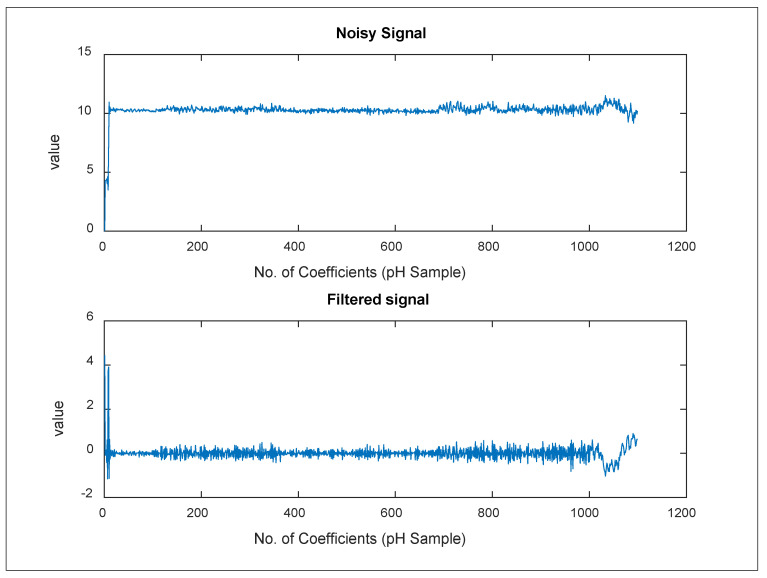
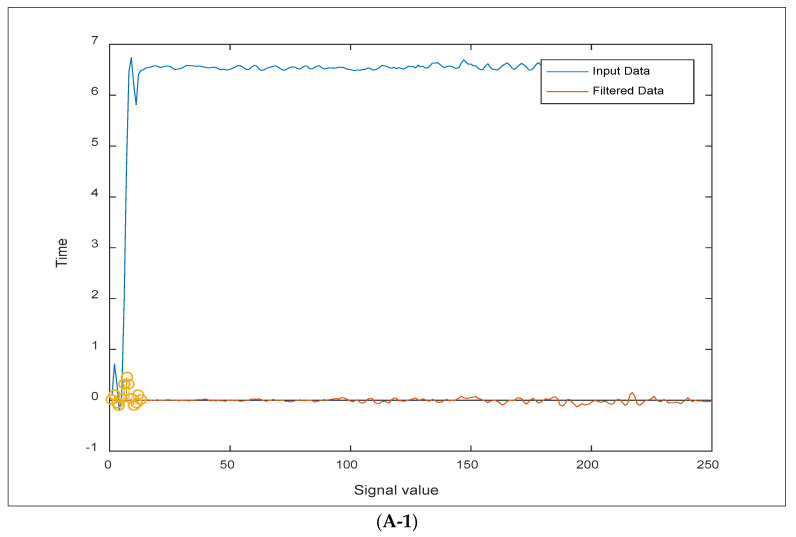
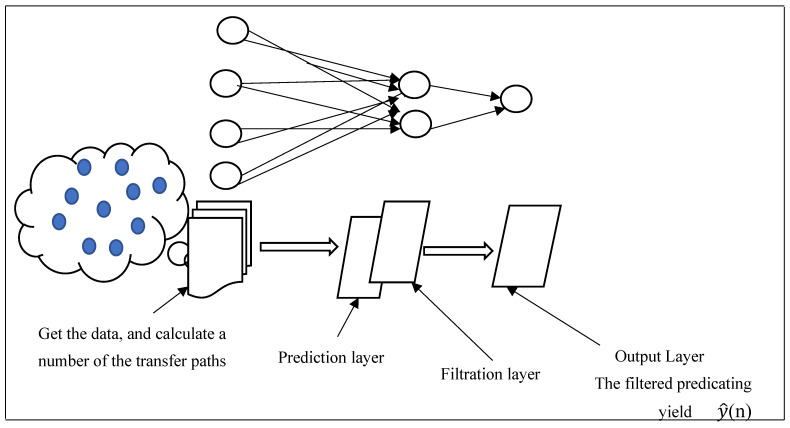
This paper describes a revolutionary design paradigm for monitoring aquatic life. This unique methodology addresses issues such as limited memory, insufficient bandwidth, and excessive noise levels by combining two approaches to create a comprehensive predictive filtration system, as well as multiple-transfer route analysis. This work focuses on proposing a novel filtration learning approach for underwater sensor nodes. This model was created by merging two adaptive filters, the finite impulse response (FIR) and the adaptive line enhancer (ALE). The FIR integrated filter eliminates unwanted noise from the signal by obtaining a linear response phase and passes the signal without distortion. The goal of the ALE filter is to properly separate the noise signal from the measured signal, resulting in the signal of interest. The cluster head level filters are the adaptive cuckoo filter (ACF) and the Kalman filter. The ACF assesses whether an emitter node is part of a set or not. The Kalman filter improves the estimation of state values for a dynamic underwater sensor networking system. It uses distributed learning long short-term memory (LSTM-CNN) technology to ensure that the anticipated value of the square of the gap between the prediction and the correct state is the smallest possible. Compared to prior methods, our suggested deep filtering-learning model achieved 98.5% of the sensory filtration method in the majority of the obtained data and close to 99.1% of an adaptive prediction method, while also consuming little energy during lengthy monitoring.
本文描述了一种用于监测水生生物的革命性设计范式。这种独特的方法通过结合两种方法来创建一个全面的预测过滤系统以及多传输路径分析,解决了诸如内存有限、带宽不足和噪声水平过高之类的问题。这项工作着重为水下传感器节点提出一种新颖的过滤学习方法。该模型是通过合并两种自适应滤波器创建的,即有限脉冲响应(FIR)滤波器和自适应线增强器(ALE)。FIR集成滤波器通过获得线性响应相位来消除信号中的有害噪声,并使信号无失真地通过。ALE滤波器的目标是将噪声信号与测量信号正确分离,从而得到感兴趣的信号。簇头级滤波器是自适应布谷鸟滤波器(ACF)和卡尔曼滤波器。ACF评估发射节点是否属于某一集合。卡尔曼滤波器改进了动态水下传感器网络系统状态值的估计。它使用分布式学习长短期记忆(LSTM-CNN)技术,以确保预测与正确状态之间差距平方的预期值尽可能小。与先前的方法相比,我们提出的深度过滤学习模型在大多数获取的数据中达到了传感过滤方法的98.5%,接近自适应预测方法的99.1%,同时在长时间监测期间消耗的能量也很少。