Du Pingping, He Huan, Wang Jiayin, Wang Lili, Meng Zhuang, Jin Xiang, Zhang Liyu, Wang Fei, Li Hongbin, Xie Quanliang
Key Laboratory of Xinjiang Phytomedicine Resource and Utilization of Ministry of Education, Xinjiang Production and Construction Corps Key Laboratory of Oasis Town and Mountain-Basin System Ecology, College of Life Sciences, Shihezi University, Shihezi 832003, China.
Plants (Basel). 2024 Sep 21;13(18):2646. doi: 10.3390/plants13182646.
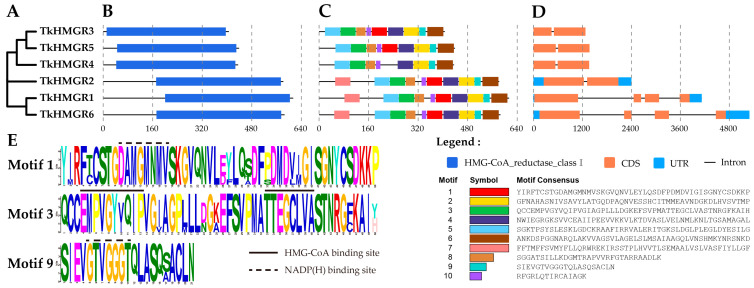
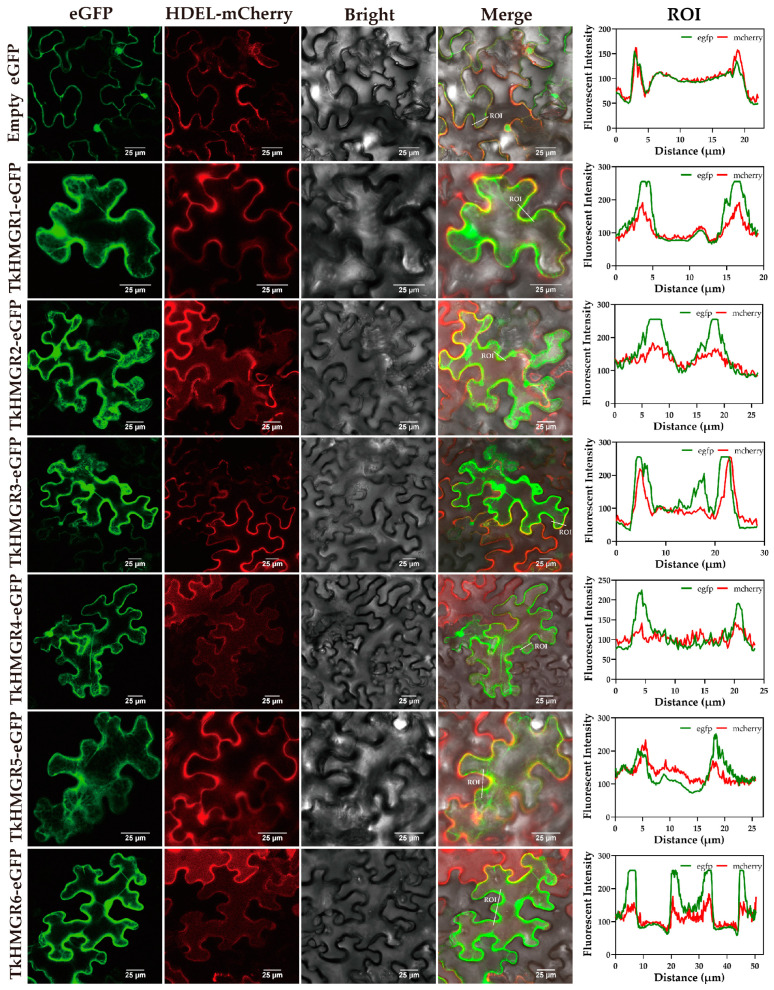
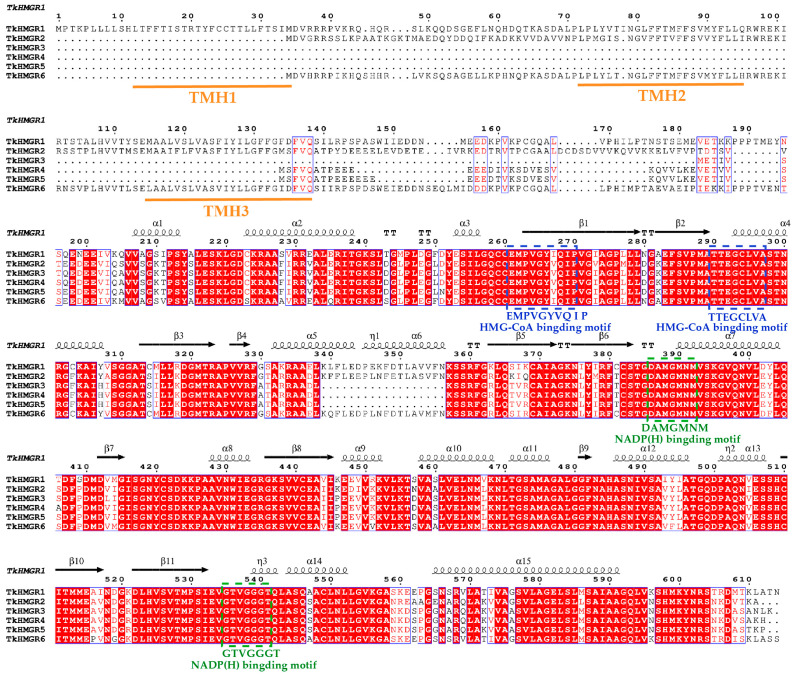
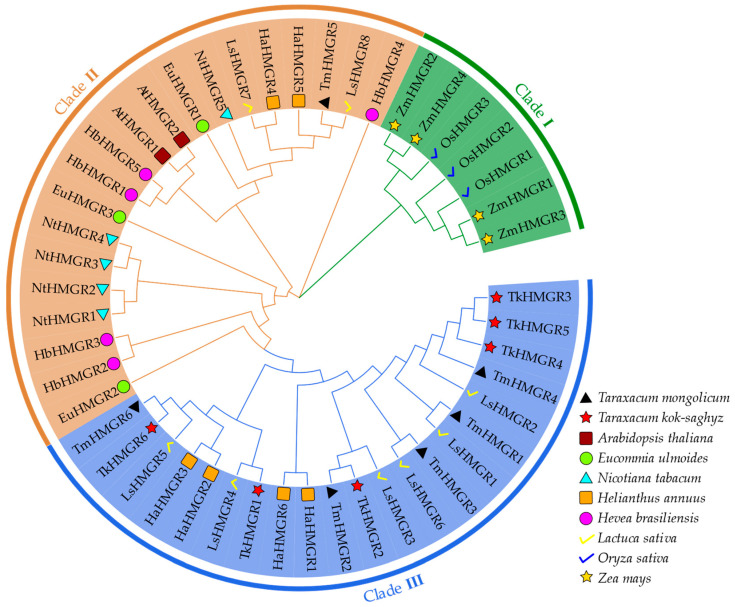
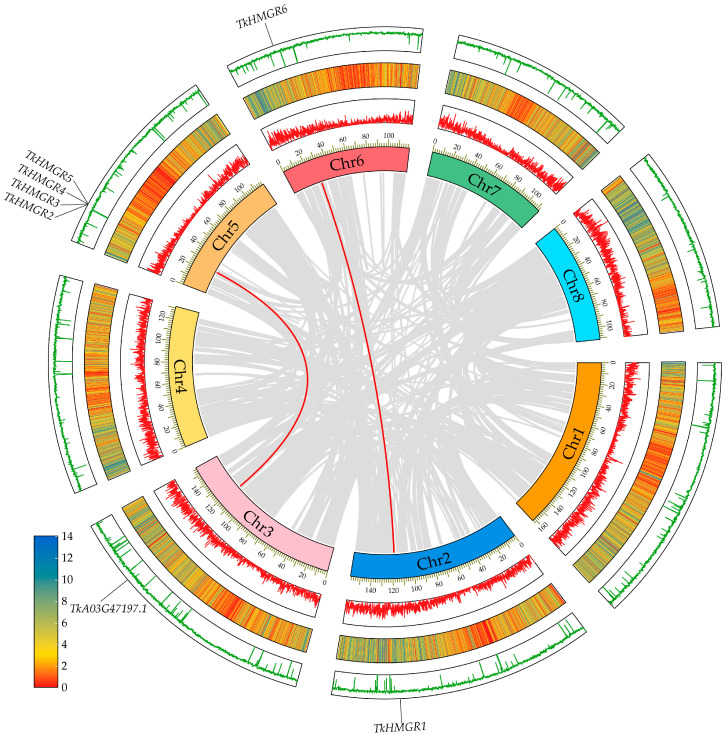
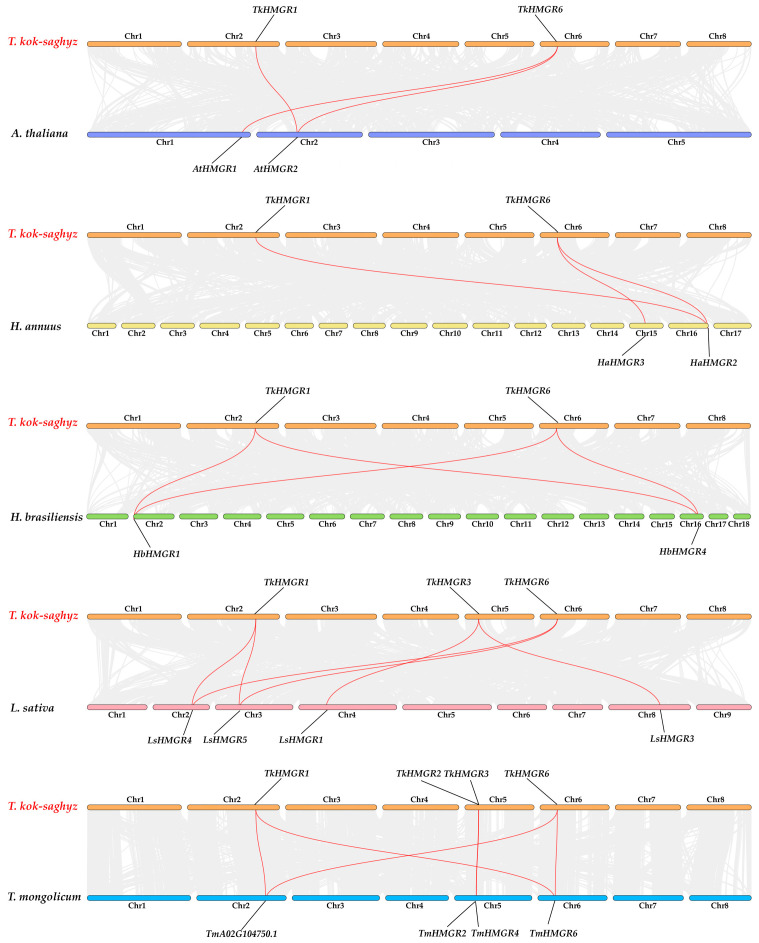
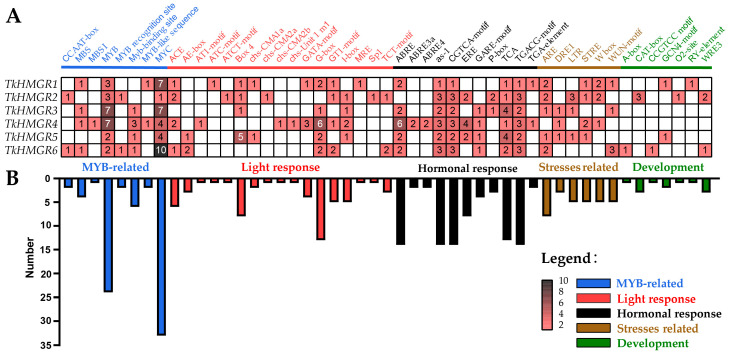
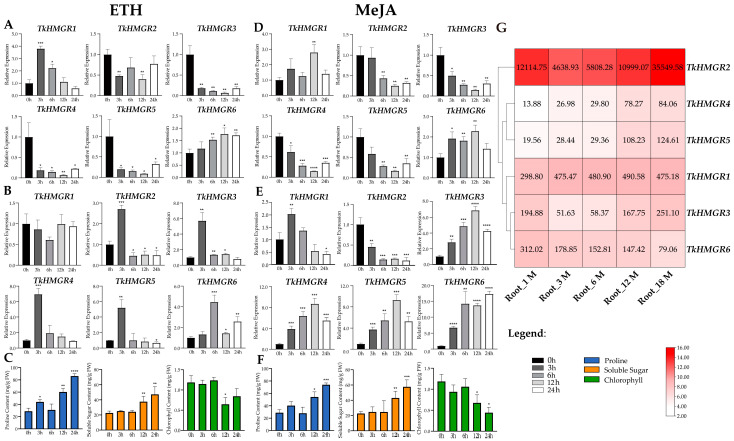
(3-hydroxy-3-methylglutaryl-CoA reductase) plays a crucial role as the first rate-limiting enzyme in the mevalonate (MVA) pathway, which is the upstream pathway of natural rubber biosynthesis. In this study, we carried out whole-genome identification of (TKS), a novel rubber-producing alternative plant, and obtained six members of the genes. Bioinformatic analyses were performed including gene structure, protein properties, chromosomal localization, evolutionary relationships, and cis-acting element analyses. The results showed that genes were highly conserved during evolution with a complete HMG-CoA reductase conserved domain and were closely related to plants during the evolutionary process. The α-helix is the most prominent feature of the secondary structure of the TkHMGR proteins. Collinearity analyses demonstrated that a whole-genome duplication (WGD) event and tandem duplication event play a key role in the expansion of this family and and have more homologous gene between other species. Cis-acting element analysis revealed that the gene family had a higher number of MYB-related, light-responsive, hormone-responsive elements. In addition, we investigated the expression patterns of family members induced by ethylene (ETH) and methyl jasmonate (MeJA), and their expression levels at different stages of root development. Finally, subcellular localization results showed that six TkHMGR members were all located in the endoplasmic reticulum. In conclusion, the results of our study lay a certain theoretical basis for the subsequent improvement of rubber yield, molecular breeding of rubber-producing plants, and genetic improvement of .
(3-羟基-3-甲基戊二酰辅酶A还原酶)作为甲羟戊酸(MVA)途径中的首个限速酶发挥着关键作用,而MVA途径是天然橡胶生物合成的上游途径。在本研究中,我们对一种新型产胶替代植物(TKS)进行了全基因组鉴定,并获得了该基因的六个成员。进行了生物信息学分析,包括基因结构、蛋白质特性、染色体定位、进化关系和顺式作用元件分析。结果表明,该基因在进化过程中高度保守,具有完整的HMG-CoA还原酶保守结构域,并且在进化过程中与某些植物密切相关。α-螺旋是TkHMGR蛋白二级结构最显著的特征。共线性分析表明,全基因组复制(WGD)事件和串联复制事件在该家族的扩张中起关键作用,并且与其他物种相比,[具体物种]有更多的同源基因。顺式作用元件分析表明,该基因家族具有较多的MYB相关、光响应、激素响应元件。此外,我们研究了乙烯(ETH)和茉莉酸甲酯(MeJA)诱导的家族成员的表达模式,以及它们在[具体植物]根发育不同阶段的表达水平。最后,亚细胞定位结果表明,六个TkHMGR成员均定位于内质网。总之,我们的研究结果为后续提高橡胶产量、产胶植物的分子育种以及[具体植物]的遗传改良奠定了一定的理论基础。